Utensílios de cozinha em aço inoxidável é amplamente considerado um dos materiais de cozinha mais duráveis, higiénicos e versáteis que existem. É a escolha preferida de chefs profissionais, restaurantes e famílias devido à sua excelente durabilidade, resistência à corrosão e longa vida útil.
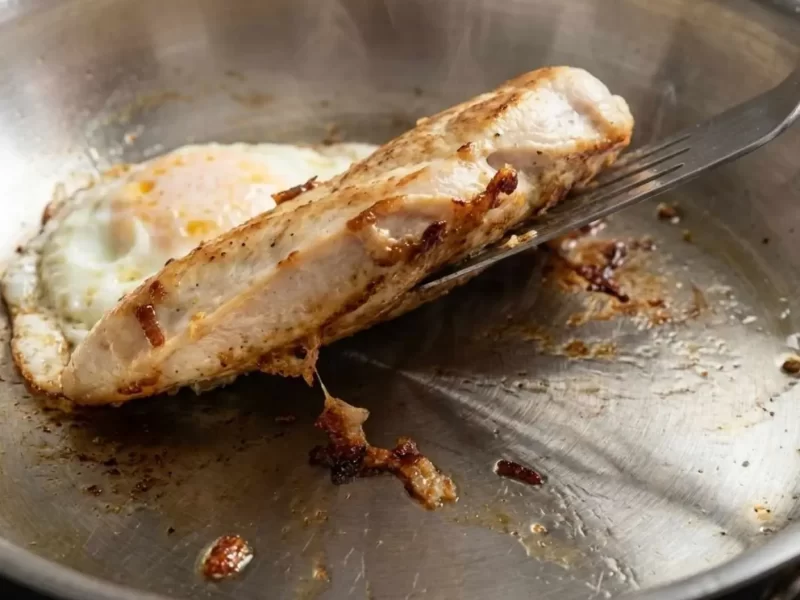
No entanto, muitos utilizadores deparam-se com o mesmo problema frustrante: os alimentos ficam colados à superfície de cozedura.
A boa notícia é que os utensílios de cozinha em aço inoxidável não apresentam defeitos intrínsecos quando os alimentos ficam colados. Na maioria dos casos, o problema resulta de técnicas de cozedura incorretas, pré-aquecimento inadequado, má gestão da temperatura ou construção de baixa qualidade dos utensílios.
Compreender por que razão os alimentos grudam e como evitar isso pode melhorar significativamente o desempenho na cozinha, ao mesmo tempo que prolonga a vida útil dos utensílios de cozinha. Quer seja um cozinheiro amador ou uma empresa que adquire produtos de um profissional fabricante de utensílios de cozinha em aço inoxidável, dominar estes princípios ajudará a maximizar o valor do seu investimento.
Por que é que os utensílios de cozinha em aço inoxidável grudem?
Antes de resolver o problema, é importante compreender por que razão ele ocorre.
Ao contrário das frigideiras antiaderentes tradicionais, os utensílios de cozinha em aço inoxidável não possuem um revestimento que crie uma barreira entre os alimentos e o metal. Em vez disso, o sucesso na cozinha depende do controlo adequado da temperatura e das técnicas de cozinha.
Qualidade dos materiais e da construção
Nem todos os utensílios de cozinha em aço inoxidável têm o mesmo desempenho.
Os utensílios de cozinha de alta qualidade apresentam normalmente uma construção multicamadas, em que camadas de aço inoxidável são unidas a um núcleo de alumínio ou cobre. Este design melhora a condutividade térmica e proporciona uma distribuição mais uniforme da temperatura.
Os utensílios de cozinha de baixa qualidade utilizam frequentemente aço inoxidável fino de camada única, que dá origem a pontos de calor. Estas diferenças de temperatura aumentam a probabilidade de os alimentos ficarem colados e queimarem.
Os principais fatores que afetam o desempenho na cozinha incluem:
- Tipo de aço inoxidável
- Qualidade do material do núcleo
- Espessura dos utensílios de cozinha
- Eficiência na distribuição de calor
- Precisão na fabricação
Produtos profissionais de uma marca de renome [fabricante de utensílios de cozinha em aço inoxidável personalizados] geralmente oferecem um melhor desempenho térmico, reduzindo os problemas de aderência e melhorando a uniformidade da cozedura.
Erros na gestão do calor
A temperatura é um dos fatores mais negligenciados quando se cozinha com aço inoxidável.
Muitos utilizadores colocam os alimentos numa frigideira fria ou adicionam ingredientes antes de o utensílio atingir a temperatura adequada para cozinhar.
Quando as proteínas dos alimentos entram em contacto com aço inoxidável que não foi suficientemente aquecido, formam ligações moleculares com a superfície metálica. Isto faz com que a carne, os ovos, o peixe e outras proteínas fiquem colados.
O calor excessivamente elevado pode causar outro problema. O sobreaquecimento pode queimar os óleos e as superfícies dos alimentos antes que ocorra a libertação natural, levando a uma aderência difícil de remover e a uma limpeza complicada.
Um controlo adequado do calor é essencial para cozinhar bem em aço inoxidável.
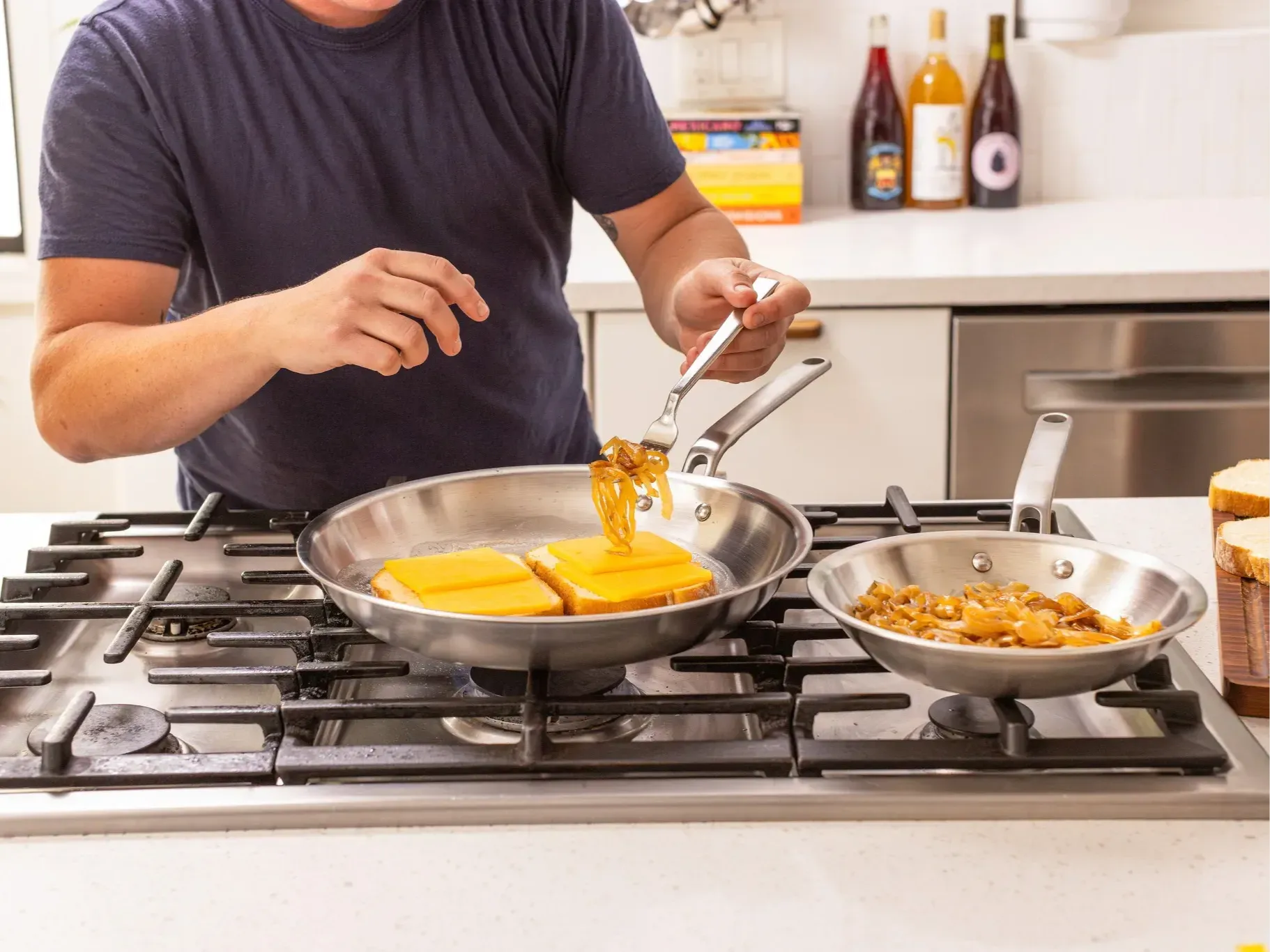
Guia passo a passo para evitar que os alimentos grudem
Felizmente, evitar que os alimentos grudem é relativamente simples quando se utilizam técnicas de cozinha adequadas.
Técnicas de pré-aquecimento
O pré-aquecimento é a base para um bom resultado na cozinha com aço inoxidável.
À medida que a frigideira aquece, os poros microscópicos da superfície metálica expandem-se e tornam-se mais uniformes. Quando se atinge a temperatura adequada, é menos provável que os alimentos adiram à superfície.
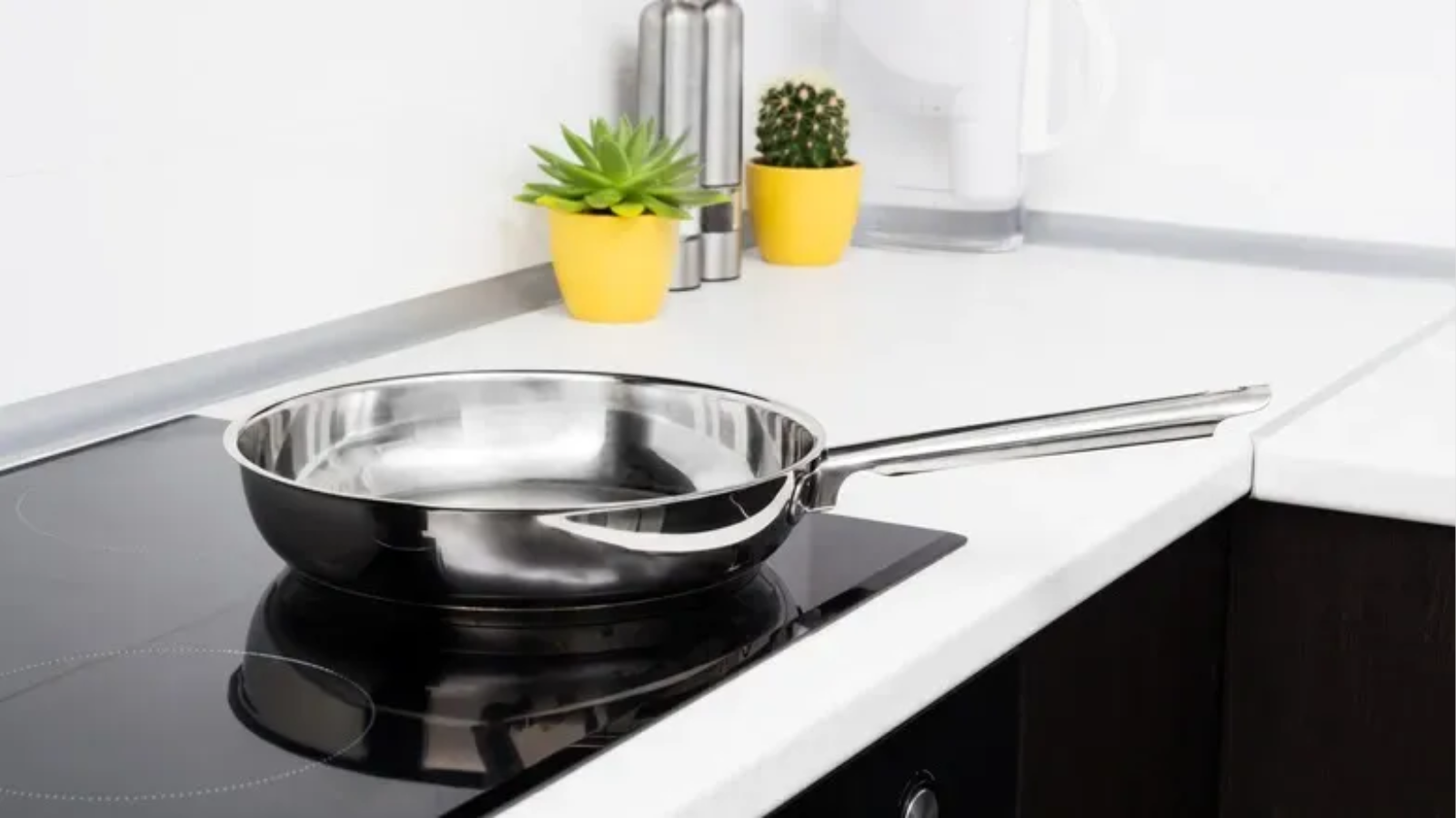
Um método comum utilizado por chefs profissionais é o teste da gota de água.
Passos:
- Coloque a panela em lume médio.
- Deixe aquecer gradualmente durante 1 a 3 minutos.
- Salpique algumas gotas de água sobre a superfície.
Resultados:
- A água evapora-se imediatamente: a panela está demasiado fria.
- A água espalha-se e salpica: a frigideira ainda não está pronta.
- A água forma uma bola lisa e desliza pela superfície: temperatura ideal para cozinhar.
Quando chegar a esta fase, adicione óleo de cozinha e deixe aquecer um pouco antes de colocar os alimentos.
Gorduras e óleos saudáveis
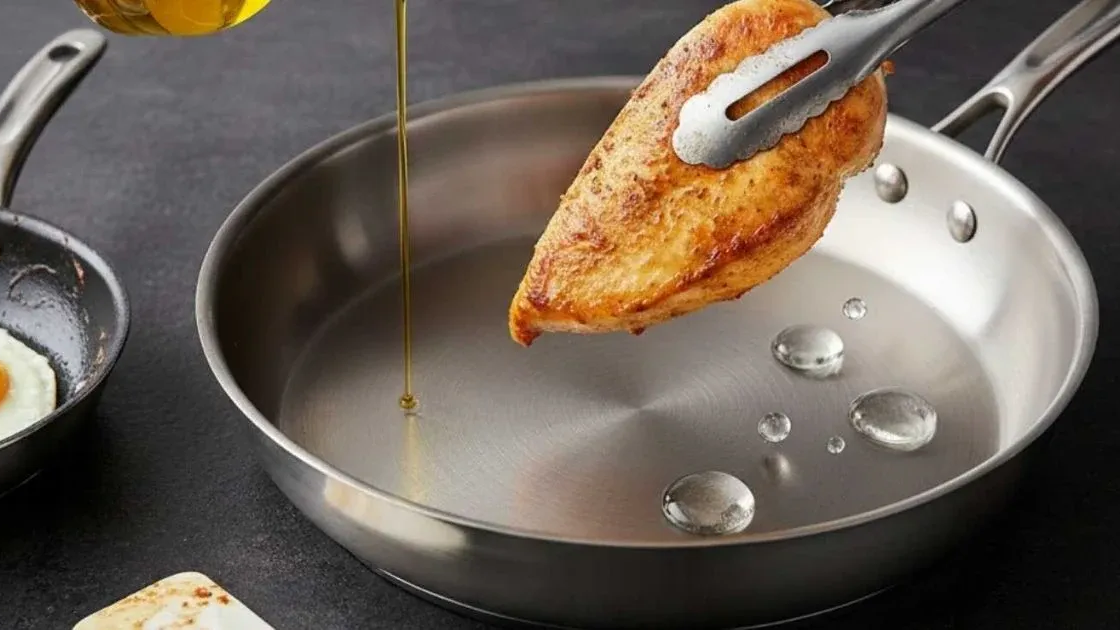
O óleo funciona como uma barreira temporária entre os alimentos e a superfície de cozedura.
A escolha do óleo adequado pode reduzir significativamente o atrito.
Entre os óleos recomendados encontram-se:
- Óleo de abacate
- Óleo de canola
- Óleo de grainha de uva
- Óleo de girassol
- Óleo de amendoim
Estes óleos apresentam pontos de fumo relativamente elevados e mantêm a estabilidade durante a cozedura.
Também se pode usar manteiga, mas esta queima mais facilmente devido aos seus sólidos lácteos. Muitos chefs combinam a manteiga com um óleo de ponto de fumo mais elevado para melhorar o desempenho.
Entre os erros mais comuns contam-se:
- Adicionar óleo antes do pré-aquecimento
- Usar muito pouco óleo
- Deixar o óleo aquecer em demasia
- Cozinhar com óleo usado
A ordem é importante:
Pré-aqueça a frigideira → Adicione óleo → Deixe o óleo aquecer → Adicione os alimentos
Seguir esta ordem ajuda a criar condições ideais para cozinhar.
Métodos de cozedura que reduzem a aderência
Mesmo com um pré-aquecimento adequado e a escolha correta do óleo, a técnica de cozedura continua a ser importante.
Evite mover os alimentos demasiado cedo
Um dos maiores erros é tentar virar os alimentos antes do tempo.
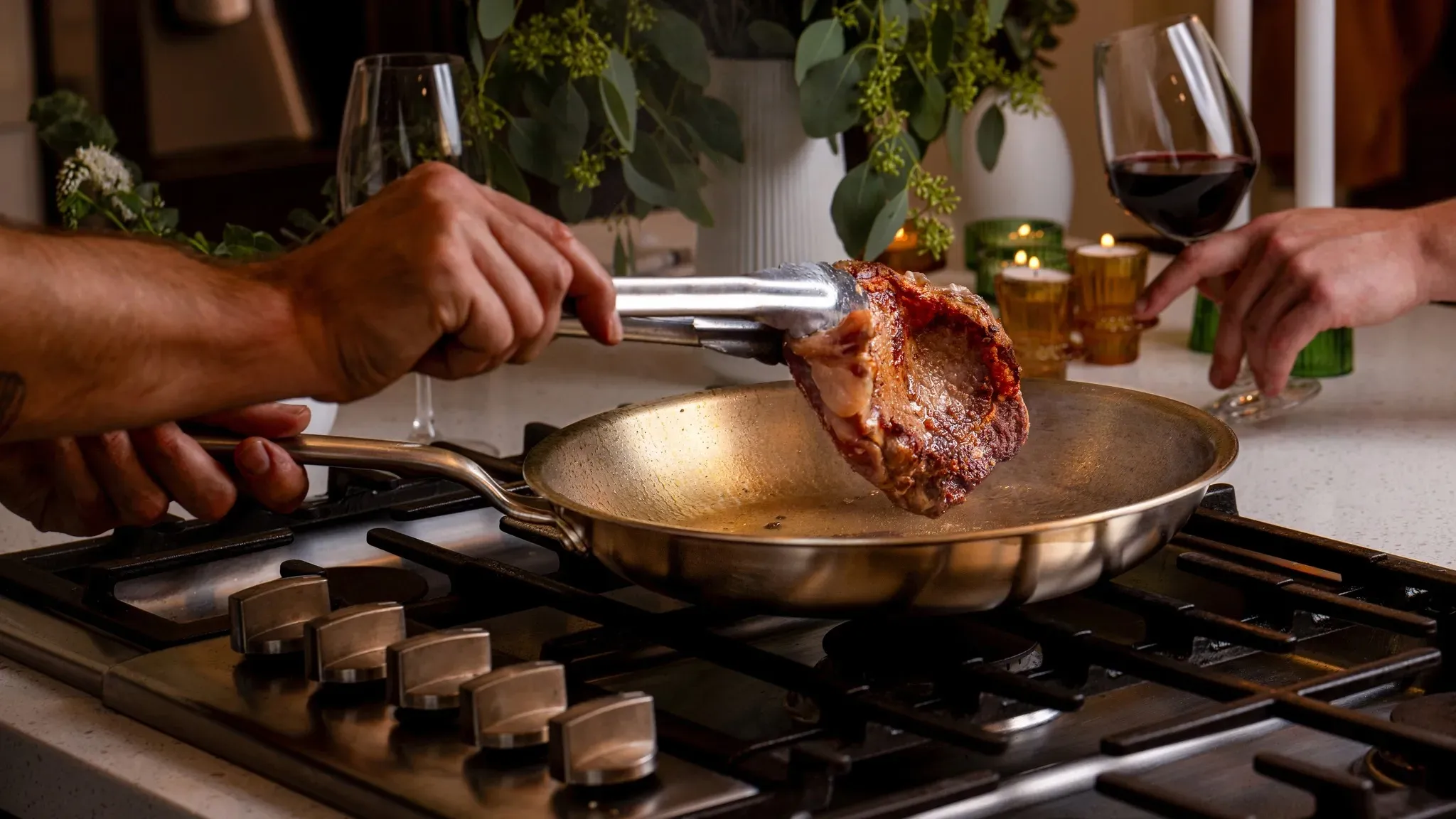
Quando proteínas como a carne, o frango ou o peixe começam a cozinhar, aderem naturalmente à superfície. À medida que a cozedura avança, forma-se uma crosta e os alimentos soltam-se por si próprios.
Se os alimentos não se desfazem facilmente, é porque, normalmente, precisam de mais tempo de cozedura.
Evite encher demais a frigideira
O excesso de alimentos reduz a temperatura de cozedura.
Quando se adiciona demasiada comida de uma só vez:
- A humidade acumula-se
- A Steam desenvolve
- A descoloração diminui
- Aumentos na aderência
Cozinhe em porções, sempre que necessário.
Controlar a humidade
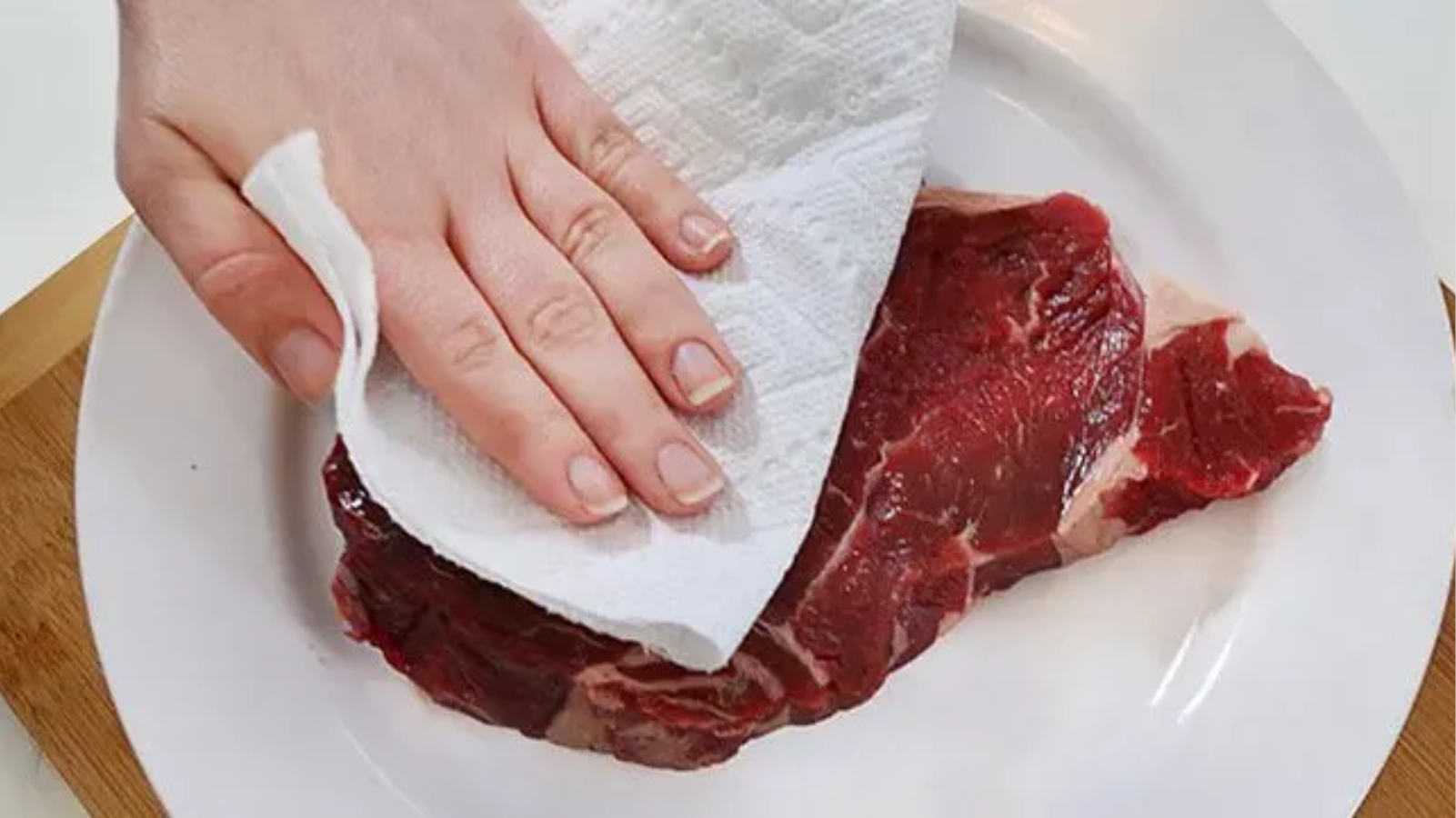
O excesso de humidade é um dos principais fatores que contribuem para a aderência.
Antes de cozinhar:
- Seque a carne com papel de cozinha
- Remova o excesso de água da superfície
- Deixe os alimentos refrigerados atingirem a temperatura ambiente
As superfícies secas favorecem um selado adequado e reduzem a aderência.
Utilizar técnicas de desengorduramento
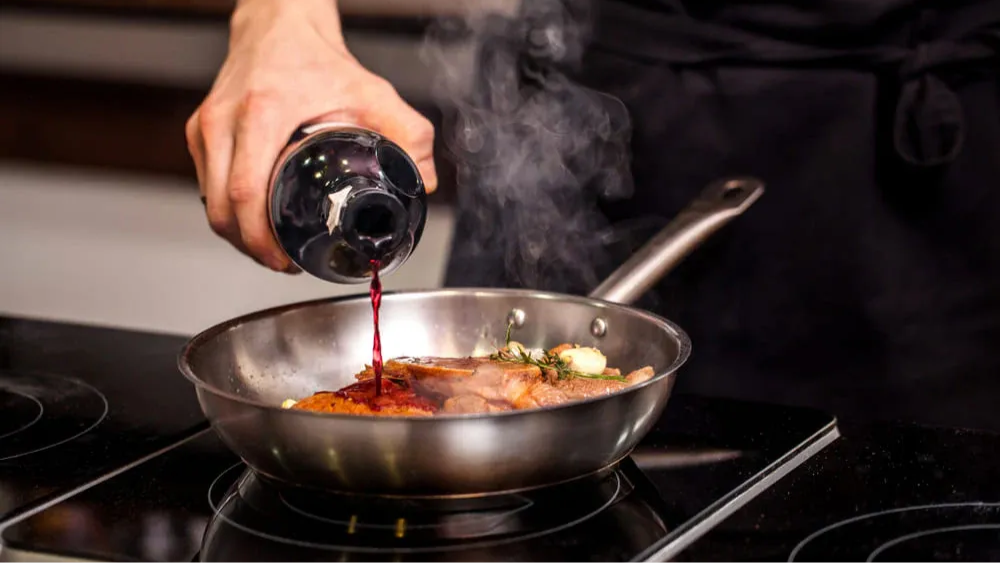
As cozinhas profissionais recorrem frequentemente à técnica de desengordurar para maximizar o sabor e minimizar a acumulação de resíduos.
Após a cozedura:
- Junte vinho, caldo ou água.
- Raspe suavemente com um utensílio de madeira.
- Desfaça os resíduos dourados da superfície.
Esta técnica simplifica a limpeza e permite preparar molhos saborosos.
Limpeza e manutenção para um desempenho duradouro
Uma manutenção adequada ajuda a preservar o desempenho e o aspeto dos utensílios de cozinha.
Práticas de limpeza imediata
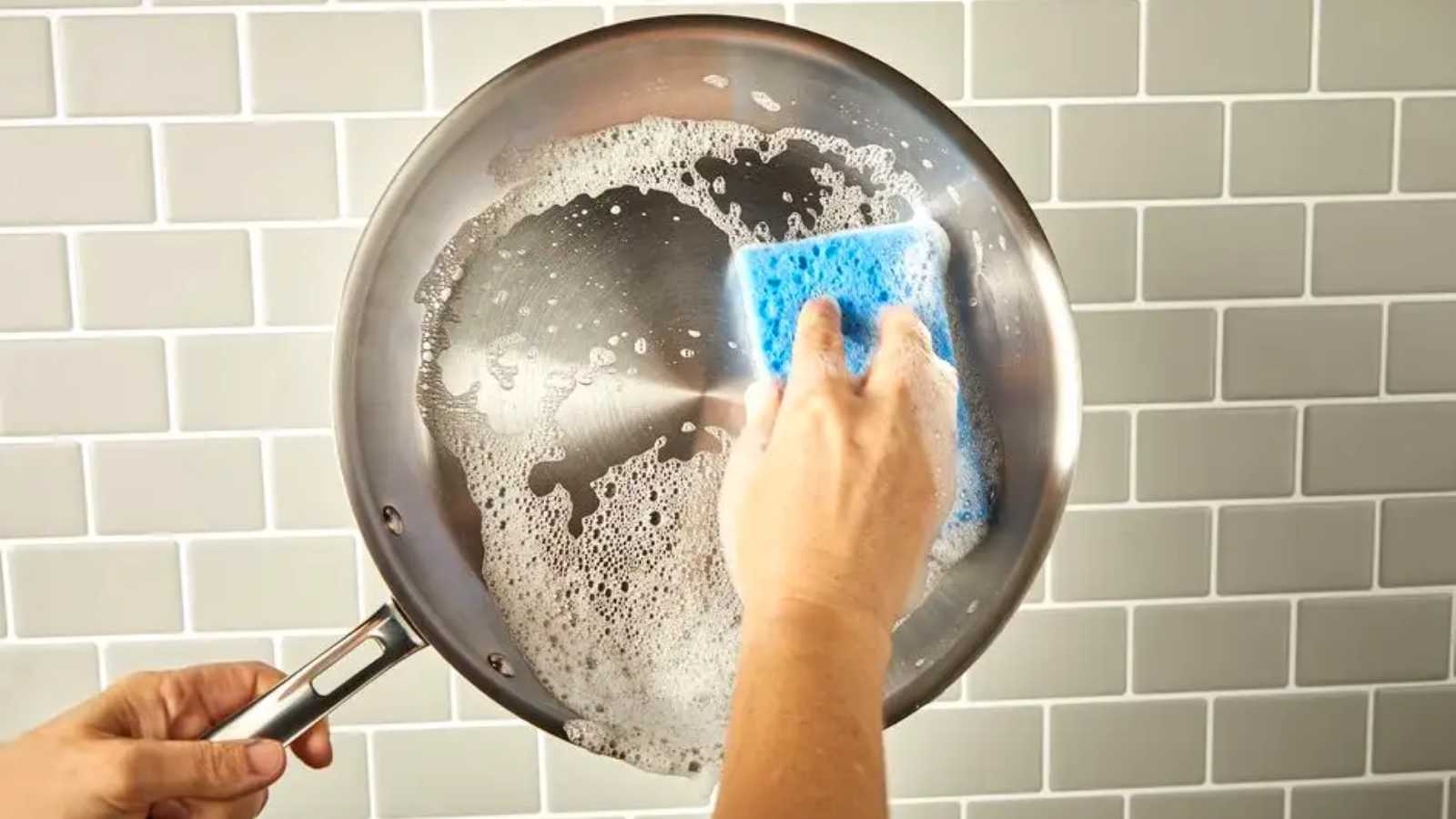
Limpar os utensílios de cozinha logo após a utilização evita que os resíduos alimentares endureçam.
As melhores práticas incluem:
- Deixe os utensílios de cozinha arrefecerem naturalmente
- Use água morna e detergente suave
- Deixe os resíduos mais difíceis de remover de molho antes de esfregar
- Utilize utensílios de limpeza não abrasivos
Sempre que possível, evite utilizar palha de aço abrasiva em superfícies polidas, pois pode causar riscos.
Para resíduos de alimentos queimados:
- Encha a panela com água.
- Adicione uma pequena quantidade de bicarbonato de sódio.
- Deixe cozinhar em lume brando durante alguns minutos.
- Deixe os resíduos soltarem-se naturalmente.
Este método é eficaz e minimiza os danos na superfície.
Tempero leve para um melhor desempenho
Embora os utensílios de cozinha em aço inoxidável não necessitem de ser temperados como os de ferro fundido, um tempero ocasional pode melhorar o desempenho na cozinha.
Processo básico de tempero:
- Lave e seque bem os utensílios de cozinha.
- Aplique uma camada fina de óleo com ponto de fumo elevado.
- Aqueça até o óleo começar a soltar um pouco de fumo.
- Deixe arrefecer e limpe o excesso de óleo.
Isto cria uma superfície de cozedura temporária que pode reduzir ainda mais a aderência em utilizações futuras.
Muitas cozinhas profissionais aplicam uma leve camada de óleo nos utensílios de cozinha utilizados com frequência.
Evitar danos
Um manuseamento adequado preserva o desempenho na cozedura.
Evite:
- Mudanças bruscas de temperatura
- Deitar água fria em panelas extremamente quentes
- Utilizar calor excessivo desnecessariamente
- Guardar os utensílios de cozinha sem cuidado
O choque térmico pode provocar deformações, especialmente em utensílios de cozinha de menor qualidade.
Os produtos de alta qualidade fabricados com tecnologia avançada de colagem oferecem, normalmente, maior resistência ao empenamento e à deformação.
Como escolher panelas de aço inoxidável de alta qualidade
A prevenção do colamento começa muito antes de se iniciar a cozedura.
A qualidade dos utensílios de cozinha desempenha um papel fundamental no desempenho na cozinha, na durabilidade e na satisfação do utilizador.
Para os consumidores
Os consumidores devem ter em conta vários fatores antes de comprar utensílios de cozinha em aço inoxidável.
Tipo de aço inoxidável
As classificações mais comuns incluem:
Aço inoxidável 304 (18/8 ou 18/10)
Vantagens:
- Excelente resistência à corrosão
- Propriedades adequadas para uso alimentar
- Longa vida útil
- Aspecto de alta qualidade
Aço inoxidável 430
Vantagens:
- Mais acessível
- Compatibilidade magnética para cozinha por indução
Limitações:
- Menor resistência à corrosão
Para superfícies de cozinha, o aço inoxidável 304 é geralmente a escolha preferida
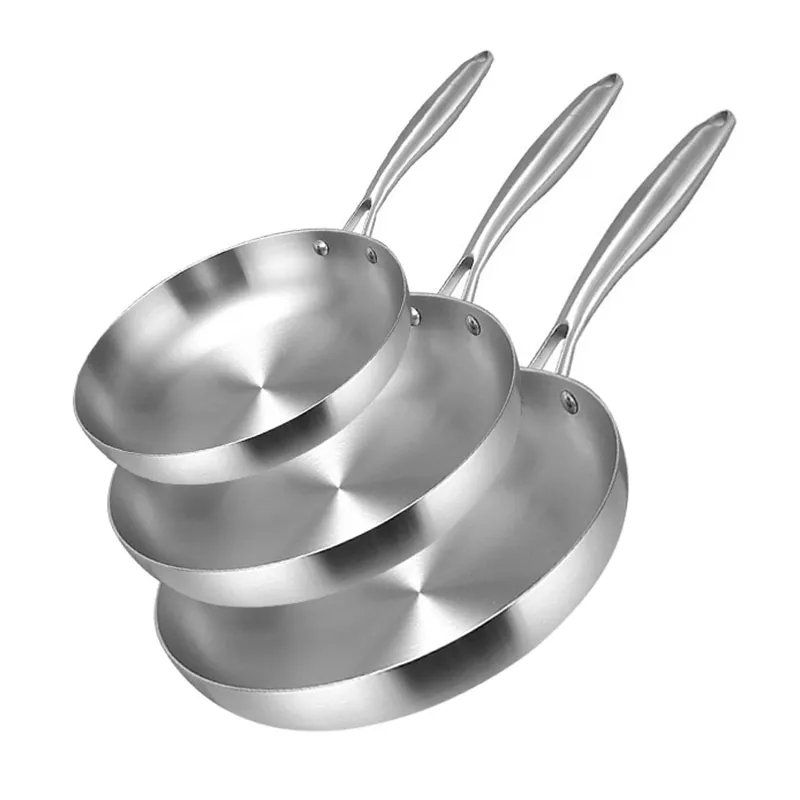
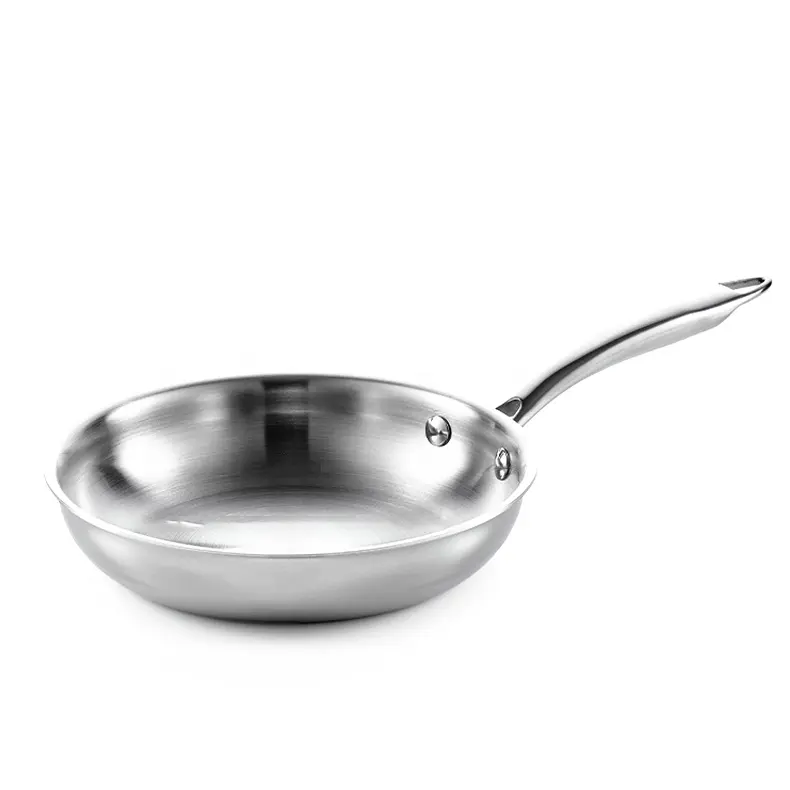
Construção em camadas múltiplas
Os utensílios de cozinha multicamadas oferecem vantagens significativas em relação aos modelos de camada única.
Os benefícios incluem:
- Aquecimento mais rápido
- Melhor retenção do calor
- Menos focos de infeção
- Resultados de cozedura mais consistentes
As construções de três e cinco camadas são particularmente populares entre os profissionais
Design da pega
As pegas ergonómicas aumentam o conforto e a segurança.
Procure:
- Construção rebitada
- Modelos resistentes ao calor
- Aderência segura
- Distribuição equilibrada do peso
Para empresas e compradores em grande escala
Para distribuidores, grossistas, retalhistas e marcas próprias, a escolha de utensílios de cozinha envolve considerações adicionais para além do desempenho na cozinha.
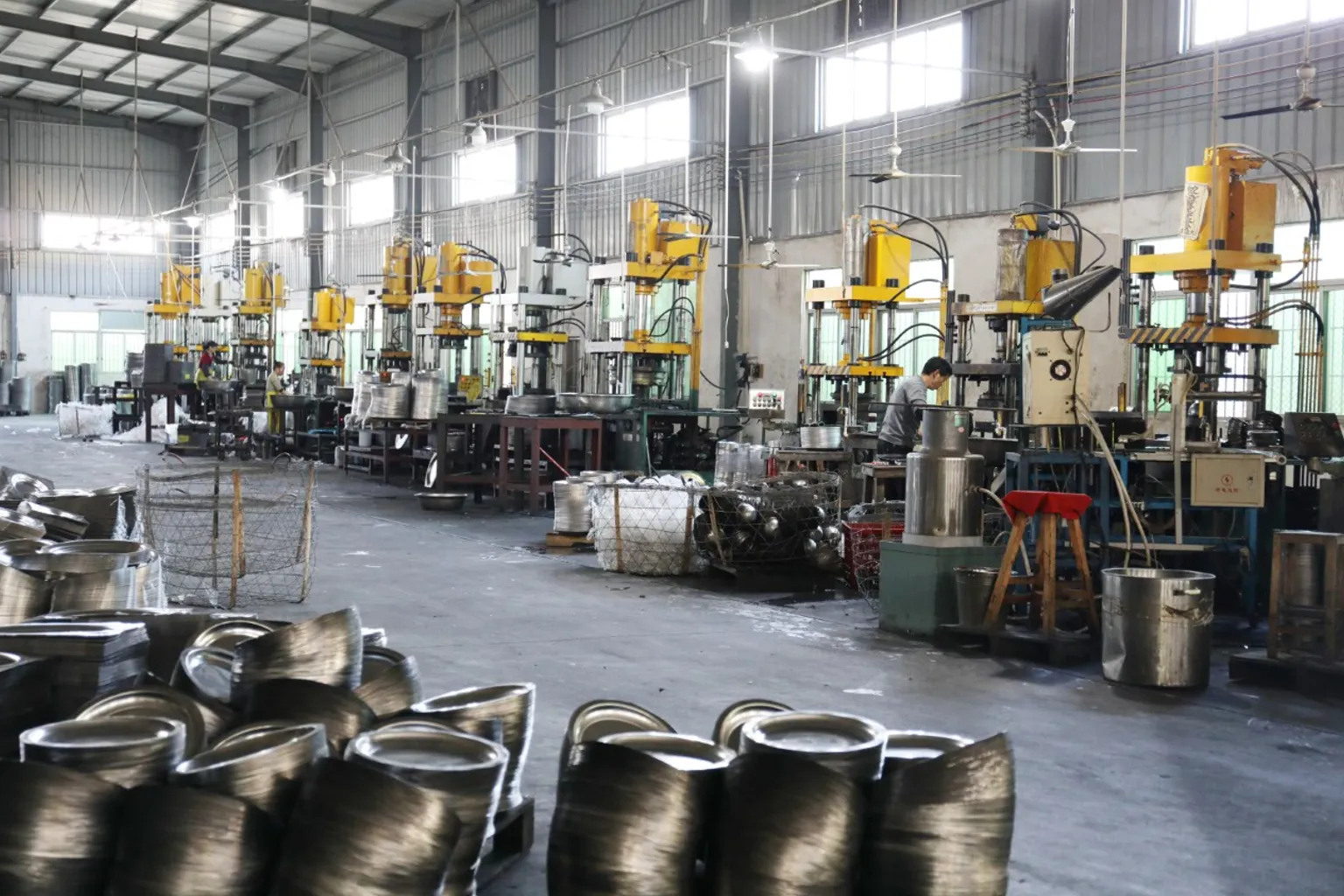
Capacidade de produção
Um fiável fabricante de utensílios de cozinha em aço inoxidável deve demonstrar conhecimentos especializados em:
- Produção de utensílios de cozinha multicamadas
- Conformação de metais de precisão
- Processos de polimento automatizados
- Sistemas de controlo de qualidade consistentes
A capacidade de produção afeta diretamente a consistência do produto e a satisfação do cliente.
Serviços OEM e ODM
A personalização assume uma importância cada vez maior nos mercados competitivos de utensílios de cozinha.
Um fabricante competente deve oferecer:
- Logótipos personalizados
- Marca própria
- Personalização de embalagens
- Apoio ao design de produtos
- Desenvolvimento de produtos exclusivos
Trabalhar com um profissional experiente fabricante de utensílios de cozinha em aço inoxidável personalizados permite que as marcas diferenciem os seus produtos, mantendo a eficiência da produção.
Certificações e conformidade
Os mercados internacionais exigem frequentemente o cumprimento de diversas regulamentações.
Entre as certificações importantes podem incluir-se:
- Sistemas de gestão da qualidade ISO
- Conformidade com os requisitos da FDA relativos ao contacto com alimentos
- Testes LFGB
- Conformidade com o REACH
Estas certificações ajudam a reduzir os riscos associados à entrada no mercado e a reforçar a confiança dos compradores.

Estabilidade da cadeia de abastecimento
O sucesso a longo prazo depende de uma produção e entrega fiáveis.
Ao avaliar um fornecedor grossista de utensílios de cozinha em aço inoxidável, os compradores devem verificar:
- Capacidade de produção
- Prazos de entrega
- Experiência em exportação
- Consistência na qualidade
- Capacidade de resposta do apoio ao cliente
Uma relação estável com os fornecedores pode reduzir os riscos de inventário e melhorar a rentabilidade.
Conclusão
Os utensílios de cozinha em aço inoxidável continuam a ser uma das soluções mais duradouras e versáteis disponíveis no mercado. Embora a aderência dos alimentos seja uma queixa comum, esta é geralmente causada por um controlo inadequado da temperatura, pré-aquecimento insuficiente, humidade excessiva ou técnicas de cozinha inadequadas, e não por defeitos nos próprios utensílios.
Ao compreender o comportamento do aço inoxidável, utilizar métodos de pré-aquecimento adequados, selecionar óleos apropriados e cuidar corretamente dos utensílios de cozinha, os utilizadores podem obter excelentes resultados na cozinha, minimizando ao mesmo tempo o risco de os alimentos ficarem colados.
Para as empresas, escolher produtos de um fornecedor experiente fabricante de utensílios de cozinha em aço inoxidável é igualmente importante. Materiais de alta qualidade, construção em várias camadas, controlo de qualidade rigoroso e capacidade de personalização contribuem, em conjunto, para um desempenho superior e uma maior competitividade no mercado.
Quer seja um cozinheiro amador em busca de melhores resultados ou uma marca que procura produtos para distribuição global, investir em utensílios de cozinha de aço inoxidável de qualidade proporciona valor a longo prazo, durabilidade e um excelente desempenho na cozinha.
Sobre a Allnice
Allnice é um profissional fabricante de utensílios de cozinha em aço inoxidável especializado em Venda por grosso de utensílios de cozinha em aço inoxidável e Soluções de utensílios de cozinha OEM/ODM para grossistas, distribuidores, retalhistas e marcas próprias a nível mundial. Com anos de experiência na área da produção, capacidade de produção em grande escala e tecnologia avançada de fabrico de utensílios de cozinha, fornecemos soluções estáveis, fiáveis e de alto desempenho para os mercados internacionais.
Como fornecedor direto da fábrica, garantimos qualidade consistente, preços competitivos e entregas eficientes. A nossa gama de produtos inclui utensílios de cozinha em aço inoxidável multicamadas, conjuntos de utensílios personalizados e coleções de marca própria concebidas para satisfazer as diversas exigências do mercado. Apoiados por rigorosos sistemas de controlo de qualidade e um serviço de apoio ao cliente ágil, trabalhamos em estreita colaboração com os clientes, desde o desenvolvimento do produto até à produção em massa. Quer necessite de personalização da marca, embalagem ou designs de produtos exclusivos, a Allnice oferece serviços OEM/ODM flexíveis que ajudam as empresas a construir marcas mais fortes e a alcançar o sucesso a longo prazo no mercado.
Perguntas frequentes
Os utensílios de cozinha em aço inoxidável são naturalmente antiaderentes?
Não. O aço inoxidável não é, por si só, antiaderente. No entanto, um pré-aquecimento adequado e técnicas de cozedura corretas podem proporcionar uma experiência culinária muito semelhante ao desempenho de um material antiaderente.
O tempero dos utensílios de cozinha em aço inoxidável pode substituir os revestimentos antiaderentes?
Não totalmente. O tempero pode melhorar temporariamente as propriedades antiaderentes, mas não cria uma superfície antiaderente permanente como os revestimentos especializados.
Qual é a melhor composição para os utensílios de cozinha em aço inoxidável?
As construções de três e cinco camadas são geralmente consideradas ideais, pois proporcionam uma excelente distribuição do calor, durabilidade e desempenho na cozedura.
O que devem as empresas ter em conta ao adquirir utensílios de cozinha a granel?
As empresas devem avaliar a capacidade de fabrico, os serviços OEM/ODM, as certificações, a capacidade de produção, os sistemas de controlo de qualidade e a fiabilidade da cadeia de abastecimento a longo prazo.