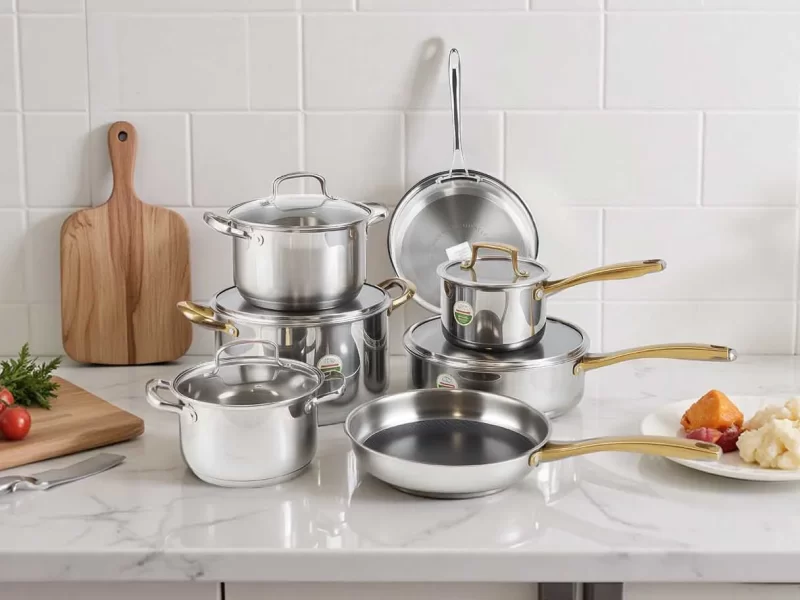
Why does stainless steel cookware rust? This guide explains the common causes of rust on utensílios de cozinha em aço inoxidável, including poor material quality, improper cleaning, and harsh usage conditions. As an experienced fabricante de utensílios de cozinha em aço inoxidável, Allnice shares how selecting high-quality 304 stainless steel, controlling manufacturing processes, and applying strict quality standards can enhance corrosion resistance, extend cookware lifespan, and help buyers choose durable stainless steel cookware for wholesale and commercial use.
Why Stainless Steel Cookware Rusts
For cookware brands, wholesalers, and importers, product quality stability directly impacts market performance.
Many customers believe that “stainless steel won’t rust” when purchasing utensílios de cozinha em aço inoxidável. However, in actual use, some products may exhibit the following:
- Yellow or brown rust spots appear on the surface
- Loss of luster after prolonged use
- Corrosion at welded areas
- Stains remain after cleaning
These problems not only affect the consumer experience but can also increase after-sales costs for the brand.
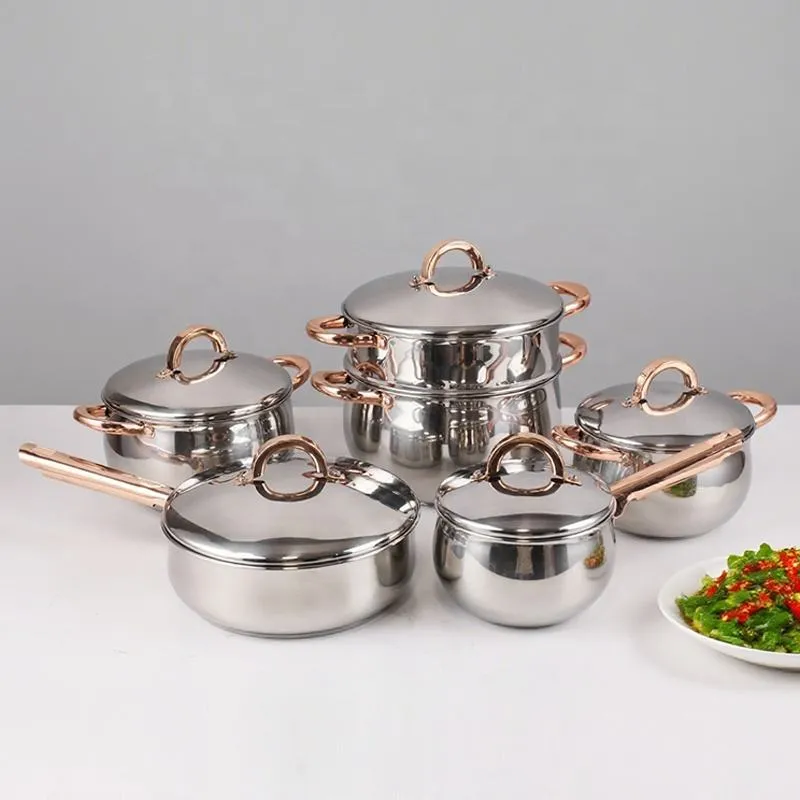
In reality, stainless steel is not completely rust-free; rather, it enhances its corrosion resistance through a protective layer formed by chromium in the material. When material selection, manufacturing processes, or usage conditions are not up to standard, this protective film can be damaged, leading to corrosion.
Therefore, for buyers, choosing a reliable utensílios de cozinha em aço inoxidável manufacturer is more important than simply focusing on price.
What Causes Stainless Steel Cookware to Rust?
Material Quality Directly Affects Corrosion Resistance
The corrosion resistance of stainless steel is closely related to its material composition.
Not all stainless steels on the market are the same; different grades vary in nickel content, chromium content, and stability.
Low-quality materials may:
- Poor resistance to salt water
- Prone to discoloration after prolonged high-temperature use
- More prone to corrosion in humid environments
High-quality utensílios de cozinha em aço inoxidável typically uses stainless steel that meets food contact standards, satisfying the long-term needs of home, restaurant, and commercial kitchens.
Salt, Moisture, and Improper Cleaning Can Damage Stainless Steel
Even with high-quality materials, improper use can affect product lifespan.
Entre os problemas mais comuns contam-se:
Prolonged contact with salt
Salt accelerates the corrosion process on metal surfaces.
For example, in a kitchen environment, cookware such as pots and pans frequently come into contact with salty foods. If not cleaned promptly, this can increase the risk of rust.
Long-term damp storage
Residual moisture can damage the protective layer on stainless steel surfaces.
Therefore, drying the cookware promptly after use is crucial for maintaining the appearance and performance of utensílios de cozinha em aço inoxidável.
Using unsuitable cleaning agents
Chlorine-based cleaning agents can damage the protective film on stainless steel surfaces and are therefore not recommended for long-term use.
Factory Perspective: How Manufacturers Prevent Rust Problems
As a professional cookware manufacturer, we believe that preventing utensílios de cozinha em aço inoxidável from rusting requires control throughout the entire production process.
Choosing the Right Stainless Steel Grade
Why 304 Stainless Cookware Is Widely Used
In modern kitchenware manufacturing, 304 stainless cookware is a widely used material.
It possesses:
- Excelente resistência à corrosão
- Stable food safety performance
- Good processing performance
Suitable for long-term use
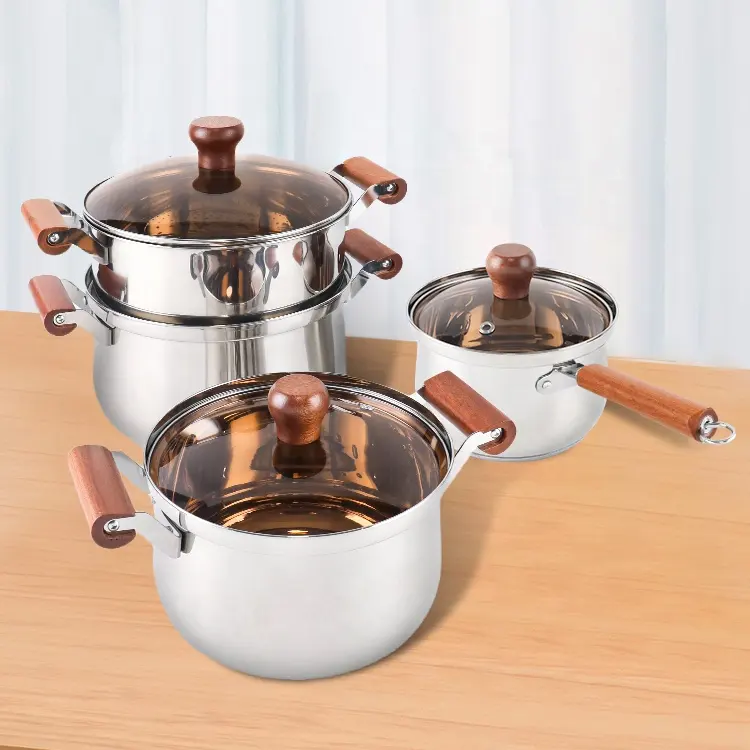
Therefore, many high-quality cookware, bowls, and kitchenware choose 304 stainless steel as their primary material.
For brands, choosing suppliers that use 304 stainless cookware can effectively improve product stability and consumer acceptance.
How Stainless Steel Cookware Manufacturing Affects Product Durability
Professional stainless steel cookware manufacturing requires strict control of material selection, forming processes, welding and surface finishing.
Materials are just the foundation; what truly determines product quality is the complete production process.
Professional fabrico de utensílios de cozinha typically includes:
Precision Stamping
Using advanced equipment to control product thickness and structure ensures stable product performance.
Welding and Connection Processes
Handles, lids, and other structural connections require strict control to prevent corrosion caused by welding defects.
Tratamento de superfícies
Polishing, brushing, and other processes not only affect appearance but also surface cleaning performance.
Good surface treatment reduces stain adhesion and improves product durability.
Controlo de Qualidade
Established manufacturers typically perform:
- Visual Inspection
- Dimensional Inspection
- Material Inspection
- Performance Testing
Ensuring each batch of products meets customer requirements.
Different Cookware Applications Require Different Material Standards
For commercial kitchens, commercial stainless steel cookware requires higher durability and corrosion resistance because products are used frequently under high-temperature conditions. Different types of cookware have different usage environments, therefore, material requirements also differ.
For example:
Stainless Steel Steamer Pot Requires Stable Material Performance
Steamers are exposed to high temperatures and moisture for extended periods, therefore, higher requirements are placed on material stability.
High-quality stainless steel steamer pot typically requires:
- Good heat resistance
- Stable structural design
- Strong corrosion resistance
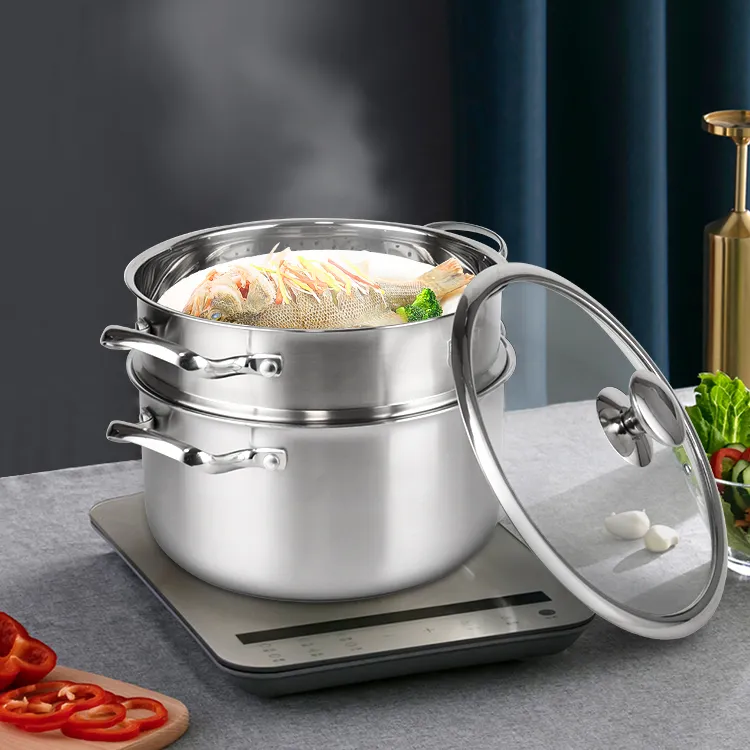
This is why professional manufacturers choose different material options based on the product’s application scenario, rather than using the same standard for all products.
How to Choose a Reliable Stainless Steel Cookware Manufacturer for Long-Term Cooperation?
When sourcing utensílios de cozinha em aço inoxidável, buyers should work with an experienced fabricante de utensílios de cozinha em aço inoxidável that understands material selection, production standards and quality control.
For overseas buyers, the supplier’s capabilities directly impact the final product quality.
When selecting a manufacturer, focus on the following:
Experiência na área da produção
Manufacturers with years of production experience typically have a better understanding of material selection, structural design, and market demands.
Complete Cookware Manufacturing Capability
Excellent suppliers should possess complete production capabilities, including:
- Conceção de produtos
- Mold development
- Stamping
- Soldadura
- Polimento
- Embalagem
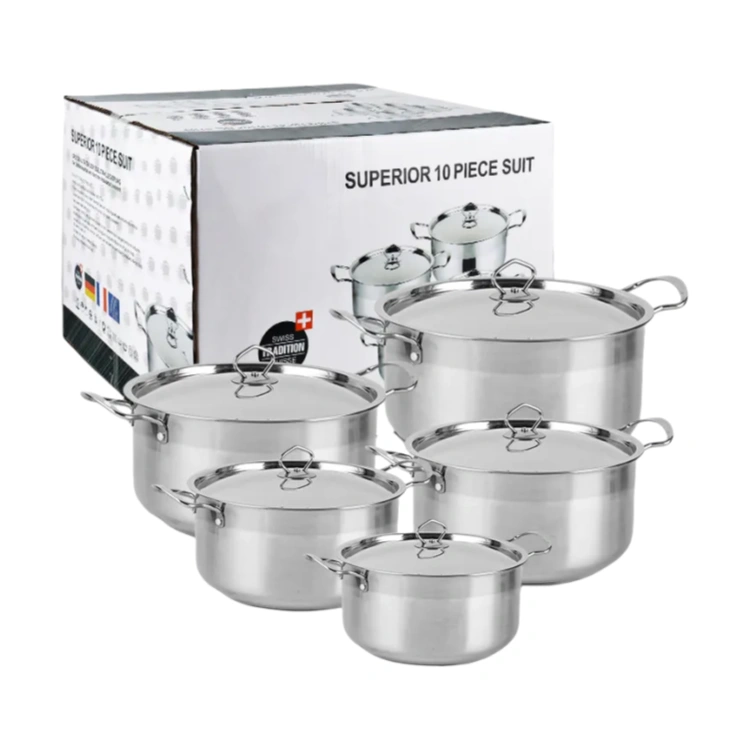
A complete supply chain improves production efficiency and reduces communication costs.
OEM and Customization Ability
Modern brands increasingly emphasize product differentiation. Many brands choose OEM stainless steel cookware solutions to create customized products with their own designs, logos, and packaging requirements.
Professional manufacturers typically offer:
- Logo customization
- Packaging design
- Product size adjustment
- Desenvolvimento de novos produtos
Helping clients build their own kitchenware brands.
Why Stainless Steel Cookware Remains Popular in Global Markets
Despite the availability of various cookware materials, utensílios de cozinha em aço inoxidável remains in high demand. For wholesalers and retailers, panelas de aço inoxidável por atacado offers long-term value because of its durability, wide application, and strong market demand.
Key reasons include:
Long Service Life
High-quality stainless steel cookware has a long lifespan, reducing replacement frequency.
Manutenção fácil
The smooth surface of stainless steel makes daily cleaning easier.
Safe and Versatile
Suitable for:
- Home kitchens
- Hotel and restaurant businesses
- Commercial kitchens
- Food service industry
Suitable for Private Label Brands
Stainless steel products offer excellent customization options, making them ideal for OEM development.
FAQ
Q1: Why does stainless steel cookware rust?
Utensílios de cozinha em aço inoxidável rusting is usually related to material quality, manufacturing processes, and the environment in which it is used. High-quality materials and proper maintenance can effectively reduce the risk of corrosion.
Q2: Is 304 stainless cookware better than ordinary stainless steel?
Yes. 304 stainless steel cookware has better corrosion resistance and is therefore widely used in food contact cookware.
Q3: Can stainless steel steamer pot rust?
Yes. Rust can occur if exposed to humid, high-salt environments for extended periods, or if the material quality is insufficient. Therefore, choosing a reliable manufacturer is crucial.
Q4: Why is cookware manufacturing important for product quality?
Because the production process determines the performance of the final product, including material handling, molding processes, welding quality, and surface treatment.
Q5: How can buyers select high-quality stainless steel cookware suppliers?
Os compradores devem concentrar-se no seguinte:
- Material grade
- Factory experience
- Capacidade de produção
- Controlo de qualidade
- OEM capability
Rather than just comparing prices.
Conclusão
The rusting problem of stainless steel cookware is not caused by a single factor, but is the result of the combined effects of materials, manufacturing processes, and the usage environment. For buyers, choosing an experienced fabricante de utensílios de cozinha em aço inoxidável with strong stainless steel cookware manufacturing capabilities helps brands develop reliable products and build long-term market competitiveness. Whether it’s everyday kitchenware or professional cookware, stable and reliable utensílios de cozinha em aço inoxidável requires a professional manufacturing process as a guarantee.
Sobre a Allnice
Allnice focuses on the research, development, manufacturing, and export of utensílios de cozinha em aço inoxidável and kitchenware, providing professional OEM/ODM solutions for global brand owners, wholesalers, and retail customers.
With extensive fabrico de utensílios de cozinha experience, Allnice can produce a variety of high-quality kitchenware, including utensílios de cozinha em aço inoxidável, 304 stainless steel cookware, stainless steel steamer pots, etc., and supports product design, structural optimization, surface treatment, and brand customization.

Como profissional China stainless steel cookware manufacturer, Allnice consistently adheres to strict quality control and continuous innovation, providing global customers with stable, high-quality, and competitive products. If you are looking for a reliable stainless steel kitchenware partner, please contact us to work with Allnice to develop kitchenware solutions that meet market demands.