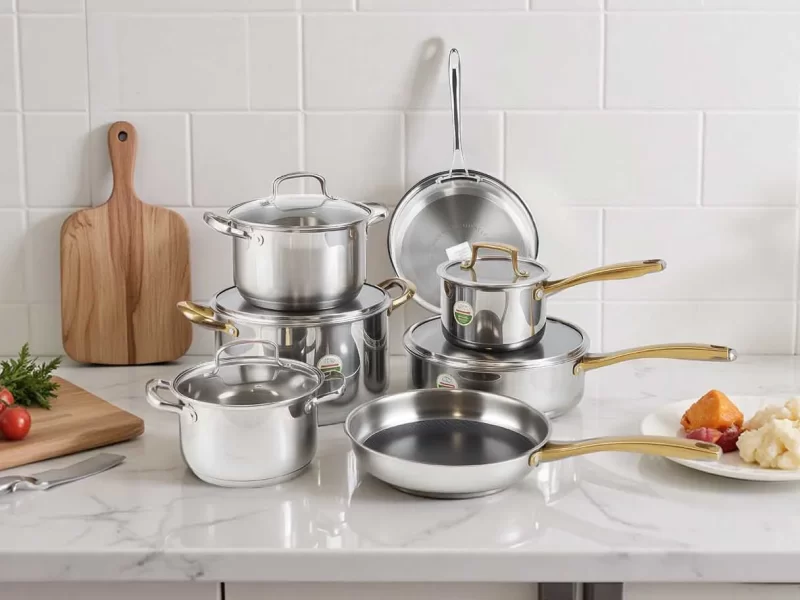
Pourquoi les ustensiles de cuisine en acier inoxydable rouillent-ils ? Ce guide explique les causes courantes de la rouille sur ustensiles de cuisine en acier inoxydable, notamment la mauvaise qualité des matériaux, un nettoyage inadéquat et des conditions d'utilisation difficiles. En tant que professionnel expérimenté, fabricant d'ustensiles de cuisine en acier inoxydable, Allnice explique comment le choix d'un acier inoxydable 304 de haute qualité, le contrôle des processus de fabrication et l'application de normes de qualité strictes peuvent améliorer la résistance à la corrosion, prolonger la durée de vie des ustensiles de cuisine et aider les acheteurs à choisir des ustensiles en acier inoxydable durables destinés à la vente en gros et à un usage professionnel.
Pourquoi les ustensiles de cuisine en acier inoxydable rouillent-ils ?
Pour les marques d'ustensiles de cuisine, les grossistes et les importateurs, la stabilité de la qualité des produits a une incidence directe sur les performances commerciales.
De nombreux clients pensent que “ l'acier inoxydable ne rouille pas ” lorsqu'ils effectuent leurs achats ustensiles de cuisine en acier inoxydable. Toutefois, dans la pratique, certains produits peuvent présenter les caractéristiques suivantes :
- Des taches de rouille jaunes ou brunes apparaissent à la surface
- Perte d'éclat après une utilisation prolongée
- Corrosion au niveau des zones soudées
- Des taches persistent après le nettoyage
Ces problèmes ont non seulement un impact sur l'expérience client, mais peuvent également entraîner une augmentation des coûts après-vente pour la marque.
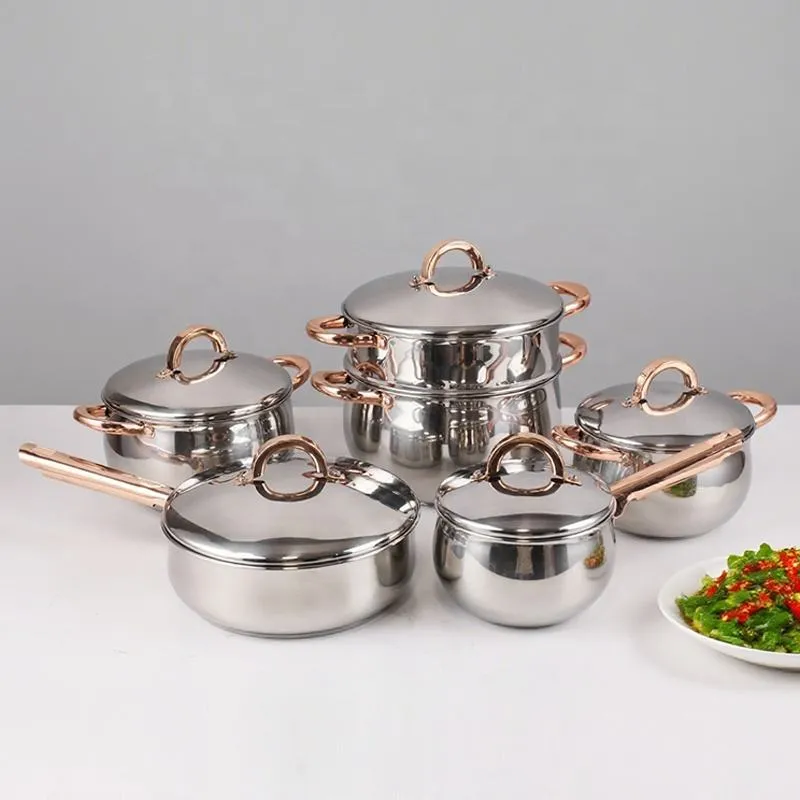
En réalité, l'acier inoxydable n'est pas totalement à l'abri de la rouille ; il tire plutôt sa résistance à la corrosion d'une couche protectrice formée par le chrome présent dans le matériau. Lorsque le choix des matériaux, les procédés de fabrication ou les conditions d'utilisation ne sont pas conformes aux normes, ce film protecteur peut être endommagé, ce qui entraîne la corrosion.
Par conséquent, pour les acheteurs, choisir un ustensiles de cuisine en acier inoxydable Il est plus important de tenir compte du fabricant que de se concentrer uniquement sur le prix.
Qu'est-ce qui provoque la rouille des ustensiles de cuisine en acier inoxydable ?
La qualité du matériau influe directement sur la résistance à la corrosion
La résistance à la corrosion de l'acier inoxydable est étroitement liée à la composition de ce matériau.
Les aciers inoxydables disponibles sur le marché ne sont pas tous identiques ; les différentes nuances se distinguent par leur teneur en nickel, leur teneur en chrome et leur stabilité.
Les matériaux de mauvaise qualité peuvent :
- Faible résistance à l'eau salée
- Risque de décoloration après une utilisation prolongée à haute température
- Plus sensible à la corrosion dans les environnements humides
De haute qualité ustensiles de cuisine en acier inoxydable utilise généralement de l'acier inoxydable conforme aux normes relatives au contact alimentaire, répondant ainsi aux besoins à long terme des cuisines domestiques, des restaurants et des cuisines professionnelles.
Le sel, l'humidité et un nettoyage inadapté peuvent endommager l'acier inoxydable
Même avec des matériaux de haute qualité, une utilisation inappropriée peut réduire la durée de vie du produit.
Parmi les problèmes courants, on peut citer :
Contact prolongé avec le sel
Le sel accélère le processus de corrosion sur les surfaces métalliques.
Par exemple, dans une cuisine, les ustensiles de cuisine tels que les casseroles et les poêles entrent fréquemment en contact avec des aliments salés. S'ils ne sont pas nettoyés rapidement, cela peut augmenter le risque de rouille.
Stockage à long terme dans un environnement humide
L'humidité résiduelle peut endommager la couche protectrice des surfaces en acier inoxydable.
Il est donc essentiel de sécher les ustensiles de cuisine dès leur utilisation afin de préserver leur aspect et leurs performances. ustensiles de cuisine en acier inoxydable.
Utilisation de produits de nettoyage inadaptés
Les produits nettoyants à base de chlore peuvent endommager le film protecteur des surfaces en acier inoxydable ; leur utilisation à long terme n'est donc pas recommandée.
Point de vue des usines : comment les fabricants préviennent les problèmes de rouille
En tant que fabricant professionnel d'ustensiles de cuisine, nous pensons qu'il est essentiel de prévenir ustensiles de cuisine en acier inoxydable La prévention de la rouille nécessite un contrôle tout au long du processus de production.
Choisir la bonne nuance d'acier inoxydable
Pourquoi les ustensiles de cuisine en acier inoxydable 304 sont-ils si répandus ?
Dans la fabrication moderne d'ustensiles de cuisine, Batterie de cuisine en acier inoxydable 304 est un matériau très répandu.
Il comprend :
- Excellente résistance à la corrosion
- Des résultats constants en matière de sécurité alimentaire
- Bonnes performances de traitement
Convient à une utilisation à long terme
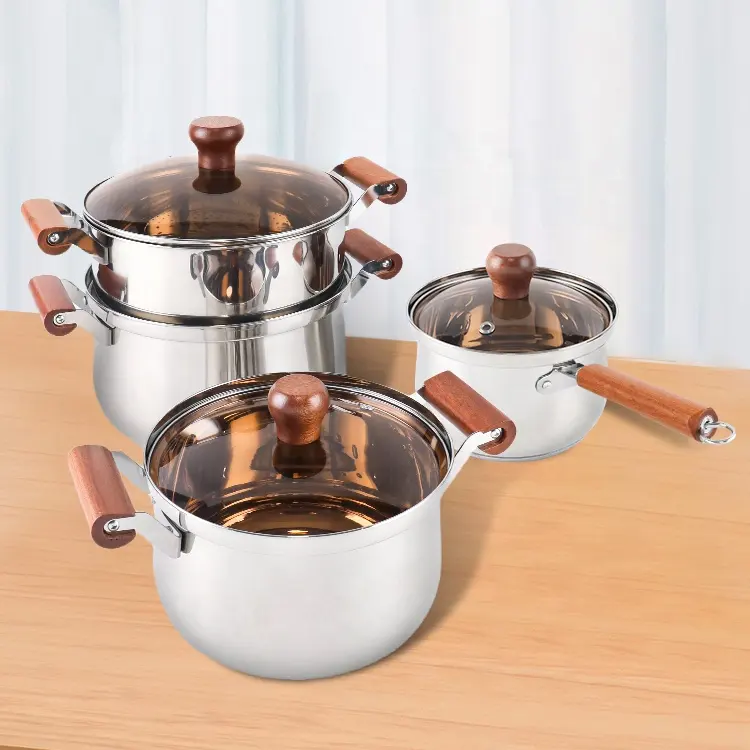
C'est pourquoi de nombreux ustensiles de cuisine, bols et articles de cuisine haut de gamme sont principalement fabriqués en acier inoxydable 304.
Pour les marques, choisir des fournisseurs qui utilisent Batterie de cuisine en acier inoxydable 304 peut contribuer efficacement à améliorer la stabilité du produit et son acceptation par les consommateurs.
L'influence de la fabrication des ustensiles de cuisine en acier inoxydable sur la durabilité des produits
Professionnel fabrication d'ustensiles de cuisine en acier inoxydable nécessite un contrôle rigoureux du choix des matériaux, des procédés de formage, du soudage et de la finition de surface.
Les matériaux ne constituent que la base ; c'est l'ensemble du processus de fabrication qui détermine véritablement la qualité d'un produit.
Professionnel fabrication d'ustensiles de cuisine comprend généralement :
Estampage de précision
L'utilisation d'équipements de pointe pour contrôler l'épaisseur et la structure du produit garantit des performances stables de celui-ci.
Procédés de soudage et d'assemblage
Les poignées, les couvercles et autres raccords structurels doivent faire l'objet d'un contrôle rigoureux afin d'éviter toute corrosion due à des défauts de soudure.
Traitement de surface
Le polissage, le brossage et d'autres traitements n'ont pas seulement une incidence sur l'aspect, mais aussi sur l'efficacité du nettoyage de la surface.
Un bon traitement de surface réduit l'adhérence des taches et améliore la durabilité du produit.
Contrôle qualité
Les fabricants bien établis réalisent généralement :
- Inspection visuelle
- Contrôle dimensionnel
- Contrôle des matériaux
- Tests de performance
Veiller à ce que chaque lot de produits réponde aux exigences des clients.
Les différentes applications des ustensiles de cuisine nécessitent des normes de matériaux différentes
Pour les cuisines professionnelles, ustensiles de cuisine professionnels en acier inoxydable exige une durabilité et une résistance à la corrosion accrues, car ces produits sont fréquemment utilisés dans des conditions de température élevée. Les différents types d'ustensiles de cuisine étant utilisés dans des environnements variés, les exigences en matière de matériaux diffèrent également.
Par exemple :
Une marmite à vapeur en acier inoxydable nécessite des matériaux aux performances stables
Les appareils à vapeur sont exposés à des températures élevées et à l'humidité pendant de longues périodes ; c'est pourquoi la stabilité des matériaux doit répondre à des exigences plus strictes.
De haute qualité cocotte vapeur en acier inoxydable nécessite généralement :
- Bonne résistance à la chaleur
- Conception structurelle stable
- Forte résistance à la corrosion
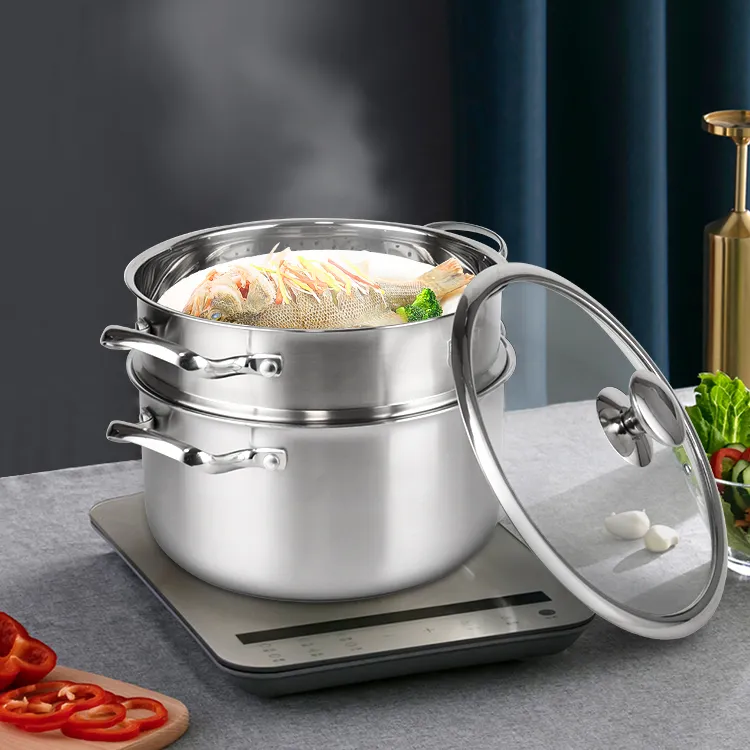
C'est pourquoi les fabricants professionnels choisissent différentes options de matériaux en fonction du contexte d'utilisation du produit, plutôt que d'appliquer la même norme à tous les produits.
Comment choisir un fabricant fiable d'ustensiles de cuisine en acier inoxydable en vue d'une collaboration à long terme ?
Lors de l'approvisionnement ustensiles de cuisine en acier inoxydable, les acheteurs devraient faire appel à un professionnel expérimenté fabricant d'ustensiles de cuisine en acier inoxydable qui maîtrise le choix des matériaux, les normes de production et le contrôle qualité.
Pour les acheteurs étrangers, les capacités du fournisseur ont une incidence directe sur la qualité du produit final.
Lorsque vous choisissez un fabricant, tenez compte des éléments suivants :
Expérience dans le secteur industriel
Les fabricants qui possèdent plusieurs années d'expérience dans la production ont généralement une meilleure maîtrise du choix des matériaux, de la conception structurelle et des exigences du marché.
Capacité complète de fabrication d'ustensiles de cuisine
Les meilleurs fournisseurs doivent disposer de capacités de production complètes, notamment :
- Conception de produits
- Développement des moisissures
- Estampage
- Soudage
- Polissage
- Emballage
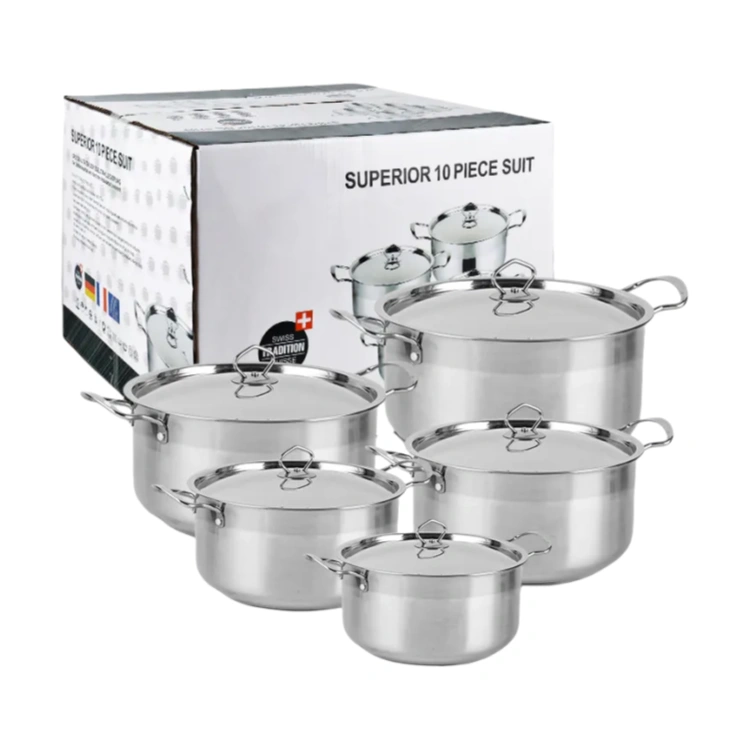
Une chaîne logistique complète améliore l'efficacité de la production et réduit les coûts de communication.
Capacités en matière de fabrication OEM et de personnalisation
Les marques modernes mettent de plus en plus l'accent sur la différenciation de leurs produits. Nombre d'entre elles optent pour des solutions de batterie de cuisine en acier inoxydable en OEM afin de créer des produits sur mesure, avec leurs propres designs, logos et exigences en matière d'emballage.
Les fabricants professionnels proposent généralement :
- Personnalisation du logo
- Conception d'emballages
- Réglage de la taille du produit
- Développement de nouveaux produits
Aider nos clients à créer leurs propres marques d'ustensiles de cuisine.
Pourquoi les ustensiles de cuisine en acier inoxydable restent-ils populaires sur les marchés mondiaux ?
Bien qu'il existe différents matériaux pour les ustensiles de cuisine, ustensiles de cuisine en acier inoxydable reste très demandé. Pour les grossistes et les détaillants, ustensiles de cuisine en acier inoxydable en gros offre une valeur à long terme grâce à sa durabilité, à ses nombreuses applications et à la forte demande du marché.
Parmi les principales raisons, on peut citer :
Longue durée de vie
Les ustensiles de cuisine en acier inoxydable de haute qualité ont une longue durée de vie, ce qui réduit la fréquence de remplacement.
Entretien facile
La surface lisse de l'acier inoxydable facilite le nettoyage quotidien.
Sûr et polyvalent
Convient pour :
- Cuisines domestiques
- Secteur de l'hôtellerie et de la restauration
- Cuisines professionnelles
- Secteur de la restauration
Convient aux marques de distributeur
Les produits en acier inoxydable offrent d'excellentes possibilités de personnalisation, ce qui les rend idéaux pour le développement OEM.
FAQ
Q1 : Pourquoi les ustensiles de cuisine en acier inoxydable rouillent-ils ?
ustensiles de cuisine en acier inoxydable La corrosion est généralement liée à la qualité des matériaux, aux procédés de fabrication et à l'environnement dans lequel l'objet est utilisé. Des matériaux de haute qualité et un entretien adéquat permettent de réduire efficacement le risque de corrosion.
Q2 : Les ustensiles de cuisine en acier inoxydable 304 sont-ils de meilleure qualité que ceux en acier inoxydable ordinaire ?
Oui. Batterie de cuisine en acier inoxydable 304 présente une meilleure résistance à la corrosion et est donc largement utilisé dans la fabrication d'ustensiles de cuisine destinés à entrer en contact avec les aliments.
Q3 : Une marmite à vapeur en acier inoxydable peut-elle rouiller ?
Oui. De la rouille peut apparaître en cas d'exposition prolongée à des environnements humides et très salins, ou si la qualité du matériau n'est pas suffisante. Il est donc essentiel de choisir un fabricant fiable.
Q4 : En quoi la fabrication des ustensiles de cuisine est-elle importante pour la qualité des produits ?
En effet, le processus de fabrication détermine les performances du produit final, notamment la manutention des matériaux, les procédés de moulage, la qualité des soudures et le traitement de surface.
Q5 : Comment les acheteurs peuvent-ils choisir des fournisseurs d'ustensiles de cuisine en acier inoxydable de haute qualité ?
Les acheteurs devraient se concentrer sur :
- Nuance de matériau
- Expérience en usine
- Capacité de production
- Contrôle de la qualité
- Capacité OEM
Plutôt que de se contenter de comparer les prix.
Conclusion
Le problème de rouille des ustensiles de cuisine en acier inoxydable n'est pas dû à un seul facteur, mais résulte de l'effet combiné des matériaux, des procédés de fabrication et des conditions d'utilisation. Pour les acheteurs, il est important de choisir un fabricant expérimenté fabricant d'ustensiles de cuisine en acier inoxydable avec une forte fabrication d'ustensiles de cuisine en acier inoxydable Ces capacités aident les marques à développer des produits fiables et à renforcer leur compétitivité à long terme sur le marché. Qu'il s'agisse d'ustensiles de cuisine courants ou d'ustensiles professionnels, stables et fiables ustensiles de cuisine en acier inoxydable nécessite un processus de fabrication professionnel pour en garantir la qualité.
À propos d'Allnice
Allnice se consacre à la recherche, au développement, à la fabrication et à l'exportation de ustensiles de cuisine en acier inoxydable ainsi que des articles de cuisine, en proposant des solutions OEM/ODM professionnelles aux marques internationales, aux grossistes et aux détaillants.
Grâce à une vaste fabrication d'ustensiles de cuisine expérience, Allnice peut fabriquer toute une gamme d'ustensiles de cuisine de grande qualité, notamment ustensiles de cuisine en acier inoxydable, Batterie de cuisine en acier inoxydable 304, casseroles à vapeur en acier inoxydable, etc., et accompagne la conception des produits, l'optimisation structurelle, le traitement de surface et la personnalisation de la marque.

En tant que professionnel Fabricant chinois d'ustensiles de cuisine en acier inoxydable, Allnice respecte systématiquement des normes rigoureuses de contrôle qualité et mise sur l'innovation continue, afin de fournir à ses clients du monde entier des produits fiables, de haute qualité et compétitifs. Si vous recherchez un partenaire fiable dans le domaine des ustensiles de cuisine en acier inoxydable, N'hésitez pas à nous contacter collaborer avec Allnice pour développer des solutions d'ustensiles de cuisine qui répondent aux attentes du marché.