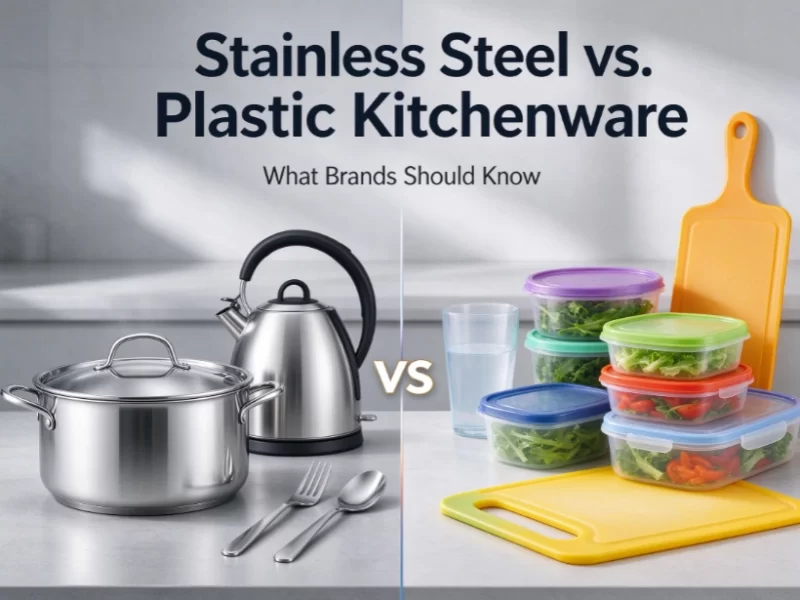
For kitchenware brands, stainless steel vs. plastic kitchenware is not simply a choice between two materials. Stainless steel is better suited to durable, premium, and professional-use products, while plastic remains practical for lightweight and cost-sensitive applications. Allnice helps importers, wholesalers, distributors, and private-label brands select, customize, and manufacture kitchenware through OEM/ODM services, mold development, logo customization, and bulk production.
Why Does Material Choice Matter for Kitchenware Brands?
Material choice directly affects a kitchenware product’s durability, price, appearance, customer experience, compliance requirements, and brand positioning. For this reason, stainless steel vs. plastic kitchenware should be evaluated as a product-development decision rather than a simple material comparison.
A brand launching a new kitchen utensil, cookware collection, food-service product, or private-label kitchenware line needs to consider the complete product lifecycle. A cheaper material at the factory gate does not automatically create the lowest total cost for the brand.
For B2B buyers, the most important questions are:
- How long will the product remain functional?
- What type of use will it receive?
- Does the material support the desired price point?
- Can the product meet food-contact and market requirements?
- Does its appearance match the brand’s positioning?
- Can the manufacturer provide consistent bulk production?
- Can the design be customized for the target market?
This is why the right comparison focuses on application, lifecycle value, and brand strategy, not simply unit price.
How Do Stainless Steel vs. Plastic Kitchenware Compare?
Stainless steel generally delivers greater durability, heat resistance, premium appearance, and end-of-life recyclability, while plastic offers lower weight, design flexibility, and lower upfront material costs.
| Facteur | ustensiles de cuisine en acier inoxydable | Plastic Kitchenware |
|---|---|---|
| Durabilité | Excellent | Depends on polymer and design |
| Heat resistance | Excellent for suitable grades and applications | Highly polymer-dependent |
| Poids | Heavier | Léger |
| Résistance à la corrosion | Excellent with appropriate grade | Generally high |
| Positionnement haut de gamme | Strong | Depends on design and finish |
| Impact resistance | Strong | Can be strong but varies by polymer |
| Nettoyage | Facile à nettoyer | Depends on surface and temperature limits |
| Recyclability | Highly established metal recycling stream | Depends heavily on polymer and local infrastructure |
| Durée de vie du produit | Typically long | Highly application-dependent |
| Commercial kitchen use | Excellent | Suitable for selected applications |
| Custom finishes | Wide range | Wide range through molding and coloring |
| Upfront material cost | Generally higher | Generally lower |
The comparison also depends on the exact material specification. “Plastic” covers many polymers with different heat resistance, mechanical performance, food-contact properties, and recycling pathways. Likewise, stainless steel includes multiple grades with different compositions and performance characteristics.
Therefore, a professional kitchenware manufacturer should recommend materials according to the intended application rather than treating either category as universally superior.
Why Is Stainless Steel a Strong Choice for Premium Kitchenware Brands?
Stainless steel supports durable product lines because it combines mechanical strength, corrosion resistance, clean appearance, and long service life with strong recycling value.
For brands competing in mid-range and premium kitchenware markets, these characteristics create several commercial advantages.
1. It supports long-term product value
Stainless steel kitchen tools, cookware, serving products, and catering equipment can withstand repeated use when the appropriate grade, thickness, forming process, and construction are selected.
That la durabilité matters for brands because product replacement can affect customer satisfaction, reviews, returns, and perceived quality.
2. It fits professional applications
Commercial kitchens require products that can tolerate frequent handling, repeated cleaning, and demanding operating conditions. Stainless steel is widely used in food-service environments because it combines durability with corrosion resistance and easy maintenance.
World Stainless states that stainless steel can be steam cleaned and sterilised and does not require additional surface treatment in commercial kitchen and food-processing applications.
3. It creates a premium visual language
Material communicates quality before customers use a product.
Brushed, polished, mirror, satin, or other stainless steel finishes can create a professional appearance that works particularly well for:
- Premium kitchenware
- Hotel supplies
- Matériel de restauration
- Catering products
- Private-label cookware
- Modern home kitchen collections
This makes stainless steel vs. plastic kitchenware a branding decision as much as a technical decision.
4. It has strong end-of-life value
Stainless steel is not only recyclable; it retains material value through established metal-recycling systems.
According to World Stainless, approximately 95% of stainless steel is recycled at the end of its life, while stainless steel itself is 100% recyclable without loss of quality.
That gives brands a strong sustainability story when supported by accurate product and sourcing information.
When Does Plastic Make More Sense for Kitchenware?

Plastic is the better choice when low weight, specific molded shapes, impact performance, or a lower initial purchase price are more important than premium metal construction.
Plastic should not automatically be treated as an inferior material. Different polymers are engineered for different applications, and food-contact plastics can be appropriate when the correct material and regulatory requirements are selected.
Plastic can make sense for:
- Lightweight kitchen tools and accessories
- Certain food-storage products
- Products requiring complex molded geometries
- Selected outdoor or event applications
- Entry-level product lines
- Products where shipping weight is a major cost factor
- Applications where controlled flexibility or impact resistance is required
The important issue is specification. Brands should identify the exact polymer, intended temperature range, food-contact requirements, additives, colorants, and applicable market regulations before placing a bulk order.
The United Nations Environment Programme has also emphasized that plastic sustainability requires a systems approach involving reduction, reuse, recycling, and product redesign rather than relying on a single material substitution.
This is an important distinction in stainless steel vs. plastic kitchenware: the correct decision depends on how the product is designed, manufactured, used, and managed at end of life.
Which Material Offers Better Value for Kitchenware Brands?
Stainless steel usually offers stronger long-term value for reusable, durable kitchenware, while plastic can offer better upfront economics for lightweight and cost-sensitive products.
B2B buyers should separate unit price de total cost of ownership.
A product with a lower factory price can become more expensive if it has a shorter service life, higher replacement frequency, weaker perceived value, or higher return rates.
Consider these factors:
| Cost Factor | Acier inoxydable | Plastique |
|---|---|---|
| Initial unit price | Usually higher | Usually lower |
| Durée de vie du produit | Long for suitable applications | Varies significantly |
| Fréquence de remplacement | Generally lower | Application-dependent |
| Shipping weight | Plus élevé | Plus bas |
| Premium retail price potential | Strong | Product-dependent |
| Maintenance | Faible | Application-dependent |
| End-of-life material value | Haut | Polymer-dependent |
| Brand positioning | Premium/professional | Broad market |
For example, a restaurant-supply brand selling repeatedly used serving tools should prioritize durability and cleaning performance. A retailer selling lightweight, low-cost accessories may prioritize material efficiency and shipping economics.
The right approach to stainless steel vs. plastic kitchenware is therefore to calculate the value delivered by each material over the product’s expected commercial life.
How Does Sustainability Affect the Stainless Steel vs. Plastic Kitchenware Decision?
Stainless steel provides a strong sustainability advantage for long-life reusable products because it is highly durable and extensively recyclable, while plastic sustainability depends strongly on product design, reuse, polymer selection, and local recycling infrastructure.
According to worldsteel, steel is a permanent material that can be recycled repeatedly without losing its inherent properties. Its global steel recovery rate is estimated at about 85%, although rates vary by product category and market.
For stainless steel specifically, World Stainless reports that at least 95% of stainless steels are recycled at end of life.
Plastic presents a more complicated sustainability picture. UNEP reported that only about 9% of plastics produced are mechanically recycled, while its recommended solutions emphasize reducing unnecessary plastic use and expanding reuse and recycling systems.
However, brands should avoid making unsupported claims such as “all plastic is harmful” or “all stainless steel products have a lower carbon footprint.” Environmental performance depends on manufacturing, transportation, product lifespan, reuse frequency, recycled content, and end-of-life management.
A useful brand-level insight
The most useful sustainability question is not:
“Which material is greener?”
It is:
“Which material allows this product to perform effectively for the longest practical service life within a realistic recycling or reuse system?”
This lifecycle-based question is a more defensible approach for brands developing sustainable kitchenware.
What Should Brands Consider Before Choosing a Material?
Brands should evaluate application, target price, expected service life, food-contact requirements, design, logistics, sustainability goals, and manufacturing capabilities before selecting stainless steel or plastic.
A practical sourcing process can follow these steps:
- Define the application
Identify whether the product is intended for home kitchens, hotels, restaurants, catering, outdoor use, retail, or another environment. - Define the target customer
A premium cookware brand and a discount retailer do not have the same material priorities. - Set the target price
Establish the expected factory cost, wholesale price, and retail positioning before finalizing material specifications. - Select the required performance level
Consider heat resistance, corrosion resistance, impact strength, cleaning frequency, weight, and expected lifespan. - Confirm food-contact requirements
Identify the destination market and determine the applicable material and product compliance documentation. - Evaluate the complete product design
Material thickness, handle construction, joints, edges, surface finish, molding, forming, and packaging can all influence performance. - Check OEM/ODM capabilities
Confirm whether the manufacturer can develop molds, modify existing designs, apply branding, and maintain consistent specifications during mass production. - Compare total sourcing cost
Evaluate unit cost together with tooling, packaging, shipping, replacement, quality control, and expected product lifespan. - Test samples before bulk production
Sample evaluation should cover dimensions, appearance, functionality, finish, construction, and applicable compliance requirements.
This process makes stainless steel vs. plastic kitchenware a measurable sourcing decision instead of a subjective preference.
Why Is OEM/ODM Capability Important for Material Selection?
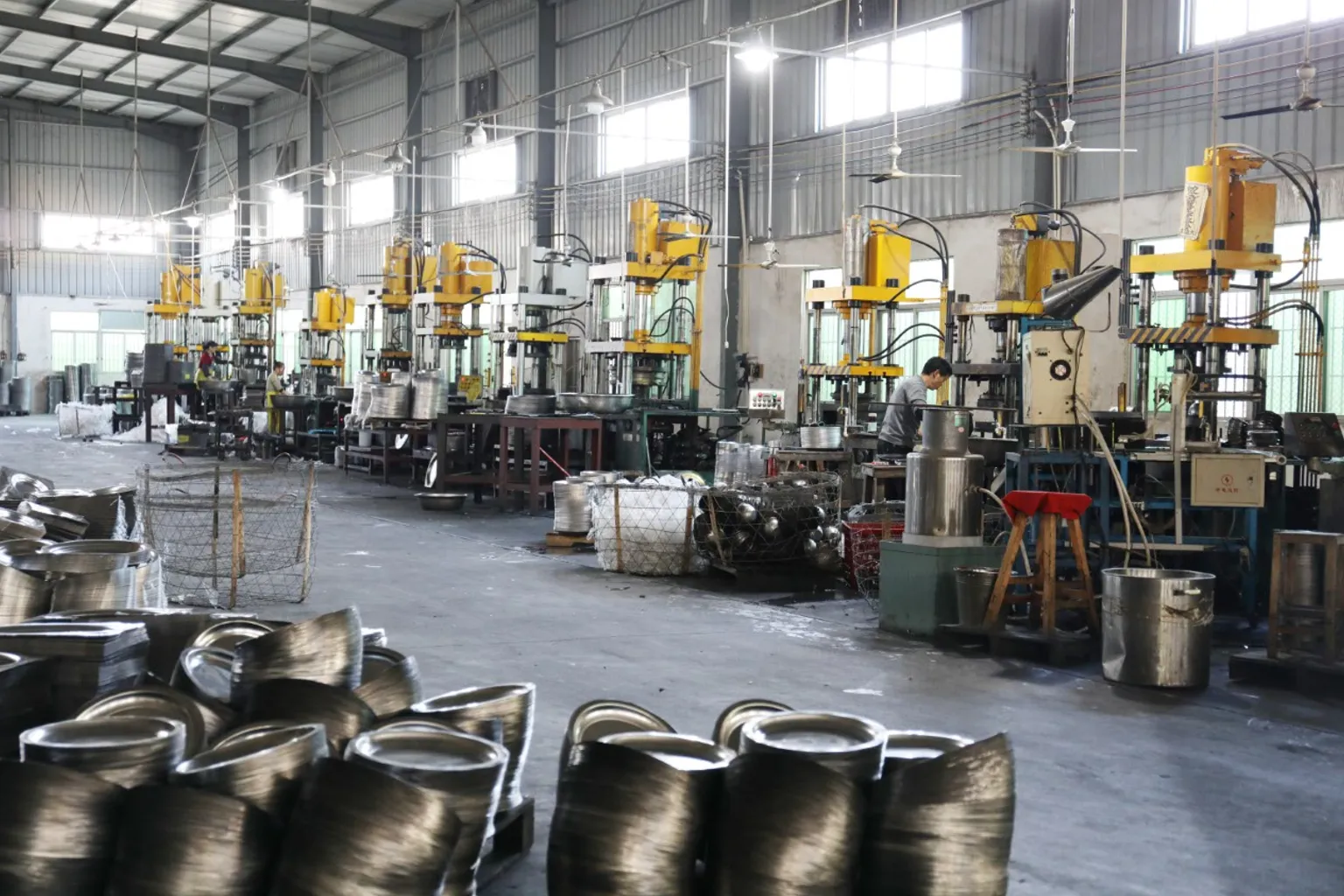
OEM/ODM capability allows brands to optimize material, structure, appearance, and manufacturing specifications around a specific market instead of selecting an off-the-shelf product.
For example, a brand may want:
- A specific stainless steel grade
- Custom thickness
- Brushed or polished finishing
- Poignées sur mesure
- New product dimensions
- Embossed or laser-marked branding
- Emballage sur mesure
- Private-label logos
- Customized product sets
- New molds for proprietary designs
These requirements directly affect material selection and manufacturing cost.
A fabricant compétent can evaluate the design before mass production and identify opportunities to balance performance, production efficiency, material usage, and target cost.
This is particularly important for brands comparing stainless steel vs. plastic kitchenware because the final product is determined by more than raw material. Manufacturing process, tooling, structure, surface treatment, and quality control can significantly change the commercial result.
Which Kitchenware Applications Are Better Suited to Stainless Steel?
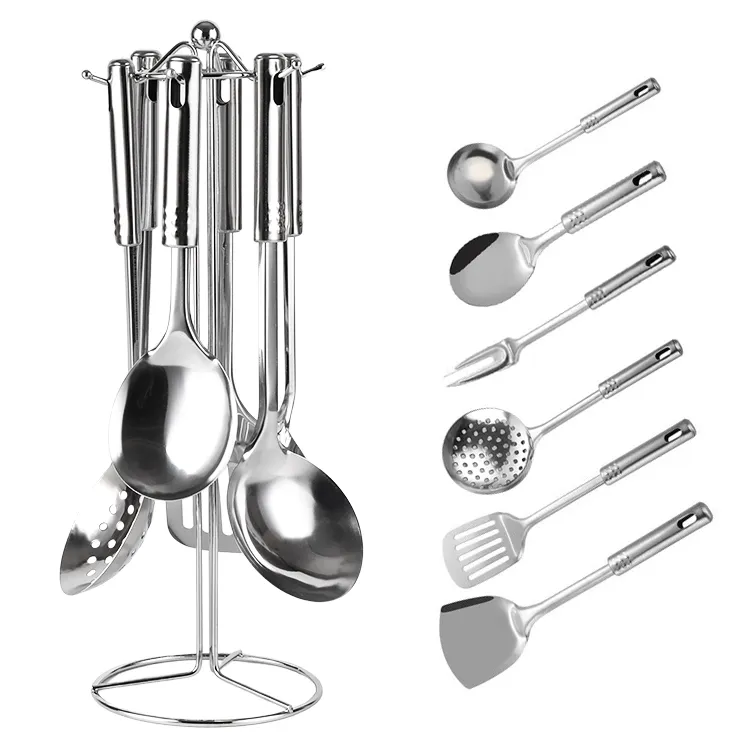
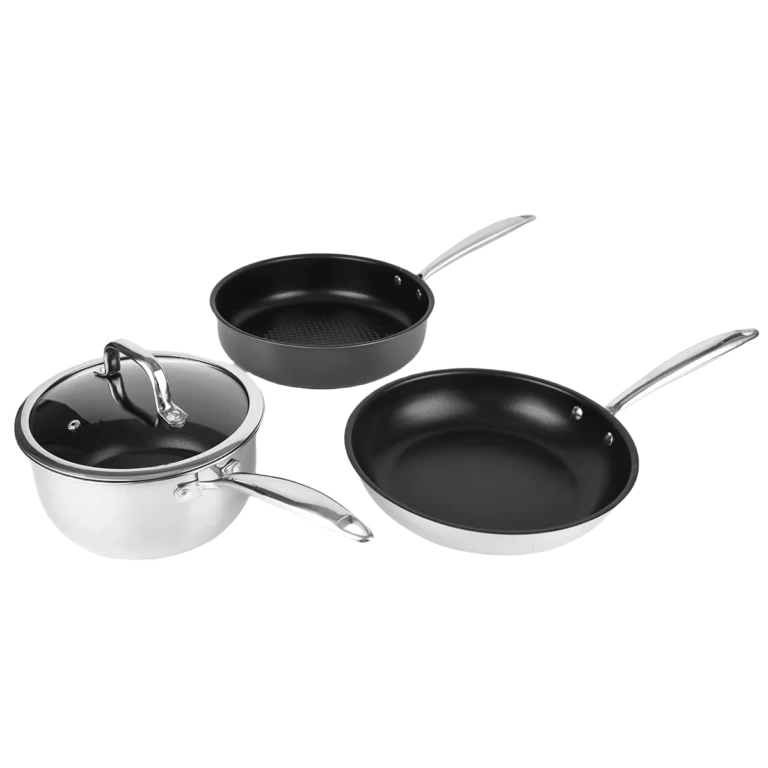
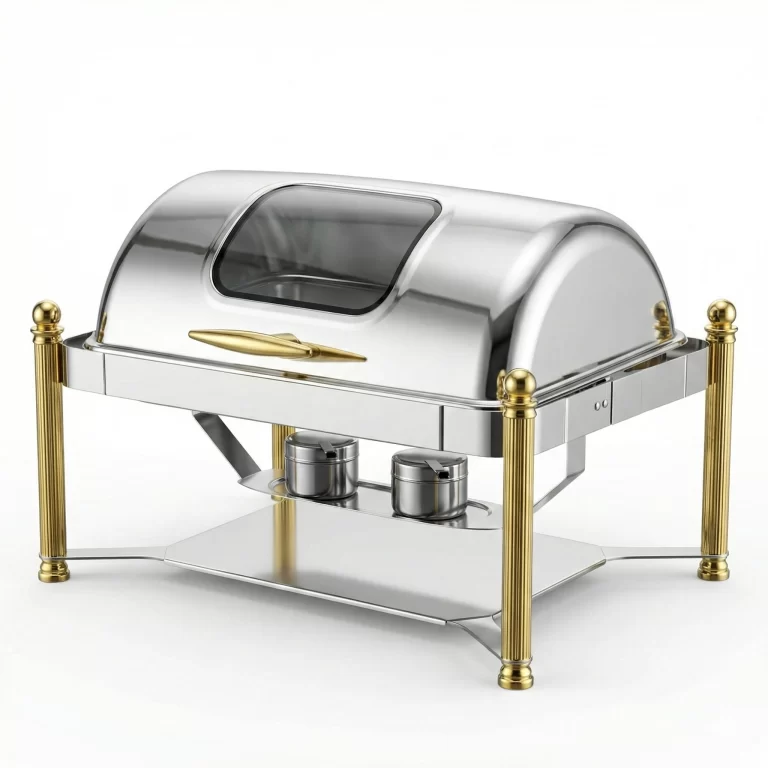
Stainless steel is particularly well suited to cookware, kitchen tools, tableware, serving products, catering equipment, and other reusable products that require durability and professional performance.
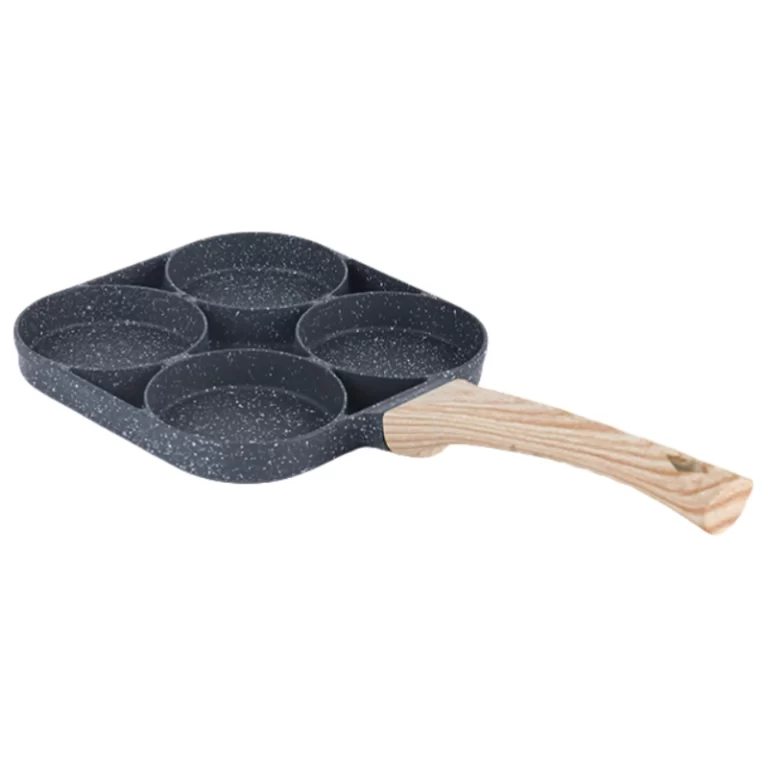
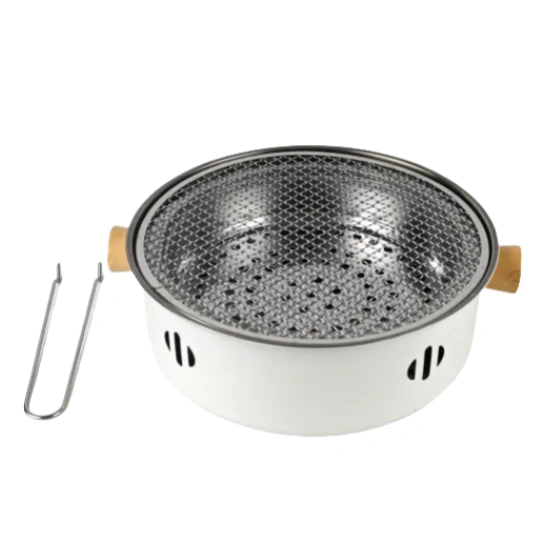

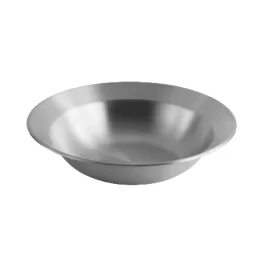
Typical applications include:
| Application | Recommended Direction |
|---|---|
| Commercial kitchen equipment | Acier inoxydable |
| Restaurant serving equipment | Acier inoxydable |
| Hotel tableware | Acier inoxydable |
| Premium kitchen tools | Acier inoxydable |
| Durable cookware | Acier inoxydable |
| Buffet and catering equipment | Acier inoxydable |
| Lightweight storage accessories | Plastic can be suitable |
| Low-cost molded accessories | Plastic can be suitable |
| Products requiring complex flexible structures | Plastic can be suitable |
For brands building a coherent product portfolio, a hybrid strategy can also work. Not every SKU needs to use the same material.
A brand could use stainless steel for high-value, high-use products while selecting suitable plastics for lightweight accessories. The goal is to create the right material-product combination rather than force one material across the entire catalog.
What Should Brands Ask a Stainless Steel Kitchenware Manufacturer?
Brands should verify material specifications, manufacturing capabilities, customization options, quality control, compliance documentation, MOQ, lead time, and bulk-production capacity before selecting a supplier.
Before placing an order, ask the manufacturer:
- What stainless steel grades are available?
- What thicknesses and dimensions can you produce?
- Which surface finishes can you provide?
- Can you develop custom molds?
- Can you customize logos and packaging?
- Can you provide OEM and ODM services?
- What quality-control procedures are used?
- What documentation can you provide for the destination market?
- What is the MOQ for customized products?
- Can you maintain consistent quality during long-term bulk production?
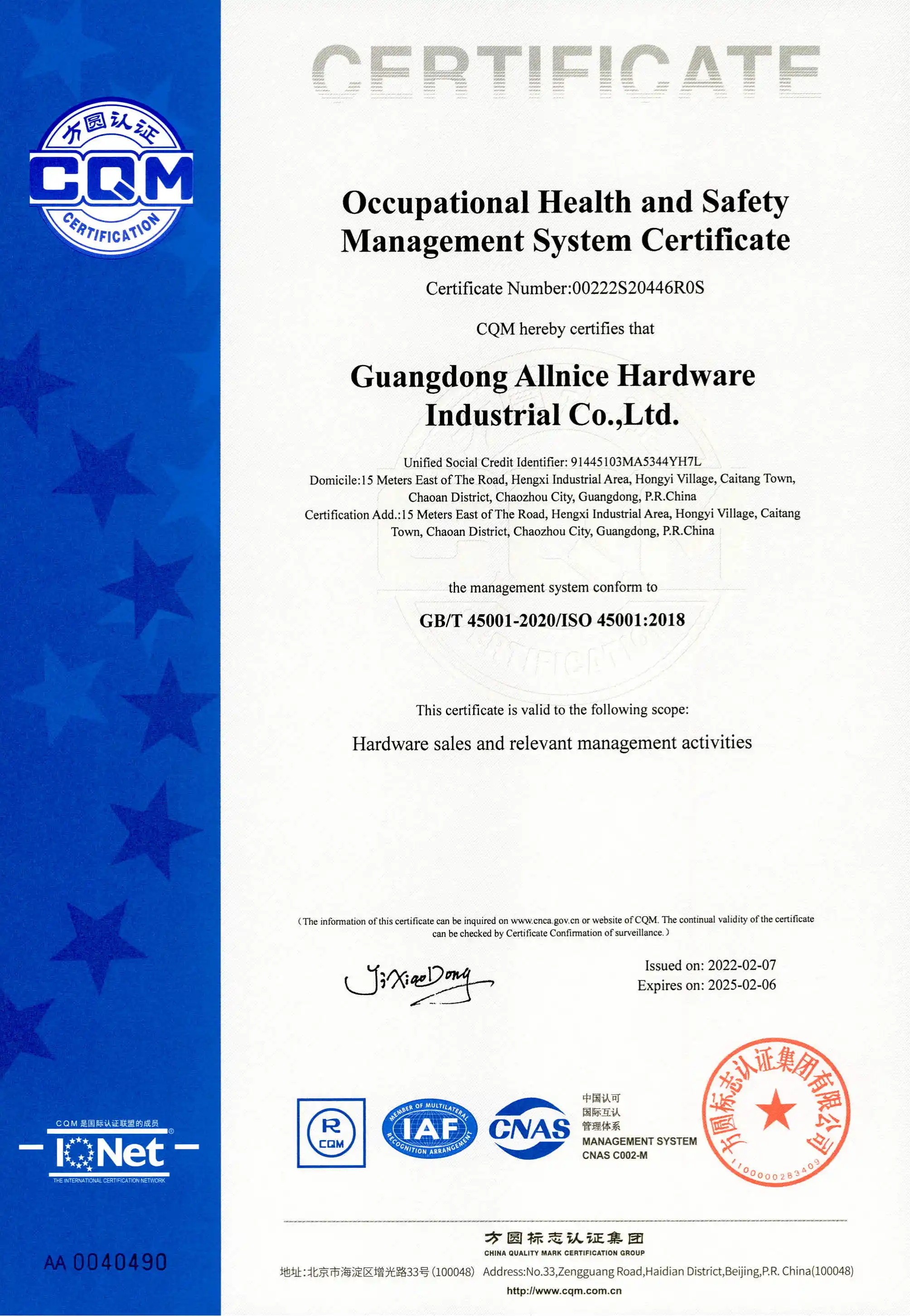
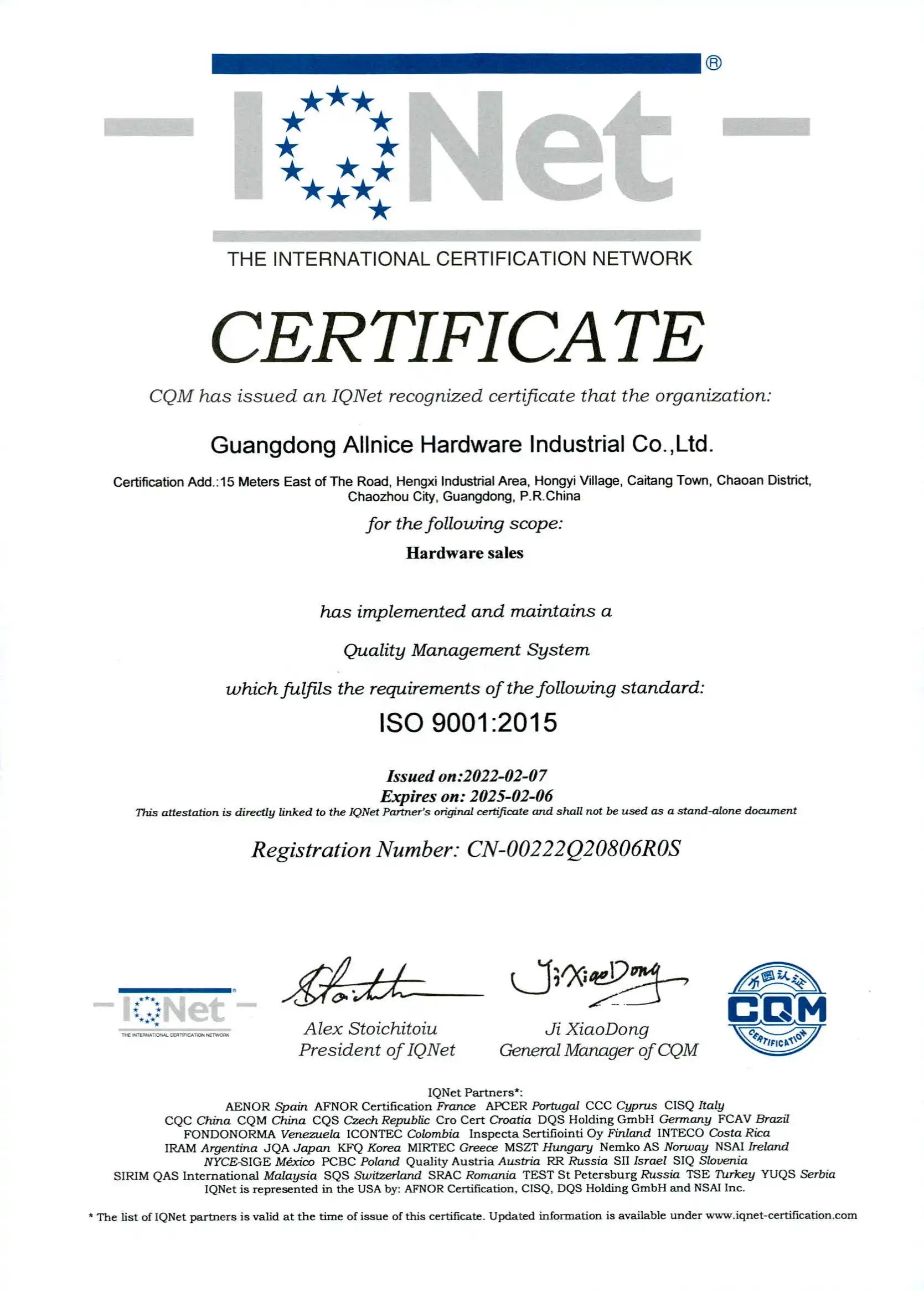
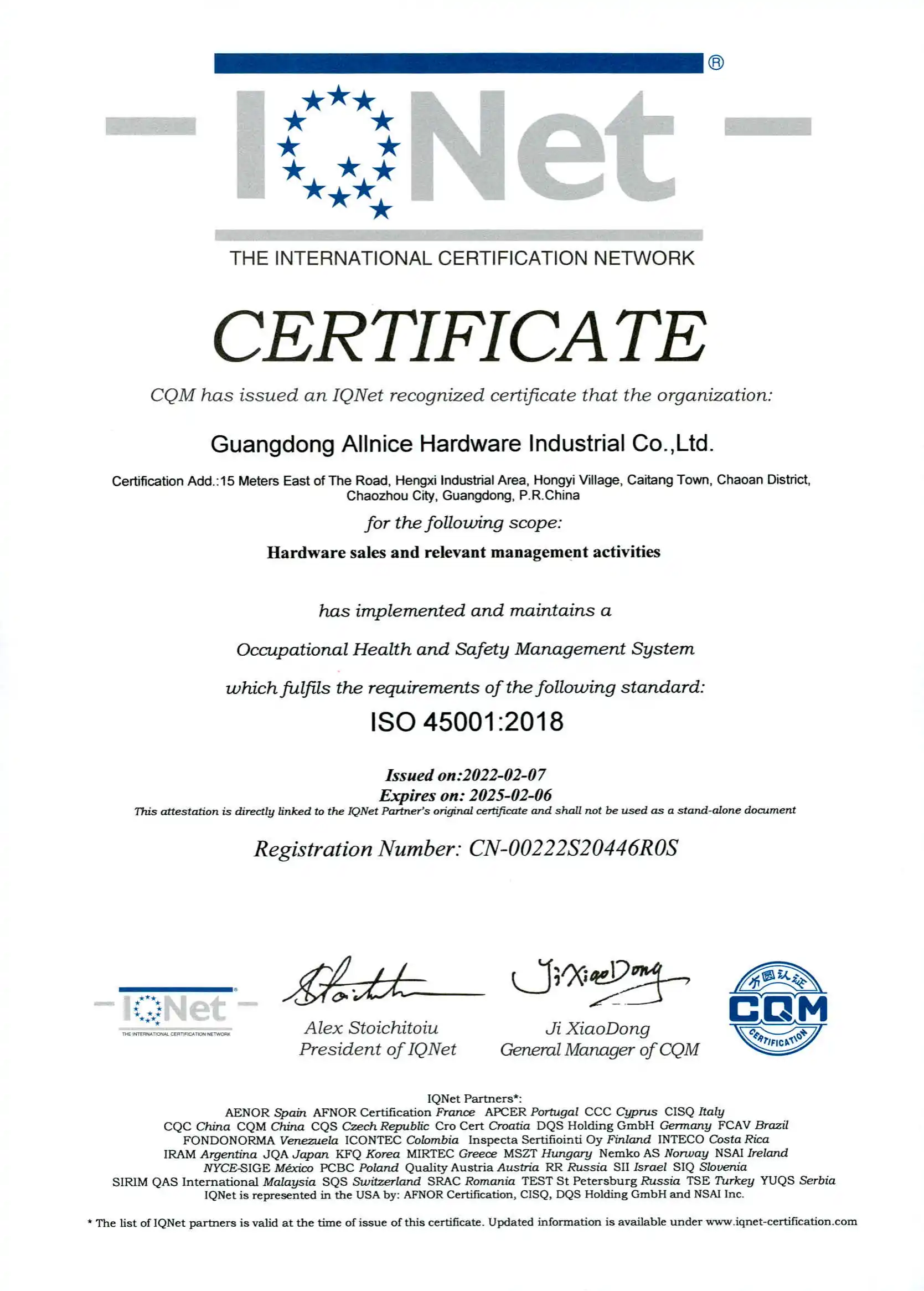

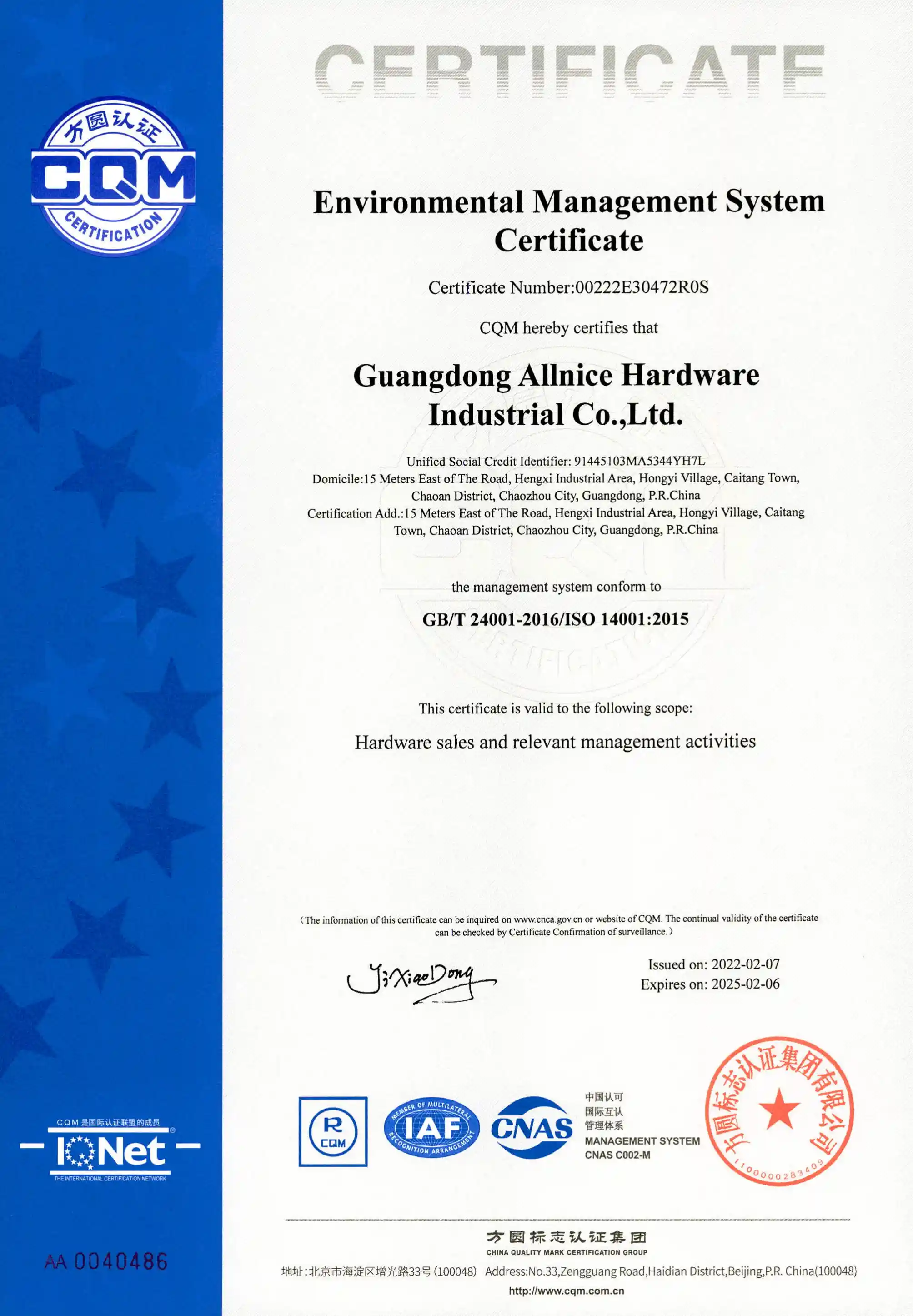
The answers help buyers distinguish between a simple trading supplier and a manufacturer capable of supporting long-term product development.
What Is the Best Material Strategy for a Kitchenware Brand?
The best material strategy is to match stainless steel or plastic to the product’s actual application, target customer, price positioning, performance requirements, and lifecycle objectives.
For brands seeking durable, reusable, premium, and professional kitchenware, stainless steel is the stronger strategic choice in many applications. Plastic remains valuable where lightweight construction, molded complexity, flexibility, or lower upfront cost is essential.
The key lesson from stainless steel vs. plastic kitchenware is that material selection should begin with the product strategy and end with verified manufacturing specifications.
Brands should also avoid evaluating sustainability, safety, or cost using one metric. A successful product needs the right material, construction, manufacturing process, quality standard, and end-of-life pathway.
FAQ
Q1. Is stainless steel better than plastic for kitchenware?
Stainless steel is generally better for durable, reusable, premium, and professional kitchenware because of its strength, corrosion resistance, heat performance, and recyclability. Plastic remains useful for lightweight and cost-sensitive applications.
Q2. Is stainless steel kitchenware more expensive than plastic?
Stainless steel usually has a higher initial material and manufacturing cost than plastic. However, brands should compare total cost of ownership, including product lifespan, replacement frequency, shipping, perceived value, and return rates.
Q3. Is stainless steel more sustainable than plastic?
Stainless steel has a strong sustainability profile because it is durable and highly recyclable. World Stainless reports that at least 95% of stainless steel is recycled at end of life. Plastic sustainability depends on polymer type, product lifespan, reuse, recycled content, and local recycling infrastructure.
Q4. Why do restaurants prefer stainless steel kitchenware?
Restaurants and commercial kitchens need products that withstand frequent use, cleaning, and demanding working environments. Stainless steel offers durability, corrosion resistance, cleanability, and a professional appearance, making it suitable for many food-service applications.
Q5. Can brands combine stainless steel and plastic in one kitchenware product?
Yes. Combining materials can optimize performance, ergonomics, weight, insulation, cost, or design. For example, a product can use stainless steel for the functional body and a suitable polymer for a handle or grip.
Q6. What should I check when sourcing stainless steel kitchenware?
Check the stainless steel grade, thickness, dimensions, surface finish, construction, food-contact requirements, quality-control procedures, customization capability, MOQ, lead time, packaging, and the manufacturer’s ability to maintain consistent quality in bulk production.
Q7. Can a manufacturer customize stainless steel kitchenware for private-label brands?
Yes. A capable OEM/ODM manufacturer can support product design, mold development, structural modifications, logo customization, packaging, sampling, and mass production. Brands should confirm the manufacturer’s actual capabilities before approving a customized project.
Conclusion
Stainless steel vs. plastic kitchenware is ultimately a business decision, not simply a material debate. Stainless steel is the stronger choice for many durable, reusable, premium, hotel, restaurant, catering, and professional kitchenware applications, while plastic remains effective for lightweight, molded, flexible, and cost-sensitive products.
Allnice is a trusted kitchenware manufacturer specializing in the production and wholesale supply of stainless steel kitchenware, tableware, and catering equipment for global importers, wholesalers, distributors, and brands. With OEM/ODM capabilities covering product design, mold development, logo customization, and bulk production, Allnice provides a one-stop solution supported by strong manufacturing capacity, strict quality control, and competitive pricing. If you are developing a new kitchenware collection or looking for a reliable long-term supplier, contact Allnice to discuss your product requirements and request a quote.
-

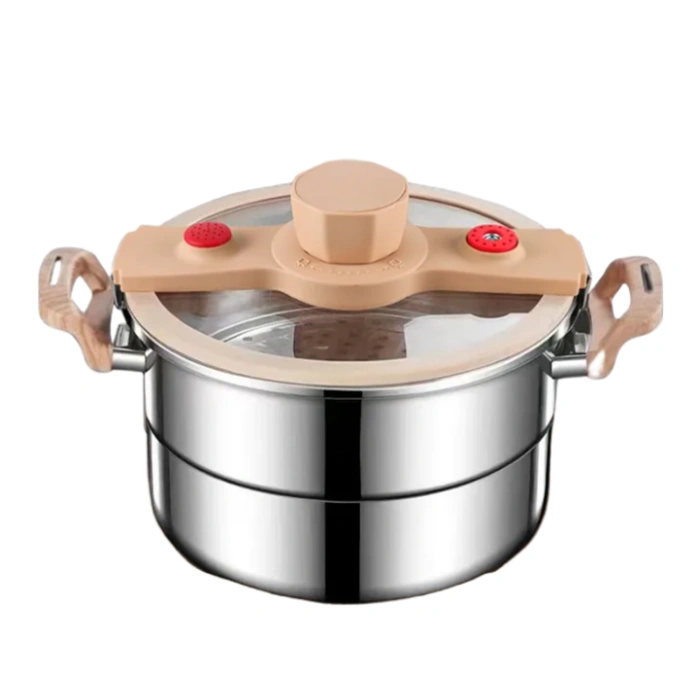
Grossiste Micro Autocuiseur avec Poignée en Bois Acier Inoxydable 304
-

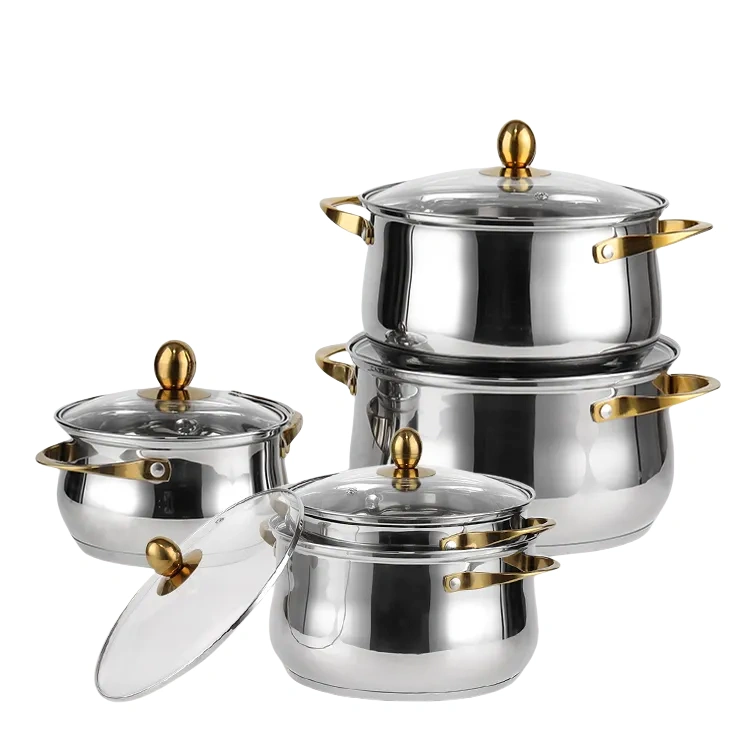
Marmite en acier inoxydable personnalisée 201 ustensiles de cuisine multi-tailles avec couvercle en verre
-
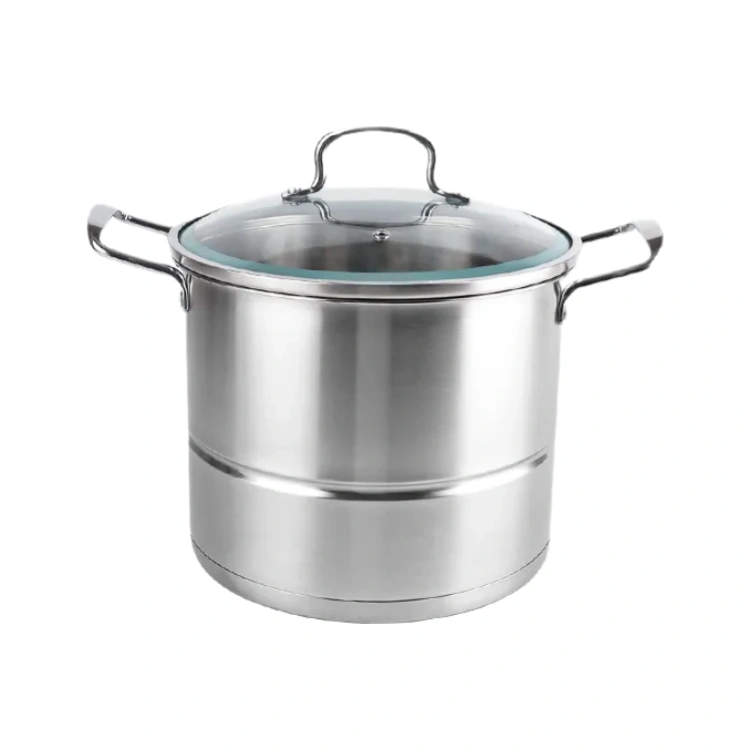
Wholesale Stainless Steel Cooking Soup Pot with Glass Lid (Pot à soupe en acier inoxydable avec couvercle en verre)
-
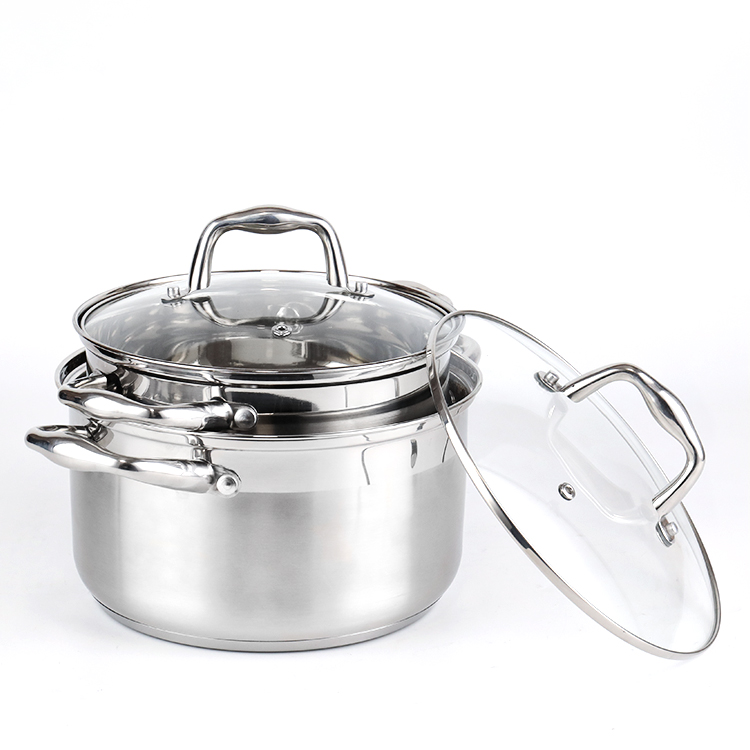
Marmite en acier inoxydable avec fond en forme de capsule pour la cuisine