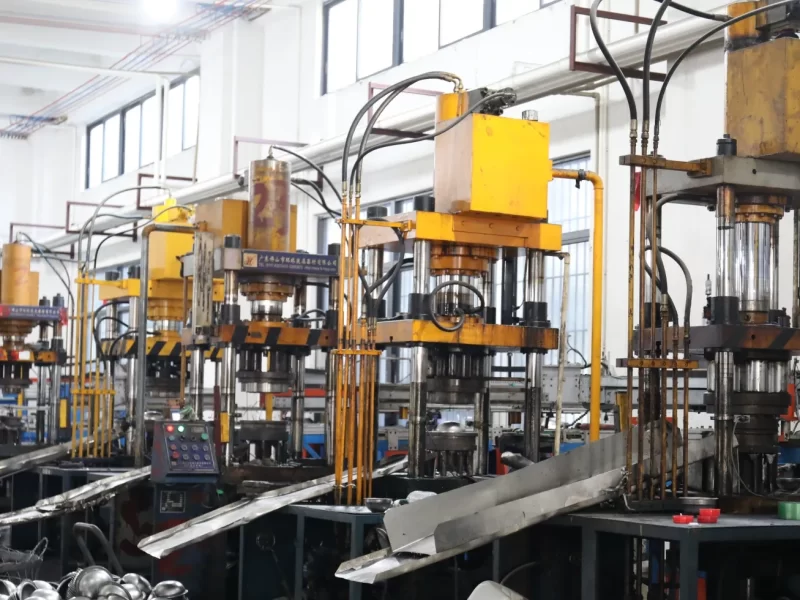
Choisir le bon fabricant de réchauds Il s'agit d'une décision d'achat qui a une incidence sur le respect des normes de sécurité alimentaire, la continuité des opérations, l'expérience utilisateur et le coût total de possession.
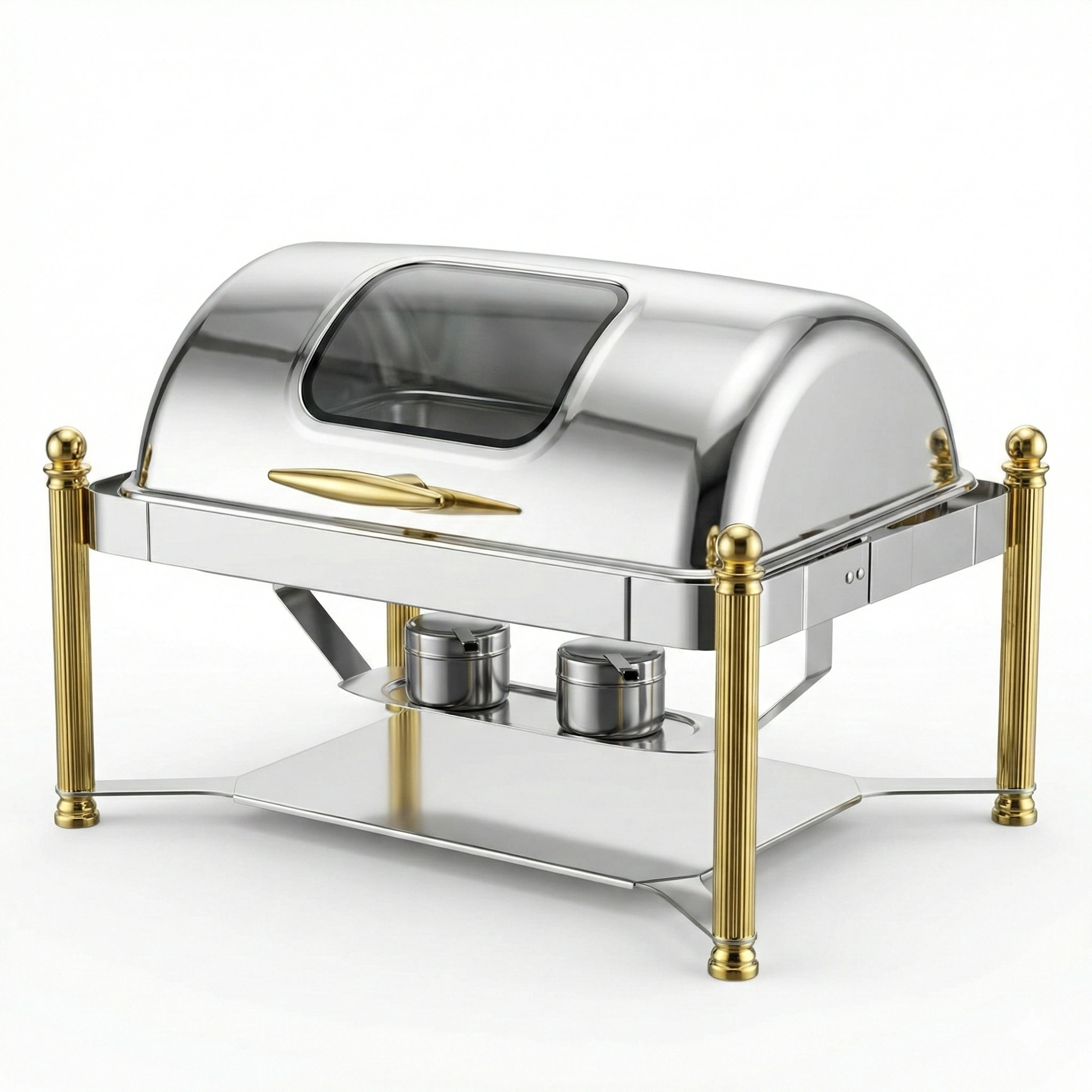
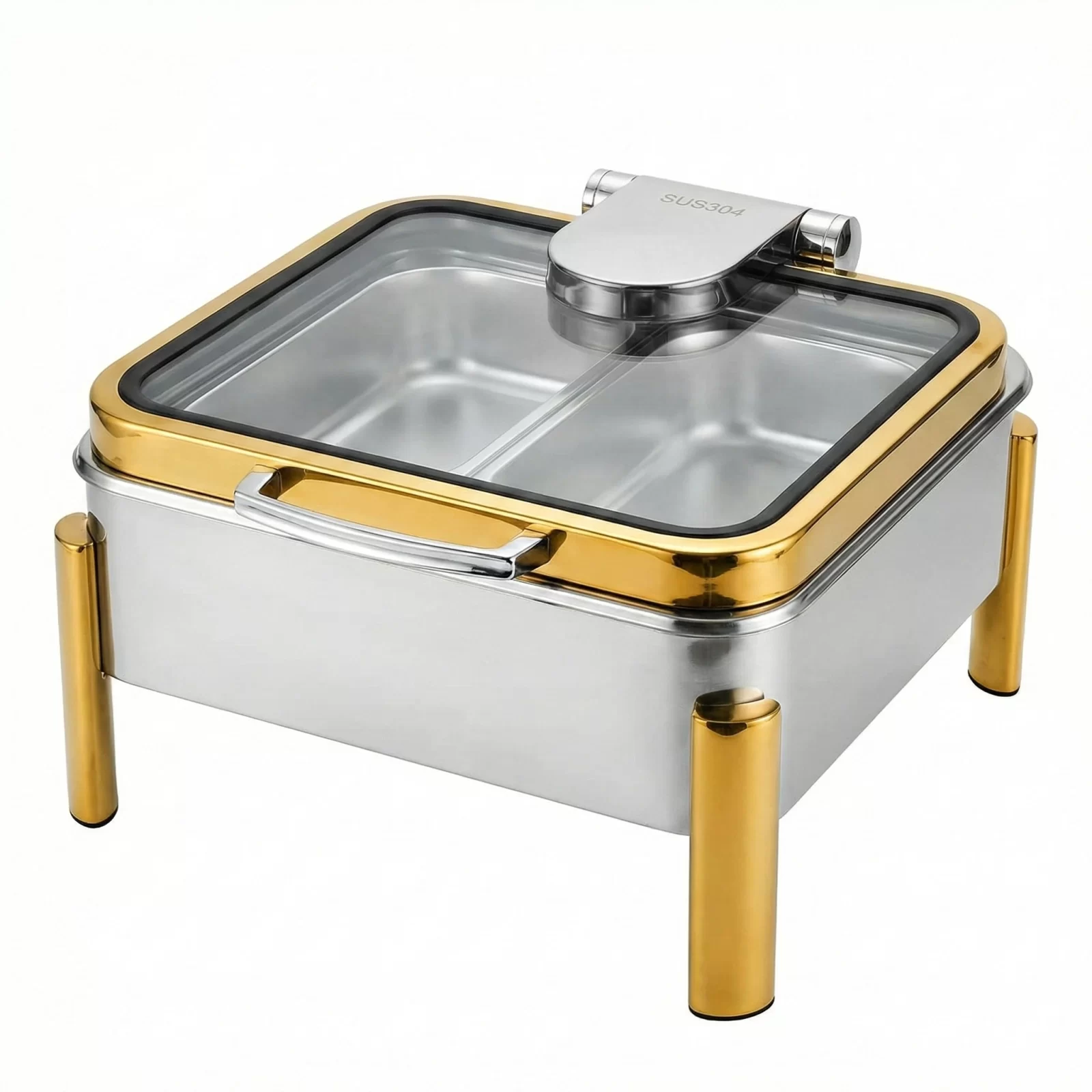
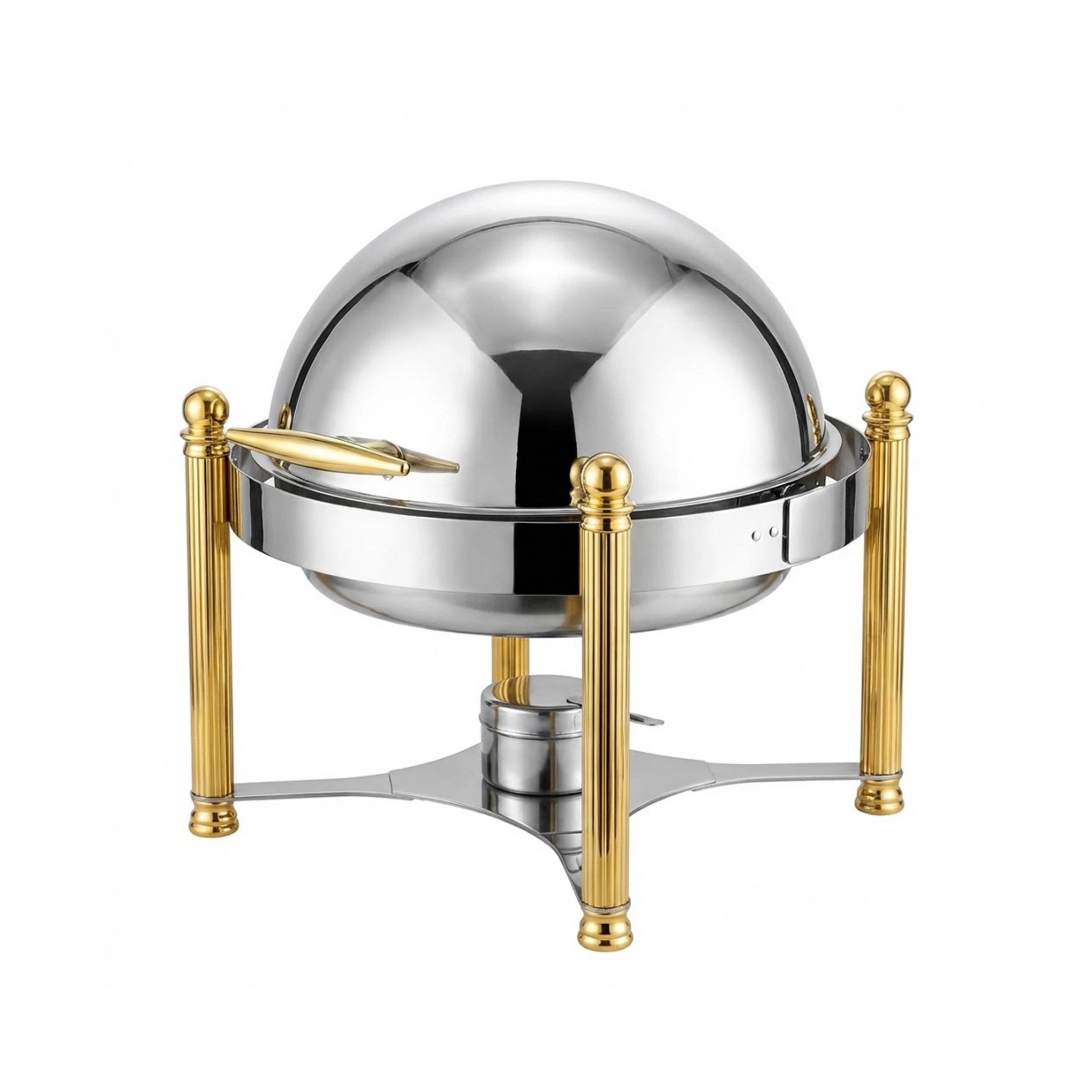
Allnice a compris les difficultés auxquelles sont confrontés les acheteurs de réchauds. En tant que fabricant de réchauds, nous vous proposons un guide pratique destiné aux professionnels des achats : ce qui peut mal tourner, ce que vous devez vérifier et comment transformer une relation avec un fournisseur en un flux d'approvisionnement prévisible.
Pourquoi le choix du fabricant de réchauds est-il important ?
Les réchauds sont indispensables dans le cadre d'un service de buffet. Un fournisseur de réchauds en acier inoxydable de mauvaise qualité entraîne généralement :
- corrosion prématurée ou piqûres (mauvaise nuance d'acier inoxydable)
- cadres instables ou couvercles qui fuient (interruptions de service)
- matériaux non conformes ou rapports d'essai manquants (retards douaniers)
- lots non homogènes (pièces non interchangeables d'une commande à l'autre)
Il en résulte des temps d'arrêt, des réclamations de clients et des frais de garantie inévitables. Partez du principe que Tous les fournisseurs qui indiquent “ 304 ” ne se valent pas.— c'est à toi de le prouver.
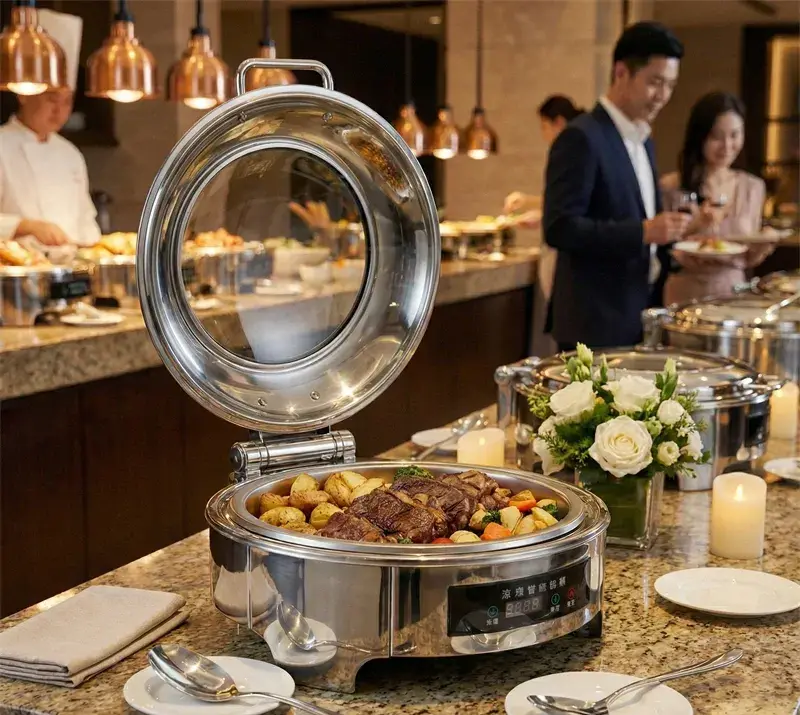
Problèmes courants rencontrés par les acheteurs de réchauds et leurs conséquences
- Déclaration inexacte de nature importante — 304 contre 201 : les substituts bon marché se corrodent plus rapidement.
- Approvisionnement basé uniquement sur le prix — Les offres les moins chères sont souvent synonymes d'épaisseurs de tôle réduites, de soudures de mauvaise qualité et de fixations peu résistantes.
- Les angles morts en matière de conformité — L'absence de certificats LFGB/FDA/NSF/CE empêche l'accès au marché.
- Configuration incorrecte — Les modèles électriques et à carburant ne sont pas interchangeables dans tous les lieux.
- Défaillances structurelles — Une mauvaise étanchéité des couvercles et des structures instables nuisent au maintien de la température.
- Volatilité de l'offre — les usines dont la capacité est limitée ne respectent pas les délais de livraison.
- Pas de plan de pièces de rechange — Une seule charnière ou vanne défectueuse peut rendre un appareil hors service.
Considérez-les comme des risques liés à l'approvisionnement qu'il faut éliminer, et non comme des inconvénients liés aux produits qu'il faut tolérer.
Qu'est-ce qui caractérise un fabricant fiable de réchauds ?
Un fournisseur fiable doit posséder quatre compétences clés :
- Capacités de production : estampage, emboutissage, soudage, polissage et assemblage en interne.
- Contrôle des matériaux : bobines traçables, certificats d'origine du laminoir et contrôle à la réception des nuances d'acier inoxydable.
- Système qualité : points de contrôle IQC/IPQC/FQC et seuils AQL documentés.
- Conformité réglementaire : Le fournisseur est en mesure de fournir des certificats de conformité aux normes LFGB, FDA, NSF et au marquage CE (marquage CE) lorsque cela est requis.
Si l'un de ces éléments fait défaut, le fournisseur représente un risque, et non un partenaire.
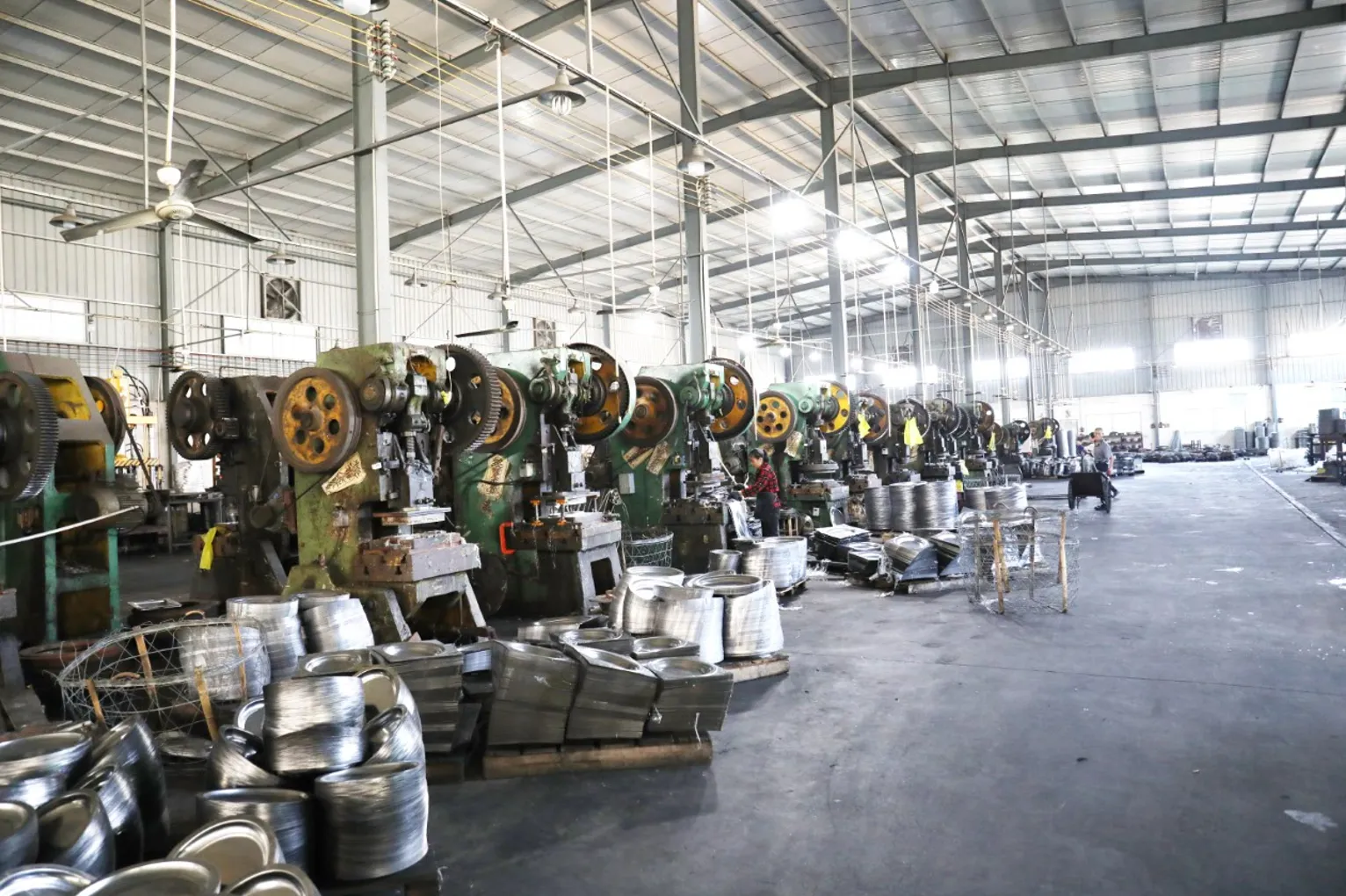
Liste de contrôle pour la vérification des capacités de production d'un fabricant de réchauds
Avant de passer une commande, vérifiez les éléments suivants sur place ou par visioconférence, en vous appuyant sur des documents justificatifs :
- Photos et vidéos de presses, de lignes de polissage et de cellules de soudage.
- Preuve de la propriété des outils (à qui appartiennent les matrices/moules après la production ?).
- Système de stockage de bobines et d'étiquetage des matériaux entrants.
- Capacité mensuelle et plan de charge en haute saison.
- La capacité de l'équipe d'ingénieurs à réaliser des plans en 2D/3D et des nomenclatures.
- Expérience en matière d'exportation et exemples de documents d'exportation.
Utilisez une fiche d'évaluation. Ne retenez que les fournisseurs qui satisfont aux critères minimaux en matière de compétences, de capacités et de documentation.
Règles relatives à l'évaluation des échantillons et aux projets pilotes
Considérez le premier échantillon physique comme un outil de test, et non comme un argument de vente. Effectuez les tests suivants :
- Vérification du matériel : spectromètre ou XRF pour vérifier la composition 304/316.
- Vérification des dimensions et du poids : tolérances de ±0,51 TP3T comme référence.
- Essais de soudure et de résistance au cisaillement : contrôles du couple et de la traction.
- Planéité de la base et répartition de la chaleur : Cartographie IR ou essais de bouillonnement.
- Tests fonctionnels : l'étanchéité du couvercle, la durée de vie des charnières et la stabilité du brûleur ou de la résistance électrique.
- Test d'emballage : Chute d'un mètre et compression du carton.
Si l'échantillon est conforme, exiger un lot pilote (300 à 500 pièces) et une inspection du premier article (FAI) avant la production en série.
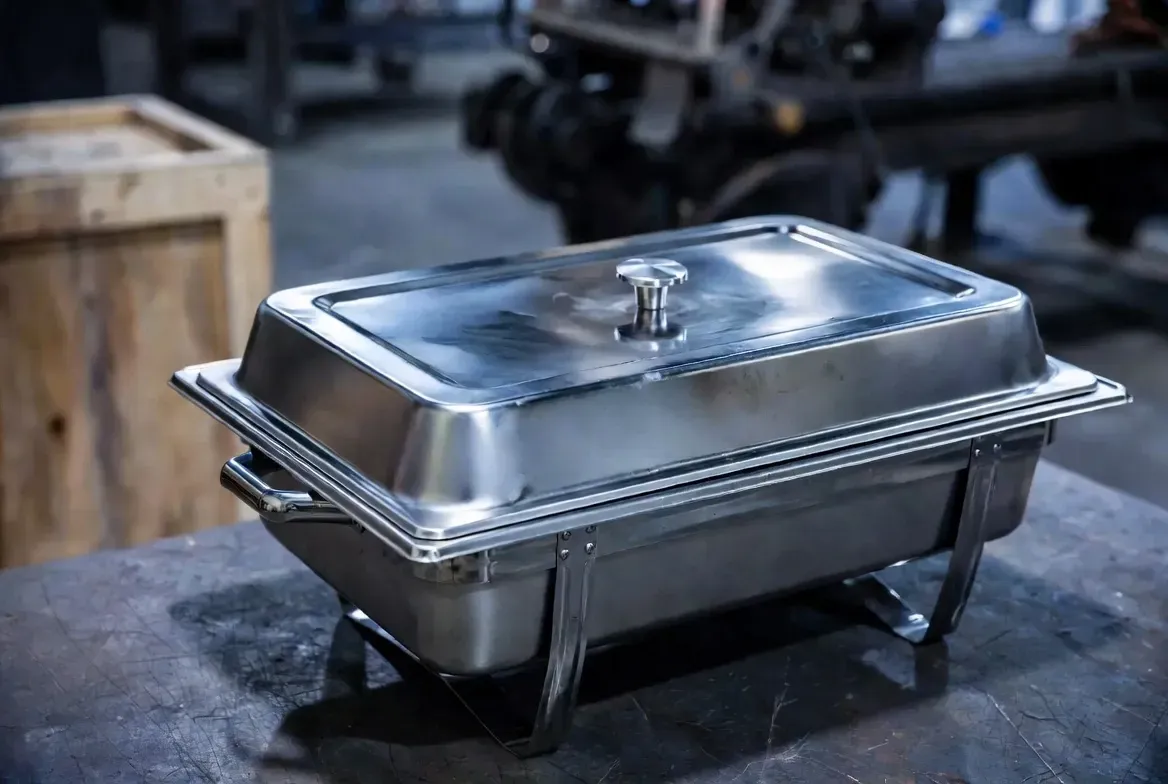
Contrats et contrôles de production garantissant la qualité
Transformer les exigences techniques en étapes contractuelles :
- Annexe technique comprenant la nomenclature et le tableau des tolérances.
- Clause relative à l'échantillon de référence : l'usine doit archiver et reproduire l'unité de référence dans les limites des tolérances convenues.
- Conditions relatives à la propriété des outillages et à leur amortissement.
- Vérification des matériaux comme critère de mise en circulation (certificat d'analyse + résultats du spectromètre).
- Points de contrôle en cours de production (de 20 à 30%).
- Clause relative à la fourniture de pièces de rechange et délais de livraison.
- Formule d'indexation des prix liée à l'indice de l'acier, et non à des hausses ponctuelles.
- Mesures correctives et conditions de refus pour les lots non conformes.
Un contrat signé constitue votre moyen de pression pour garantir la reproductibilité.
Logistique, emballage et service après-vente
Les acheteurs opérationnels doivent définir les détails logistiques dès le début :
- Délais de livraison confirmés et plages de capacité saisonnières.
- Recommandations concernant le transport en conteneurs complets (FCL) et en groupage (LCL), et spécifications de palettisation.
- Protection antirouille et contrôle de l'humidité (VCI, dessiccants).
- Kit de pièces de rechange fourni avec la première livraison (charnières, joints, soupapes).
- Inspection avant expédition accompagnée d'une preuve photographique ; le dédouanement définitif n'aura lieu qu'après validation de l'inspection avant expédition.
Ces mesures permettent d'éviter les mauvaises surprises à destination et de réduire les délais de mise en rayon.
Relation avec les fabricants de réchauds : du fournisseur au partenaire
Les acheteurs à long terme y gagnent plus que le simple prix :
- Cofinancer l'outillage afin de réduire le coût unitaire à mesure que les volumes augmentent.
- Tableaux de bord communs des indicateurs clés de performance (taux de défauts, OTIF, communication).
- Évaluations trimestrielles des performances et mesures correctives conjointes.
- Réservation de capacités pour les périodes de forte affluence en échange d'engagements en matière de prévisions.
Faites plaisir à votre fabricant de réchauds comme un atout stratégique : investir dans cette relation et garantir la continuité de l'approvisionnement.

Liste de contrôle rapide pour les équipes chargées des achats
- Préparez un appel d'offres accompagné d'un cahier des charges complet en annexe (matériaux, épaisseurs, essais).
- Vérifier les capacités de fabrication en interne et la propriété des outillages.
- Exiger un certificat d'analyse (CoA) et une vérification par spectromètre.
- Valider l'échantillon → réaliser un essai pilote → accepter la FAI avant la production en série.
- Prévoir dans le contrat les clauses relatives aux pièces de rechange et au PSI.
- Prévoir un fournisseur de secours pour les références essentielles.
Conclusion
Choisir un prestataire fiable fabricant de réchauds C'est de l'ingénierie, pas une mise en scène d'approvisionnement. Éliminez toute ambiguïté grâce à des spécifications précises, exigez des preuves matérielles, validez la reproductibilité par des séries pilotes et garantissez les performances à l'aide de jalons contractuels. En procédant ainsi, vous réduirez les retours, protégerez votre activité et transformerez un achat risqué en un processus d'approvisionnement prévisible et reproductible.
À propos d'Allnice
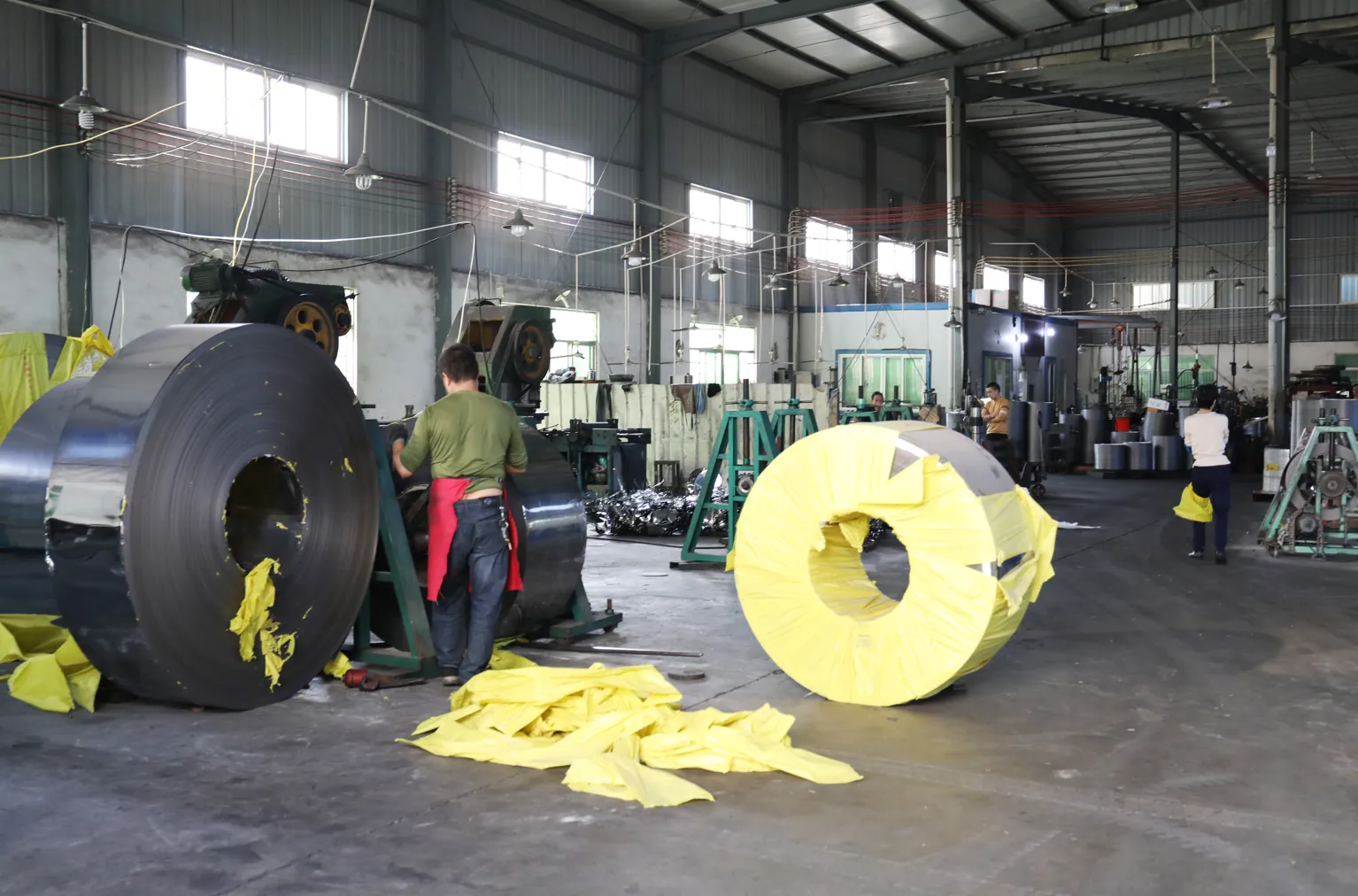
Allnice est un professionnel fabricant de réchauds en acier inoxydable au service des distributeurs internationaux, des fournisseurs de restauration et des enseignes du secteur de l'hôtellerie-restauration. L'usine maîtrise les étapes clés de la production — notamment l'estampage, l'emboutissage, le soudage, le polissage et l'assemblage final — afin de garantir une qualité constante d'un lot de production à l'autre.
Grâce à un approvisionnement traçable des matières premières et à des contrôles qualité structurés tout au long du processus de fabrication, Allnice garantit le respect constant des spécifications et des performances fiables dans les environnements de restauration sous forme de buffet.
Pour les acheteurs B2B, l'entreprise propose solutions personnalisées pour les chafing dish telles que les configurations de taille, les systèmes de chauffage, les finitions de surface, l'image de marque et la conception des emballages, afin de proposer des solutions de réchauds adaptables, conçues pour un approvisionnement commercial à long terme.