Most buyers underestimate how inefficient their sourcing model actually is. On paper, splitting orders across multiple factories looks like cost optimization. In reality, it creates fragmentation, inconsistency, and operational drag.
Each additional supplier introduces:
- Another negotiation cycle
- Another quality standard
- Another production timeline
- Another logistics coordination layer
The result is predictable: delayed launches, inconsistent product quality, and inflated total procurement cost.
A one-stop sourcing model eliminates these inefficiencies at the structural level. The advantage is not marginal—it is systemic.
What Is a One-Stop Stainless Steel Kitchenware Supplier?
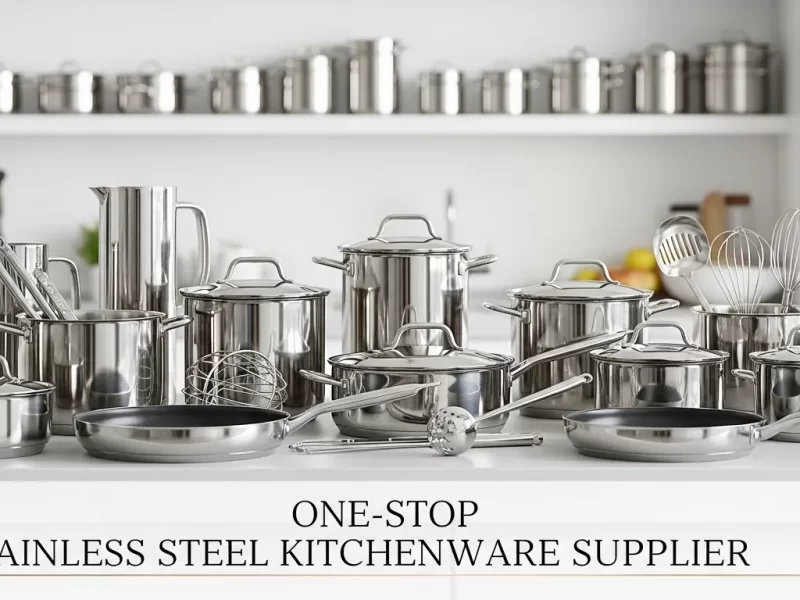
Allnice is a one-stop stainless steel kitchenware supplier; we are not just a factory with multiple SKUs. We have an integrated manufacturing system capable of handling:
- Product development
- Material sourcing
- Manufacturing across categories
- Quality control
- Packaging and branding
- Export logistics
Instead of managing five to ten vendors, you deal with one centralized partner.
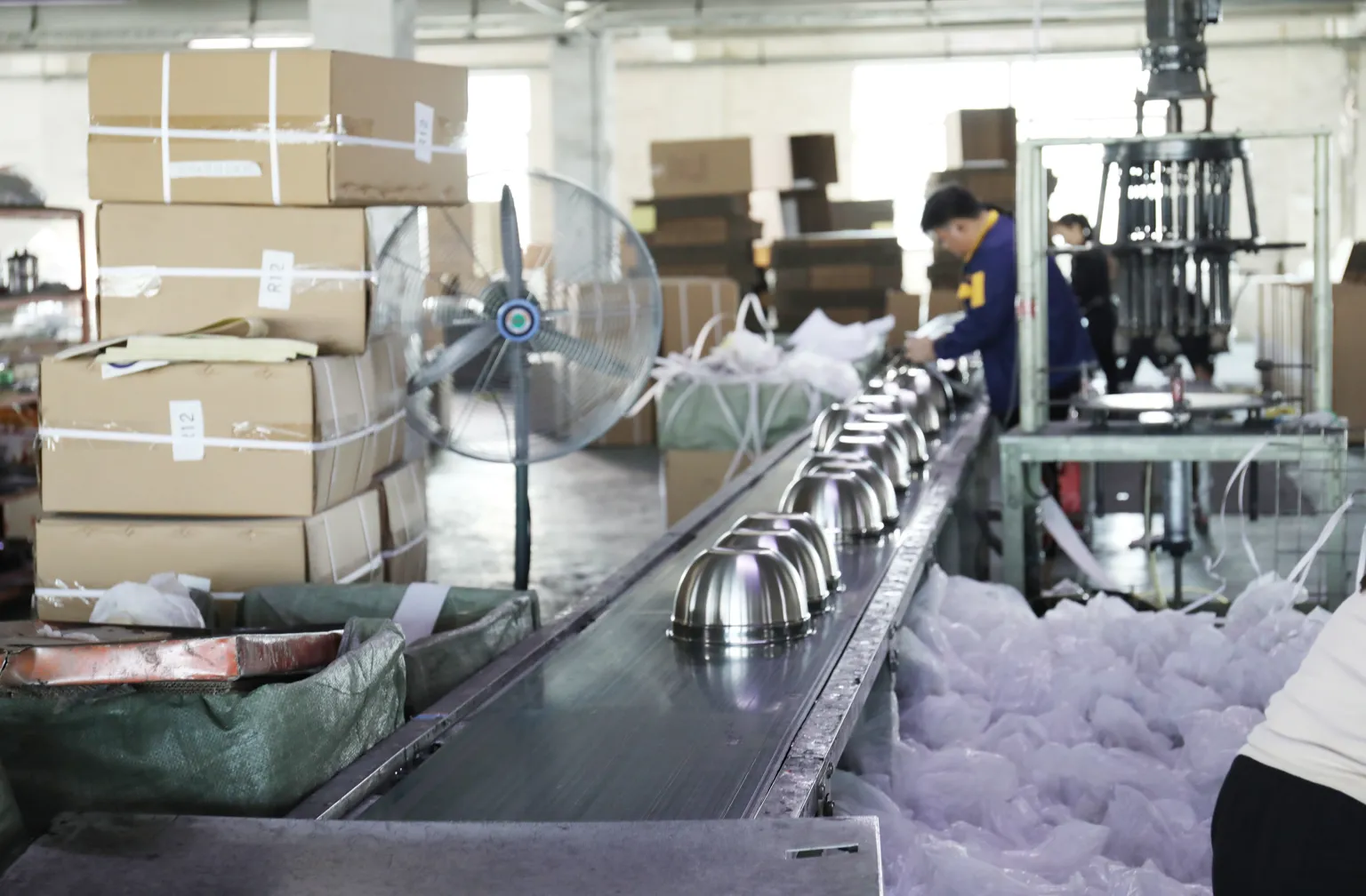
Being a one-stop stainless steel kitchenware manufacturer, Allnice operates with unified production standards, coordinated workflows, and centralized accountability.

The Real Cost of Multi-Supplier Procurement
Supplier Coordination Overhead
Every additional supplier increases communication complexity. This includes:
- Time zone misalignment
- Language barriers
- Repeated specification explanations
- Contract renegotiation
What you perceive as “more options” is often just duplicated effort with fewer effects.
Inconsistent Quality and Specifications
Different factories interpret specifications differently. Even with identical drawings, variations occur in:
- Steel grade (e.g., 201 vs 304 vs 316)
- Surface finish (mirror vs satin inconsistency)
- Thickness tolerances
- Handle construction and welding quality
This leads to a fragmented product line that weakens your brand positioning.
A single stainless steel kitchenware supplier enforces uniform quality benchmarks across all products.
Logistics and Shipping Complications
Multiple suppliers mean:
- Split shipments
- Multiple freight bookings
- Higher per-unit shipping costs
- Increased risk of delays
In contrast, consolidated shipping reduces both cost and operational risk.
How One-Stop Suppliers Reduce Total Procurement Cost
Consolidated Production and Bulk Pricing
Cost reduction does not come from negotiating harder. It comes from structural efficiency.
With a one-stop model:
- Raw materials are purchased in larger volumes
- Production is optimized across product lines
- Tooling and setup costs are distributed
This enables more competitive pricing from a [wholesale stainless steel kitchenware supplier] without sacrificing margins.
Typical Product Categories Covered
A true one-stop supplier should cover a broad but coherent range of kitchenware products, including:
If a supplier only assembles products from external sources, you are not reducing risk—you are outsourcing it blindly.
Integrated Quality Control Systems
Instead of adapting to multiple QC systems, a one-stop supplier provides:
- Standardized inspection protocols
- Consistent testing methods
- Unified defect handling procedures
This reduces return rates and protects your brand from avoidable quality issues.
Time Efficiency: From Sampling to Mass Production
Streamlined Communication and Project Management
A single point of contact eliminates redundancy:
- No repeated technical briefings
- Faster feedback loops
- Clear accountability
Decision-making speed increases, which directly shortens your time-to-market.
Faster Product Development Cycles
Fragmented sourcing slows down development:
- Samples arrive at different times
- Design inconsistencies require rework
- Coordination delays compound
A centralized custom stainless steel kitchenware manufacturer synchronizes:
- Design validation
- Sample production
- Iteration cycles
This can cut development time by 30–50% in practical scenarios.
Shorter Lead Times
Lead time is not just production—it is coordination.
One-stop stainless steel kitchenware suppliers optimize:
- Production scheduling
- Capacity allocation
- Material readiness
Instead of waiting for the slowest supplier, your entire order moves at a controlled pace.
Customization Advantages with One-Stop Kitchenware Manufacturing
OEM/ODM Capabilities
Customization is where fragmented sourcing fails most.
A capable supplier provides:
- Structural design adjustments
- Functional enhancements
- Material selection guidance
Without this integration, customization becomes inconsistent across product lines.
Branding and Packaging Integration
Brand consistency is not optional at scale.
A one-stop system ensures:
- Uniform logo application (laser, embossing, printing)
- Coordinated color and finish
- Retail-ready packaging alignment
A professional custom stainless steel kitchenware manufacturer integrates packaging into production, not as an afterthought.

Supply Chain Stability and Scalability
Production Capacity Management
Scaling with multiple small suppliers is unstable.
A centralized system allows:
- Volume ramp-up without requalification
- Predictable output capacity
- Better production planning
This is critical for seasonal demand spikes and large retail orders.
Risk Reduction in Global Sourcing
Each supplier is a potential failure point:
- Delays
- Quality issues
- Compliance risks
Reducing the number of suppliers reduces systemic risk.
An experienced one-stop stainless steel kitchenware supplier with export expertise can manage:
- Documentation
- Compliance standards (FDA, LFGB, etc.)
- Shipping coordination
When a One-Stop Supplier Is the Right Choice (and When It’s Not)
Ideal Scenarios
- Building or scaling a private label brand
- Managing multiple product categories
- Needing consistent quality across SKUs
- Optimizing operational efficiency
When It May Not Fit
- Ultra-specialized, high-tech products
- Extremely low-volume niche orders
- Situations requiring patented or proprietary manufacturing
Blindly choosing a one-stop stainless steel kitchenware model without verifying its capabilities is just replacing one risk with another.
Conclusion: Strategic Procurement, Not Just Purchasing
Most buyers focus on unit price. That is a mistake.
The real cost drivers are:
- Time
- Consistency
- Coordination
- Risk
A one-stop stainless steel kitchenware supplier addresses all four simultaneously.
This is not about convenience. It is about building a scalable, controllable supply chain that supports long-term growth.
FAQ
What are the benefits of working with a one-stop stainless steel kitchenware supplier?
Reduced coordination effort, consistent product quality, lower logistics costs, and faster time-to-market.
Is a one-stop stainless steel kitchenware supplier more expensive?
Not necessarily. While unit prices may appear similar, total procurement cost is typically lower due to efficiency gains and reduced overhead.
Can they handle different product categories?
Yes, if they have integrated manufacturing capabilities. Otherwise, they may rely on outsourcing, which reintroduces risk.
How do they improve quality control?
By standardizing materials, processes, and inspection systems across all products.
What should I verify before choosing a one-stop stainless steel kitchenware supplier?
Production capability, quality control systems, export experience, and customization support.