
As a one-stop commercial cookware supplier, Allnice observes that many restaurants and hotels’ reputation is getting worse because of their poor food service. After investigations, the only mistake is the cookware mismatch.
Most buyers still select cookware based on unit price or isolated product specs. That approach ignores the only variable that matters: output volume. A restaurant serving 80 covers per day and a hotel kitchen producing 500+ meals operate under completely different thermal loads, batch sizes, and time constraints.
This guide breaks down each core cookware category, its role in a commercial kitchen, and how to size it correctly based on operational scale.
Saucepan: Precision Cooking for Controlled Output
Role in Commercial Kitchens
The saucepan functions as a precision tool within the kitchen rather than a volume-driven vessel. It is primarily used for sauces, reductions, reheating, and controlled small-batch preparation where temperature responsiveness and accuracy matter more than capacity. In professional kitchens, saucepans support consistency in flavor development and finishing processes, especially in stations where timing and control directly affect dish quality.
Key Features That Matter
- Fast heat responsiveness (thin but stable base)
- Balanced handle for continuous use
- Smooth interior for easy cleaning
Recommended Sizes by Kitchen Volume
- Small kitchens (cafés, low-volume restaurants): 1–3L
- Mid-volume kitchens: 3–5L
- High-volume kitchens: 5L+, multiple units required
Undersized saucepans create constant repetition cycles. Oversized ones reduce control and waste energy.

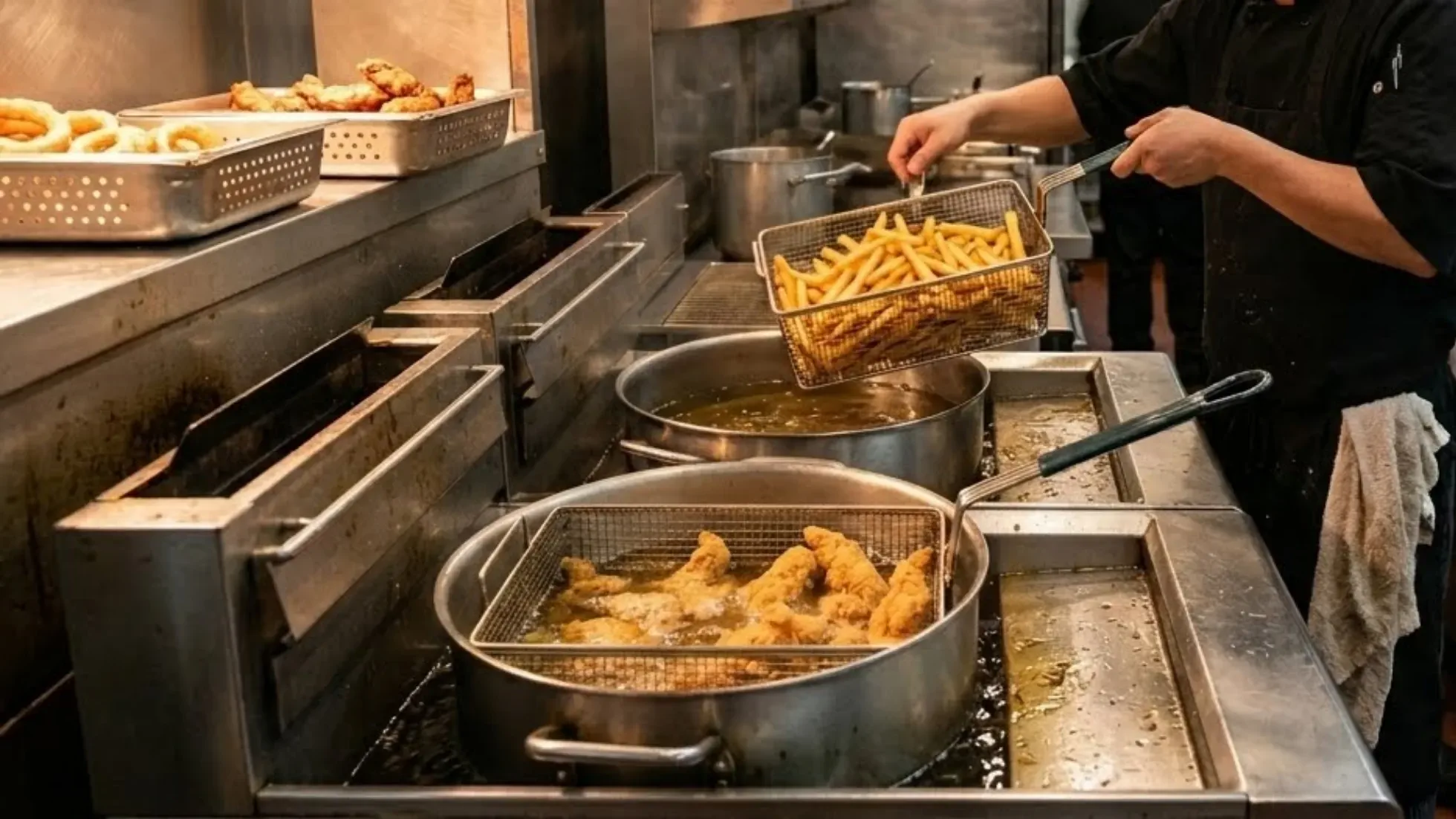
Fryer Pot: High-Temperature, High-Throughput Cooking
Role in Commercial Kitchens
Fryer pots are designed for continuous, high-temperature cooking where speed and output are critical. They are commonly used for deep frying proteins, snacks, and fast-service menu items, often operating under peak-hour pressure where consistency must be maintained across batches. In this context, fryer pots directly influence kitchen throughput, as insufficient capacity or poor heat stability leads to oil temperature drops and inconsistent product quality.
Structural Requirements
- Thick base for heat stability
- High oil capacity to prevent temperature drop
- Reinforced handles for safety
Recommended Sizes by Kitchen Volume
- Small: 4–6L
- Medium: 6–10L
- Large: 10L+
A common mistake is underestimating oil volume. Small fryer pots collapse under peak demand, leading to inconsistent food quality.
Frying Pans: The Highest-Frequency Workhorse
Role in Commercial Kitchens
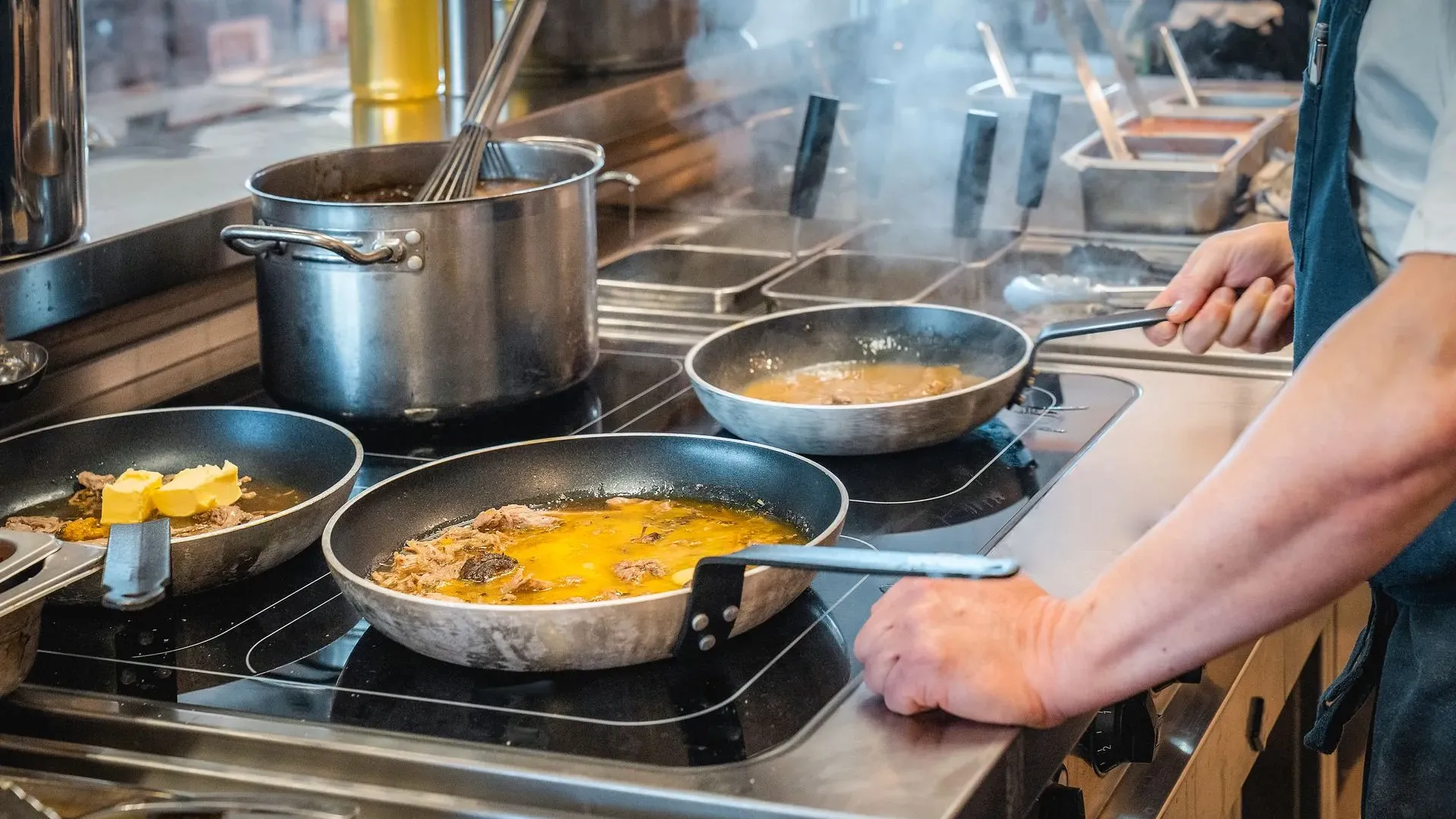
Frying pans are the most frequently used cookware in any commercial kitchen, handling a wide range of cooking tasks, including searing, sautéing, and line cooking. Their role is not specialized but continuous, supporting multiple stations and menu items throughout service. Because of this high usage frequency, frying pans must deliver consistent heat distribution and withstand constant thermal cycling without warping or degrading.
Performance Factors
- Even heat distribution (multi-layer base preferred)
- Resistance to warping
- Surface durability under repeated use
Recommended Sizes by Kitchen Volume
- Small: 20–24 cm
- Medium: 24–28 cm
- Large: 28–32 cm
A professional [commercial cookware manufacturer] will standardize thickness and base construction to ensure consistency across all pan sizes.
Pressure Cookers: Efficiency and Time Compression
Role in Commercial Kitchens
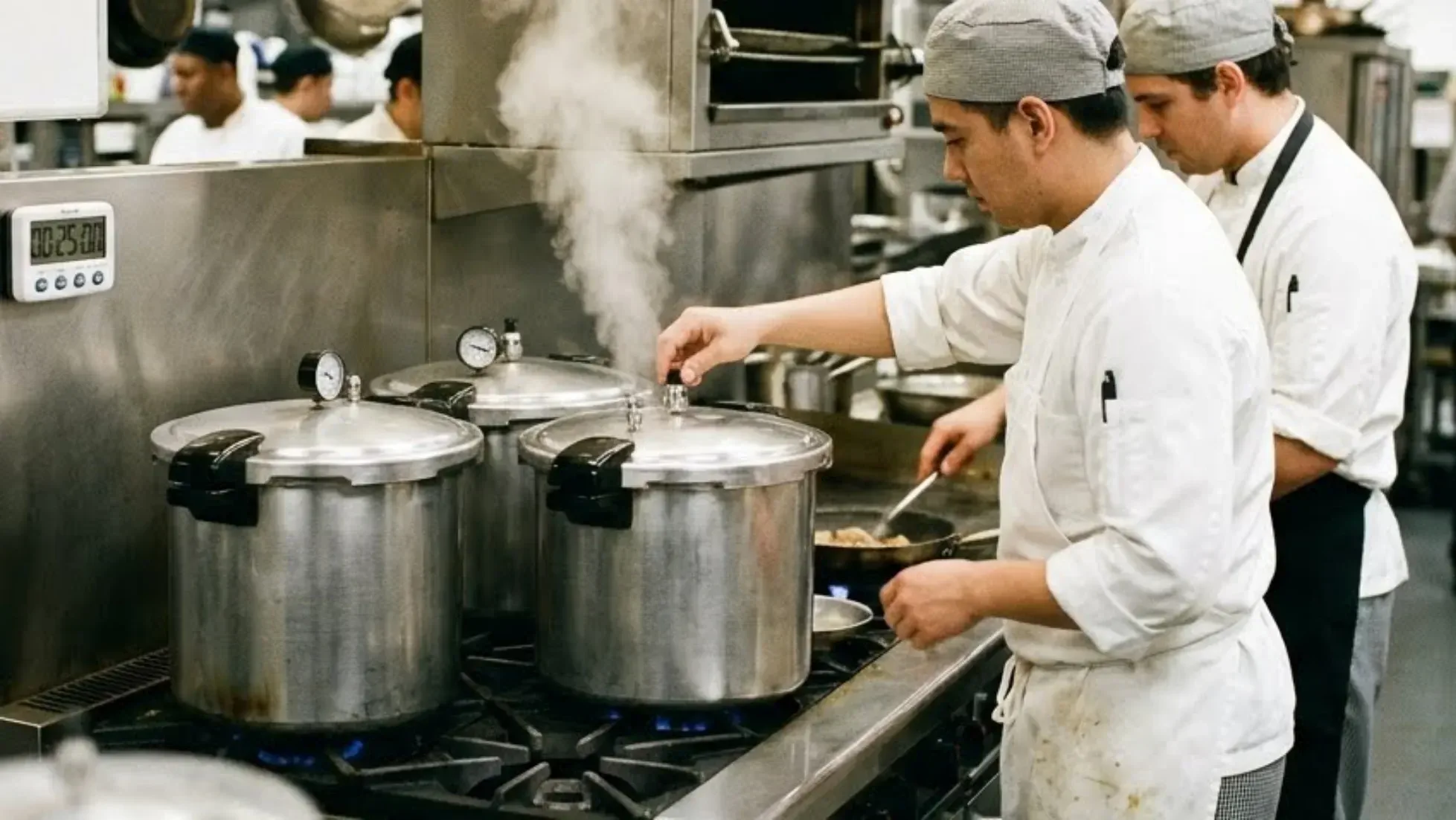
Pressure cookers serve as efficient tools that significantly reduce cooking time for bulk ingredients and tough proteins. In high-demand kitchens, they enable faster preparation cycles without compromising tenderness or flavor extraction. Their role becomes critical in operations where time constraints directly affect service speed, allowing kitchens to increase output without expanding equipment footprint.
Safety and Performance Requirements
- Reliable pressure control valves
- High-quality sealing systems
- Thick walls for pressure stability
Recommended Sizes by Kitchen Volume
- Small: 6–10L
- Medium: 10–20L
- Large: 20L+
In high-volume kitchens, pressure cookers are not optional—they are throughput multipliers.
Soup Pots: Liquid-Based Bulk Production
Role in Commercial Kitchens
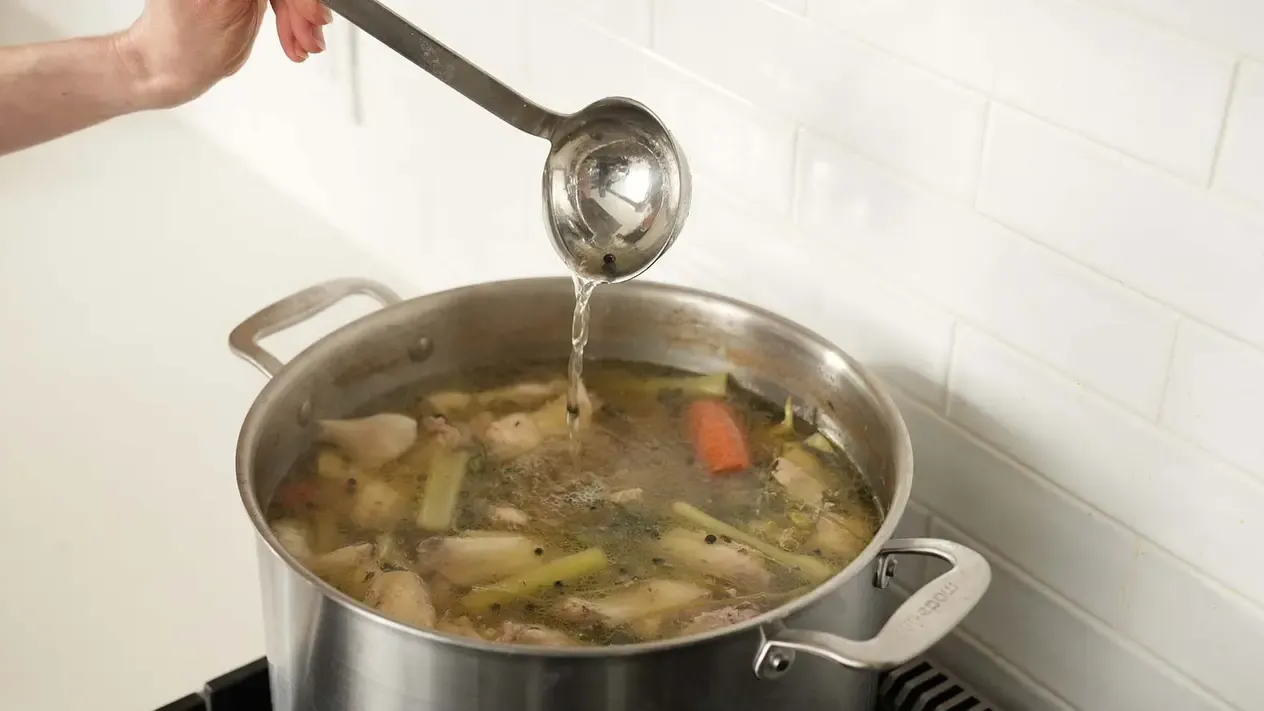
Soup pots are designed for continuous liquid-based cooking, including soups, broths, and sauces produced in medium to large volumes. Unlike stock pots, which are used for foundational preparation, soup pots are often used during active service for items that require stable simmering and consistent heat retention. Their performance directly impacts flavor consistency and kitchen workflow efficiency.
Key Construction Factors
- Even heat distribution
- Strong heat retention
- Corrosion resistance (especially for acidic liquids)
Recommended Sizes by Kitchen Volume
- Small: 8–16L
- Medium: 16–30L
- Large: 30L+
Working with a reliable [commercial cookware supplier] ensures consistent material grade across all liquid-based cookware, preventing flavor contamination and corrosion issues.
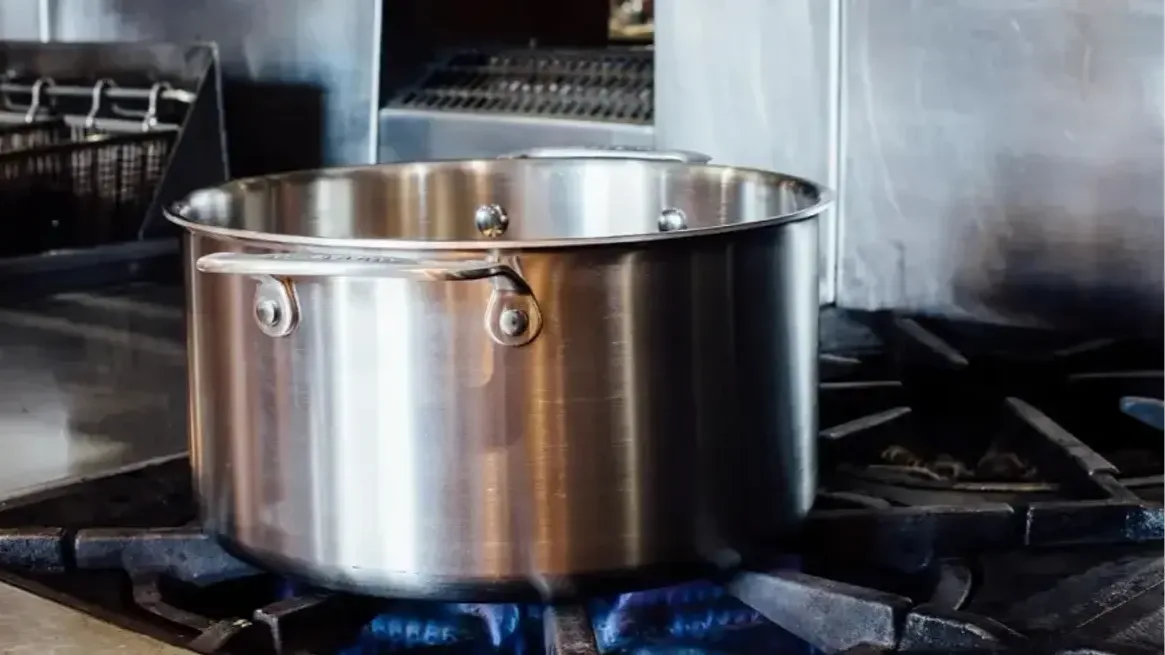
Stock Pots: Heavy-Duty High-Capacity Cooking
Role in Commercial Kitchens
Stock pots are the backbone of bulk preparation, used for producing large quantities of broth, boiling ingredients, and supporting centralized kitchen operations. They are typically used in pre-service preparation rather than during active cooking, making durability and capacity more important than responsiveness. In hotel and large-scale kitchens, stock pots are essential for maintaining supply consistency across multiple service periods.
Structural Requirements
- Reinforced base to prevent deformation
- Thick sidewalls for durability
- High load-bearing capacity
Recommended Sizes by Kitchen Volume
- Small: 20–30L
- Medium: 30–50L
- Large: 50L+
A qualified wholesale cookware supplier should offer consistent structural specifications across large-capacity products to avoid performance gaps.
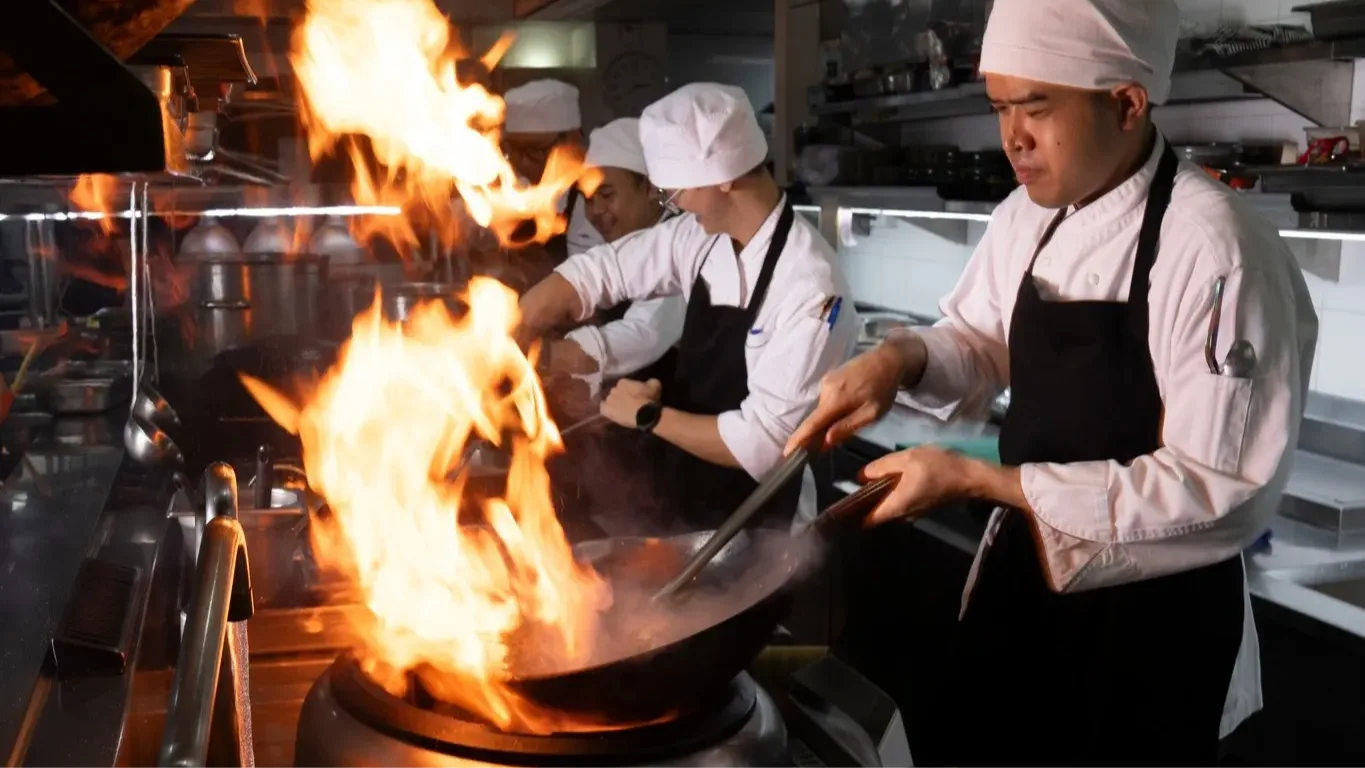
Woks: High-Heat, Fast-Turnover Cooking
Role in Commercial Kitchens
Woks are designed for high-heat, rapid cooking processes that require speed, control, and constant movement of ingredients. They are essential in kitchens that rely on stir-frying and quick-turnover dishes, where cooking time is measured in seconds rather than minutes. The shape and heat responsiveness of a wok directly influence food texture, making proper sizing and material selection critical for performance.
Performance Requirements
- Rapid heat response
- Proper curvature for ingredient movement
- Durable surface under high flame
Recommended Sizes by Kitchen Volume
- Small: 30–34 cm
- Medium: 34–38 cm
- Large: 38–45 cm
Improper wok sizing directly affects cooking speed and food texture.
How to Standardize Cookware Across a Commercial Kitchen
Consistent Materials and Thickness
Using different steel grades across cookware leads to:
- Uneven heating behavior
- Inconsistent cooking results
- Maintenance complexity
Standardization ensures predictable performance.
Operational Efficiency Through Standardization
When cookware behaves consistently:
- Staff training becomes easier
- Cooking times stabilize
- Output becomes predictable
Reducing Replacement and Training Costs
A fragmented system increases:
- Replacement frequency
- Operational errors
- Long-term costs
A unified system reduces all three.
Sourcing Strategy: Why Category Integration Matters
Managing cookware category by category creates hidden inefficiencies:
- Different quality standards
- Misaligned specifications
- Multiple communication channels
Working with a single [commercial cookware manufacturer] eliminates these inconsistencies at the source.
Building a Complete Commercial Kitchen Supply System
A professional buyer does not purchase cookware individually—they build a system.
An integrated commercial cookware supplier provides:
- Full category coverage (saucepan to wok)
- Consistent material and construction standards
- Centralized quality control
- Coordinated production timelines
For brand owners and distributors, a custom cookware manufacturer enables:
- Unified product design
- Consistent branding across categories
- Tailored specifications for target markets
At scale, sourcing from a [wholesale cookware supplier] allows:
- Bulk pricing advantages
- Simplified logistics
- Scalable inventory planning
This is where one-stop supply becomes practical—not as a concept, but as a measurable operational advantage.
Conclusion: Choose Cookware Based on Output, Not Assumptions
Most procurement mistakes come from guessing.
The correct strategy is straightforward:
- Define kitchen output volume
- Match cookware size to throughput
- Standardize materials and specifications
- Consolidate sourcing to reduce complexity
Buyers who continue to manage fragmented suppliers are not saving money—they are accumulating inefficiency.
FAQ Section
What cookware sizes do restaurants typically use?
It depends on the output. Small kitchens use 1–5L cookware, while high-volume operations require 20L+ for bulk cooking categories.
How do I choose cookware for a commercial kitchen?
Start with production volume, then select categories and sizes that support peak demand without bottlenecks.
What is the most durable cookware for high-volume kitchens?
Thick, multi-layer stainless steel cookware (especially 304 or 316 grade) offers the best durability and corrosion resistance.
Should all cookware be from the same supplier?
For consistency, efficiency, and quality control, sourcing from one supplier is typically more effective.
What is the best material for commercial cookware?
Stainless steel (304 or 316) is the most widely used due to its durability, corrosion resistance, and food safety.
About Allnice

Allnice is a commercial cookware manufacturer providing a one-stop commercial cookware supply for B2B buyers. With direct factory production, we ensure stable quality, consistent materials, and reliable performance across full product categories—from saucepans to stock pots and woks. Our commercial cookware wholesale model supports scalable procurement, cost control, and unified specifications.
We offer OEM/ODM commercial cookware customization to match kitchen output, workflow, and market positioning. Focused on long-term service, we help distributors, brands, and hospitality buyers reduce sourcing complexity, maintain consistency, and build efficient, high-performance commercial kitchen systems.