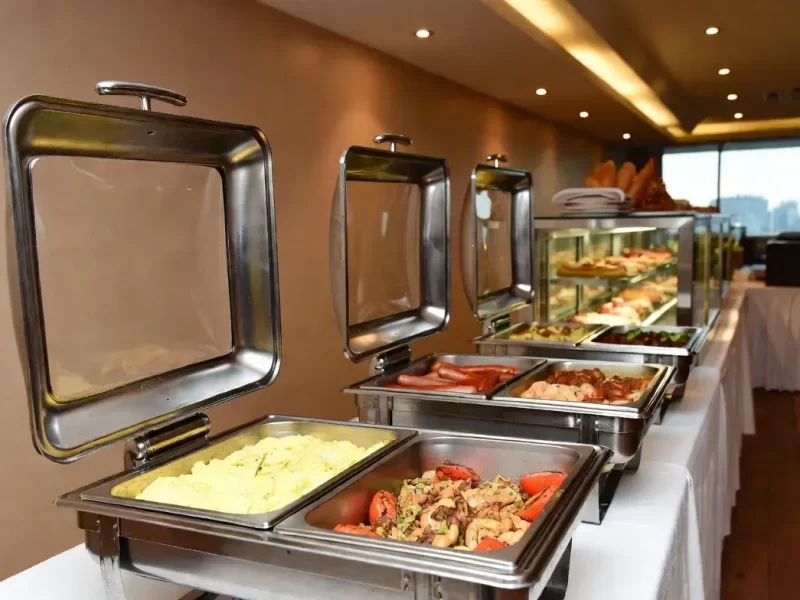
Sourcing chafing dish equipment from China can deliver great value—but only if you avoid the common traps foreign buyers face. This guide walks procurement teams through a practical, risk-focused process so you get consistent performance, predictable lead times, and lower total cost of ownership. If your brief is sourcing chafing dishes for hotels, caterers, rental fleets, or event operators, read this first.
Start by Clarifying the Use Case of Your Chafing Dish
Too many sourcing mistakes begin because buyers don’t define where and how the equipment will be used.
- Fuel (sterno) vs electric: fuel units are portable but require fuel handling and flame safety; electric units give better temperature control but need reliable power planning.
- Indoor vs outdoor: indoor venues often forbid open flames—plan accordingly.
- Single-station vs long buffet line: long lines need modular, joinable units with compatible GN sizing.
- Service duration: short events (<3 hrs) vs long runs (6+ hrs) change heating and fuel requirements.
Document these constraints and send them with your RFQ—don’t let suppliers guess.
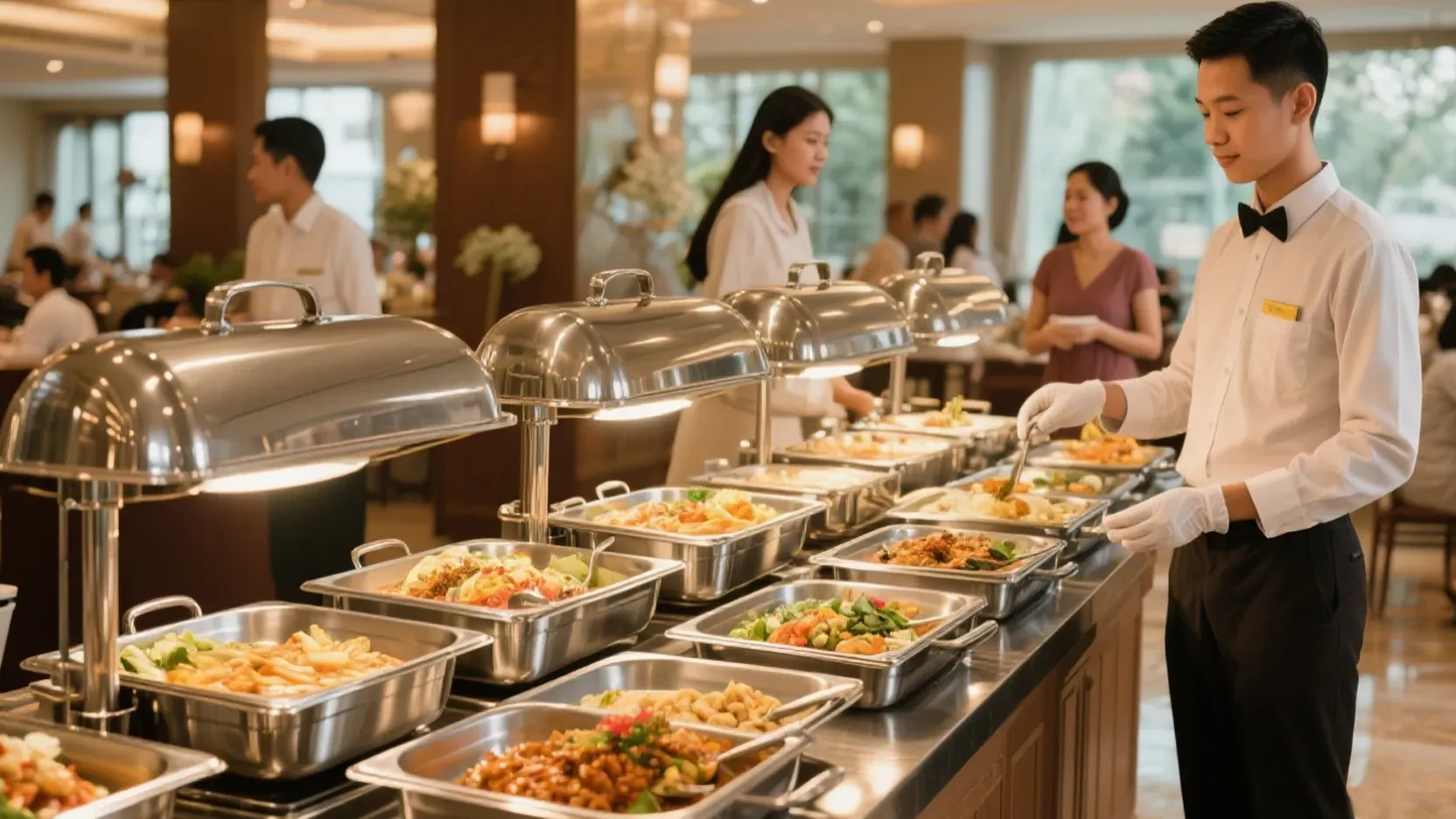
Inspect Product Performance, Not Just Appearance
Photos and polished samples can be misleading. Ask for and test the measurable performance of these metrics of the sample of the chafing dish:
- Water bath capacity and retention time (how long the unit keeps food ≥60°C).
- Heating uniformity across wells (for electric units, check element layout).
- Power draw and actual wattage vs rated wattage.
- Build thickness and material gauge—thicker pans retain heat better.
- Thermostat accuracy and stability (±1–2°C is reasonable).
When you receive a sample, run a real-world test: load gastronorm pans, measure temperatures at multiple points over hours, and simulate staff actions like opening lids and replacing pans.
Lock the BOM and Avoid the “Sample ≠ Mass Production” Trap
This is the single biggest cause of post-shipment disputes.
- Require a locked Bill of Materials (BOM) in the purchase contract that lists key components (heater model, thermostat brand, element wattage, pan thickness, lid spec).
- Insist that any approved sample include a component list and serial numbers for critical parts.
- Make pilot runs (300–500 units) contractually mandatory before full production, or at least a PP (pre-production) batch that must match the approved sample.
Put acceptance criteria in writing: flatness tolerance, temperature variance, finish quality, and functional checks.
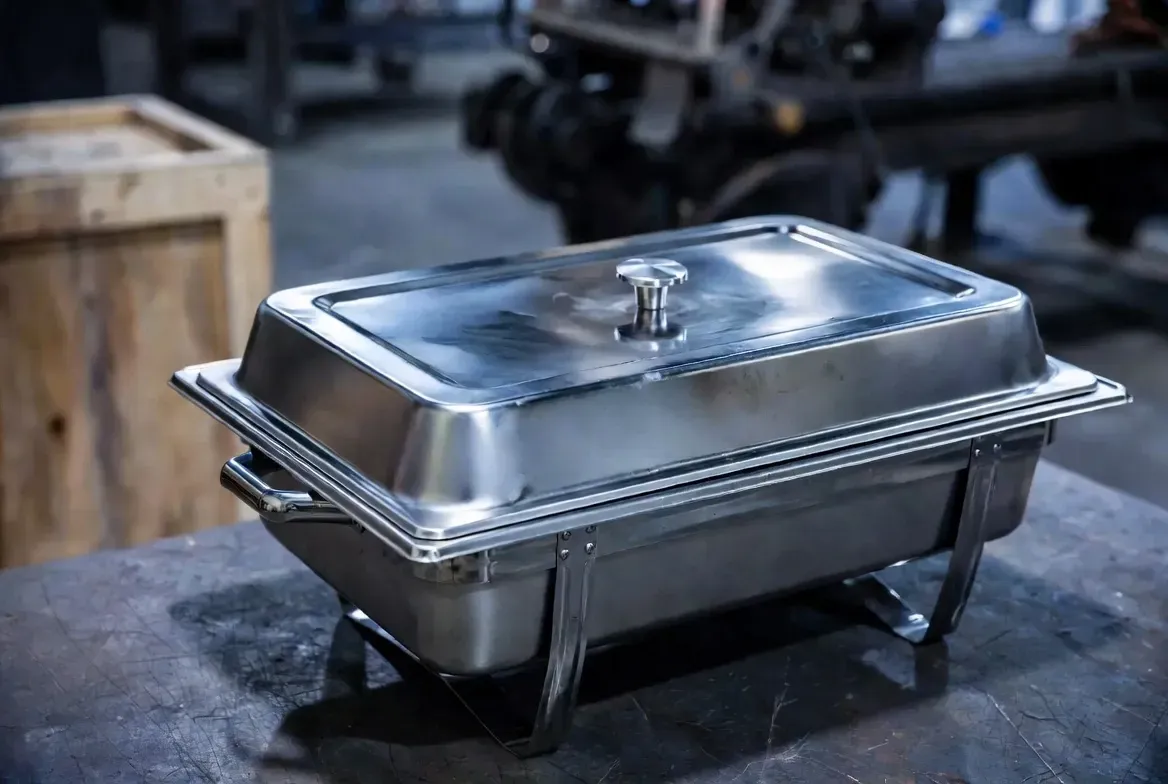
Verify Modularity and Compatibility for Future Expansion
If you expect to expand a buffet line or replace units later, ensure parts are interoperable.
- Confirm gastronorm pan dimensions and that lids, water trays, and frames are cross-compatible across batches.
- Check joiner kits or linking mechanisms for long lines.
Buying mismatched batches is a common, avoidable cost.
Evaluate Supplier Capacity and Production Practices
A supplier who can show photos of a busy factory producing chafing dishes isn’t enough. Look for operational signals:
- Do they run dedicated lines for electric and fuel units (not an ad-hoc setup)?
- Can they reserve production slots during your peak season? Ask how they handle third-party insert orders when capacity is tight.
- Do they publish lead times with seasonal adjustments (e.g., pre-peak, peak)? If not, push for written delivery windows and penalties for late delivery in your contract.
Reserve production slots with deposits if your selling season cannot be missed.
Plan for After-sales and Spare Parts from Day One
Chafing dishes in commercial use wear parts—prepare in advance.
- Require spare parts kit with first shipment: spare thermostats, heating elements, gaskets, and common fasteners.
- Agree on a lead time for spare parts and local stocking options. For rental businesses, quick part replacement prevents costly downtime.
- Negotiate a basic service level (response time, shipment method) for defective components.
A supplier who resists stocking spares is a red flag.
Build Performance Checks into Every PO
Make sure every Purchase Order (PO) includes specific, testable acceptance criteria:
- Pre-shipment functional test report (temperatures at t=0, t=30, t=180 minutes).
- Visual inspection of photos of specific serial-numbered units.
- Packing and palletization checklist to avoid transit damage.
- Right to reject or to demand rework if pilot tolerance or functional tests fail.
This converts vague promises into enforceable obligations.
Use Mixed Strategies to Reduce Effective MOQ and Risk
If MOQ or price is a barrier, consider:
- Mixed-SKU containers—combine several low-MOQ items to fill a container and lower per-SKU MOQ.
- Staggered deliveries—place an initial pilot order and schedule bulk shipments later.
- Group procurement—partner with other buyers to aggregate volumes.
These tactics let you validate products without over-committing.

Quick Sourcing Checklist
- Clear buffet scenario: fuel/electric, indoor/outdoor, duration, line length.
- Required BOM fields: heater model, element wattage, thermostat spec, pan gauge.
- Sample acceptance tests: temp stability, heat uniformity, build gauge, leak test.
- Pilot run requirement and FAI (first article inspection) rules.
- Spare parts kit included with first shipment.
- Production slot reservation and penalty/late-delivery clauses.
Conclusão
When sourcing chafing dishes from China, your priority should be predictable performance and long-term reliability—not the lowest unit price. Lock the specs, validate with real tests, insist on pilot runs, and plan spares and modular compatibility. That disciplined approach turns an uncertain overseas buy into a repeatable supply stream that supports your buffet operations rather than undermining them.
Sobre a Allnice
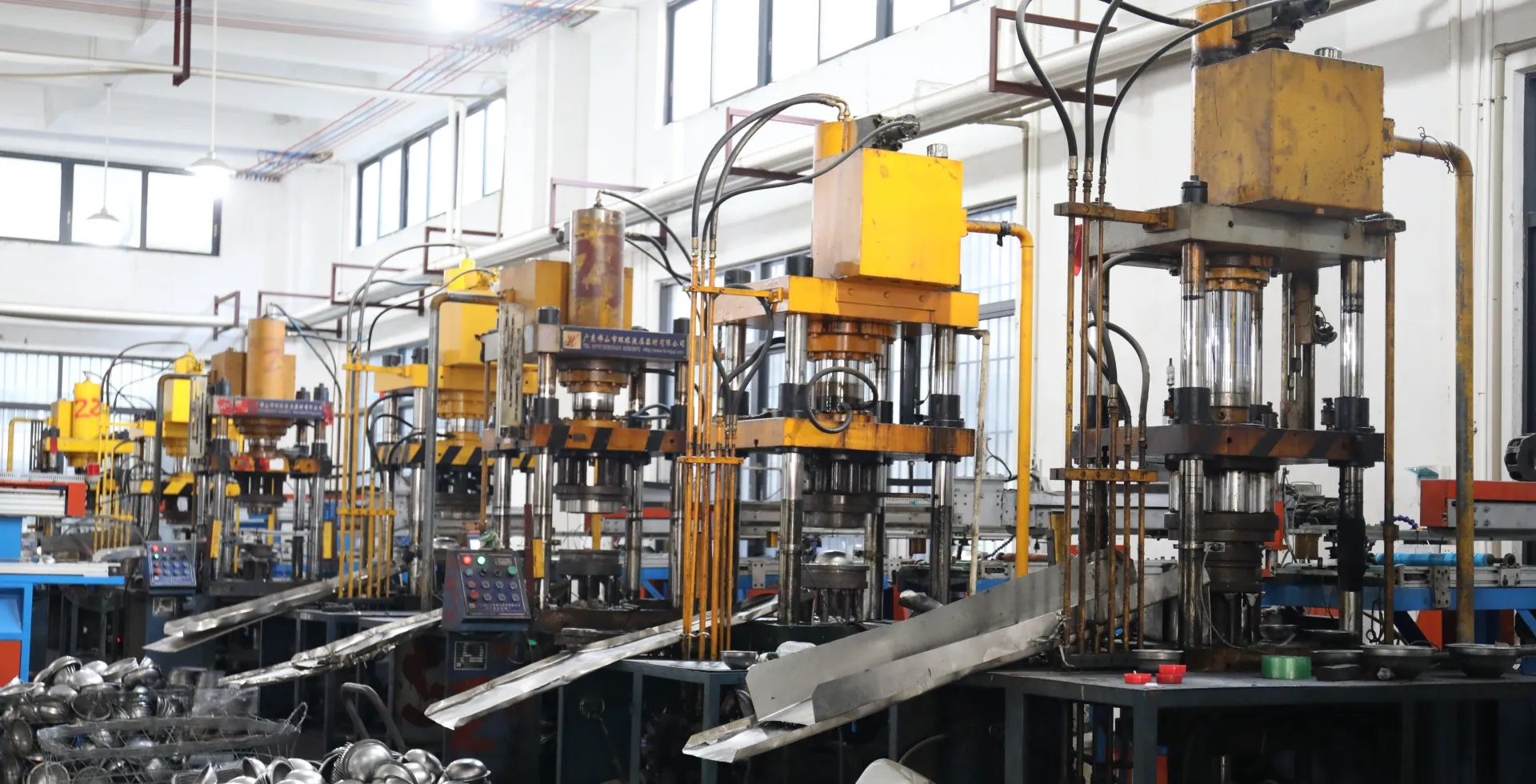
Allnice é um profissional fabricante de equipamento para restauração especializado em prato para assar por atacado equipment supply for hotels, caterers, event operators, and rental fleets. With in-house production coordination and long-term partner factories, Allnice is structured for stable, repeatable supply and predictable lead times—critical for commercial foodservice programs.
We focus on performance-driven products rather than showroom samples, supporting buyers with documented specifications, pilot runs, and spare-parts planning.
For professional clients, Allnice offers soluções personalizadas para chafing dish, including heating systems (fuel or electric), material thickness, GN compatibility, branding, and packaging—helping procurement teams control risk, standardize SKUs, and scale sourcing with confidence.