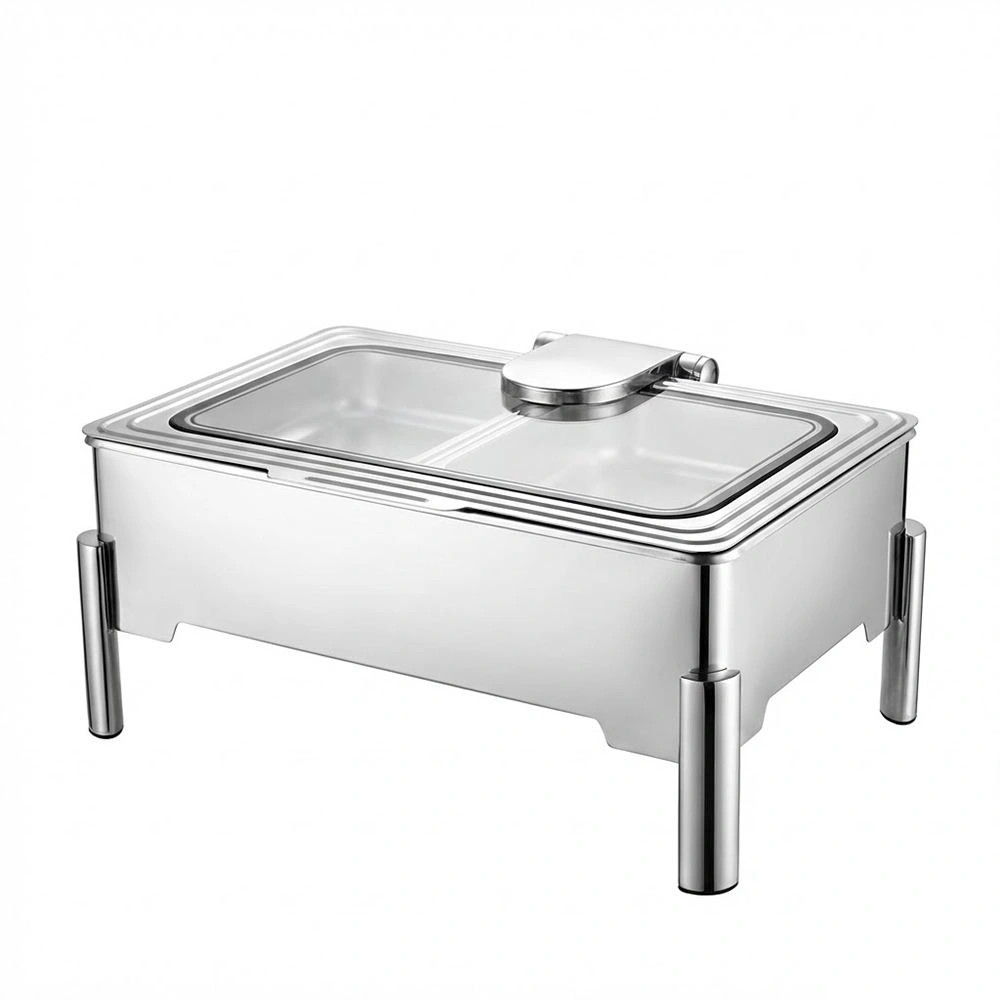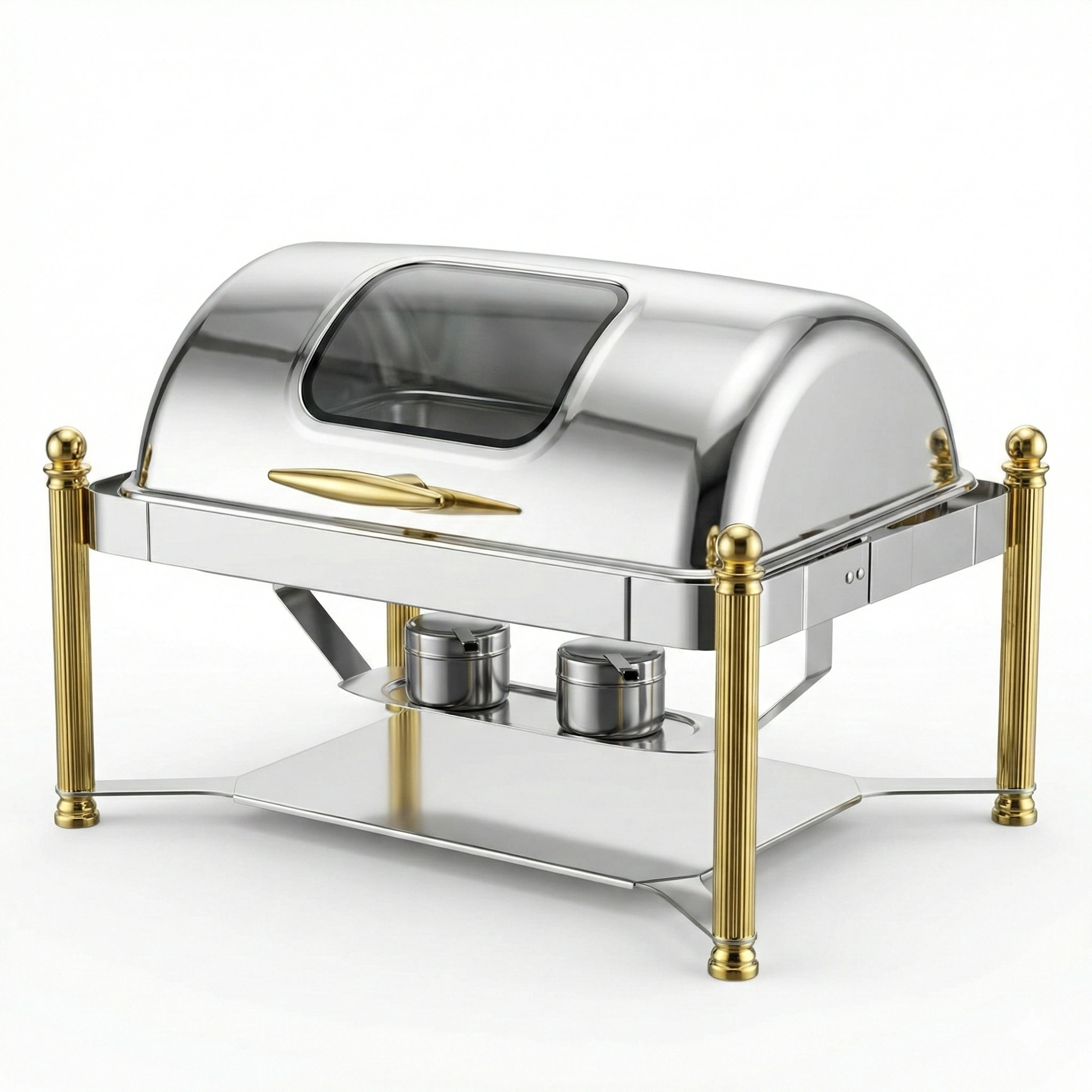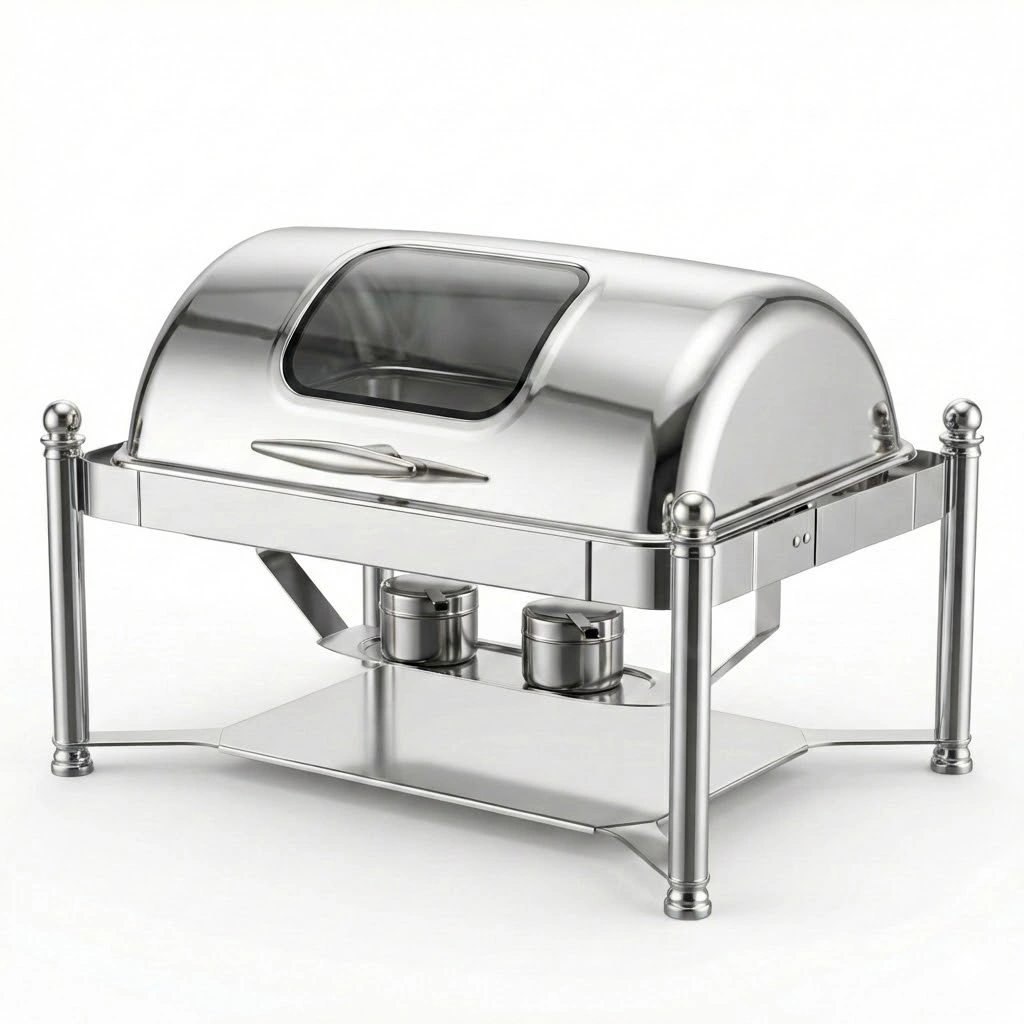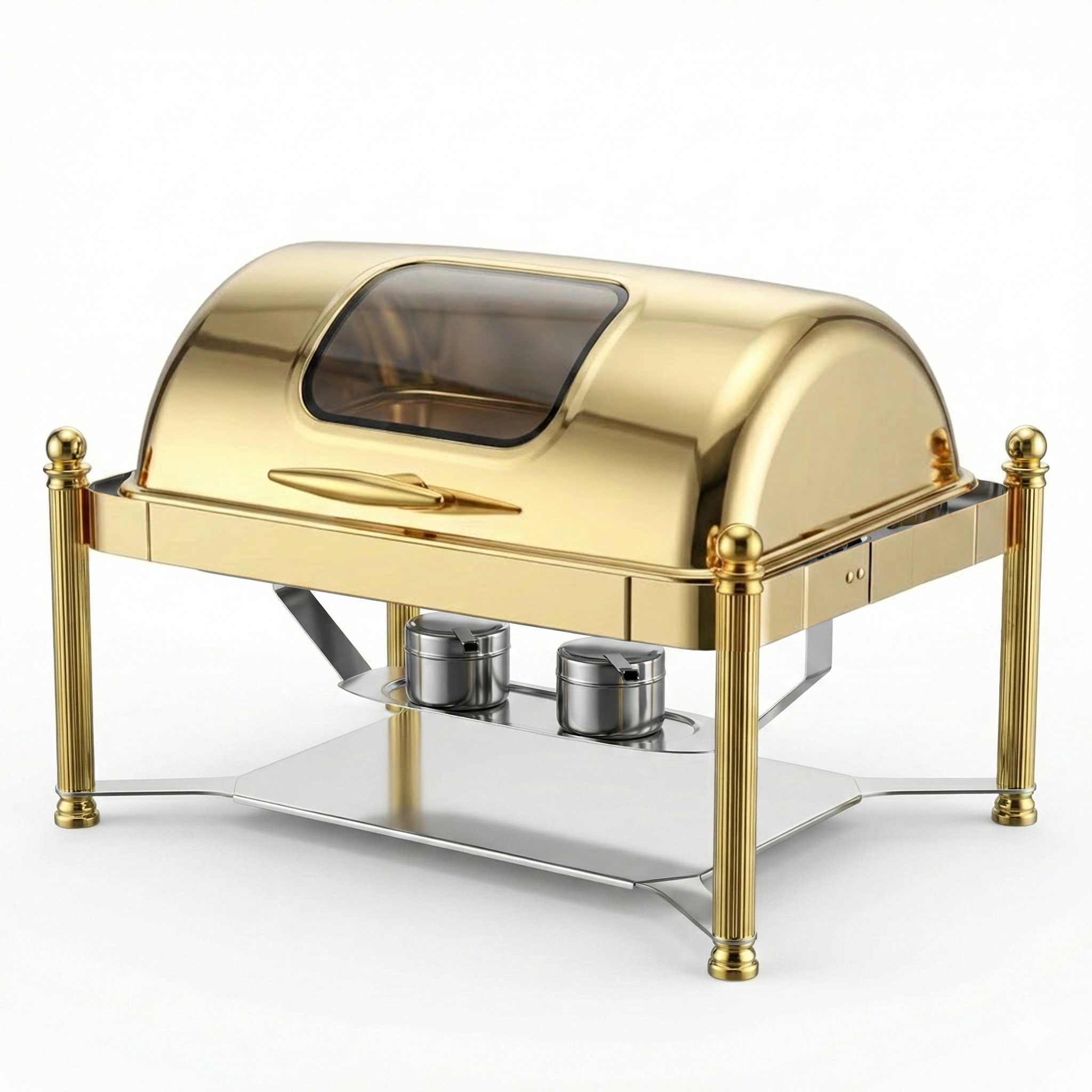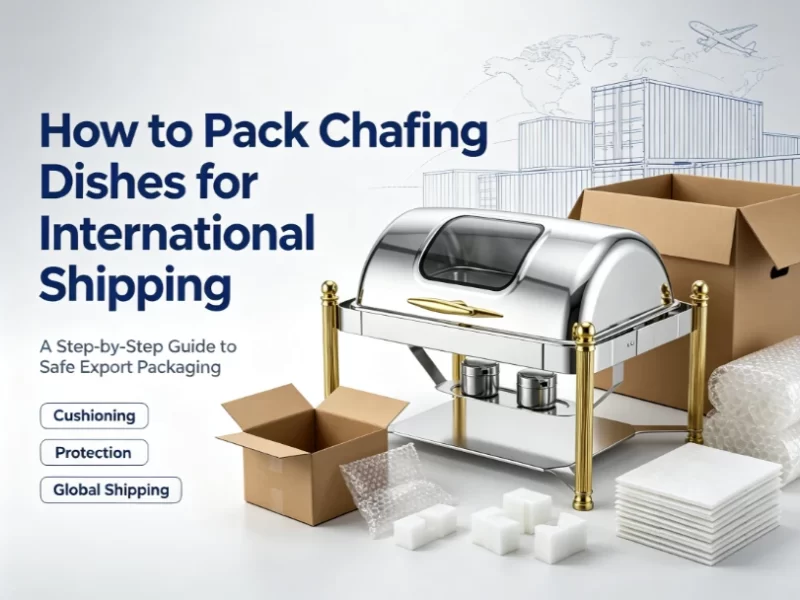
Proper packaging is the key to preventing dents, scratches, deformation, and shipping damage when exporting chafing dishes internationally. The best way to pack chafing dishes for international shipping is to use multi-layer protection, including individual wrapping, reinforced inner packaging, strong export cartons, and secure pallet loading to prevent scratches, dents, and transportation damage. As an experienced acier inoxydable fabricant de matériel de restauration, Allnice provides OEM/ODM solutions with customized packaging support for global buyers.
Why Is Proper Packaging Important When Shipping Chafing Dishes Internationally?
Proper packaging protects chafing dishes from physical impact, moisture exposure, stacking pressure, and handling risks throughout international transportation. A professional packaging system ensures products arrive ready for commercial use without additional repair or replacement.
For catering equipment buyers, choosing a manufacturer that understands export packaging standards helps reduce unnecessary replacement costs and delivery delays.
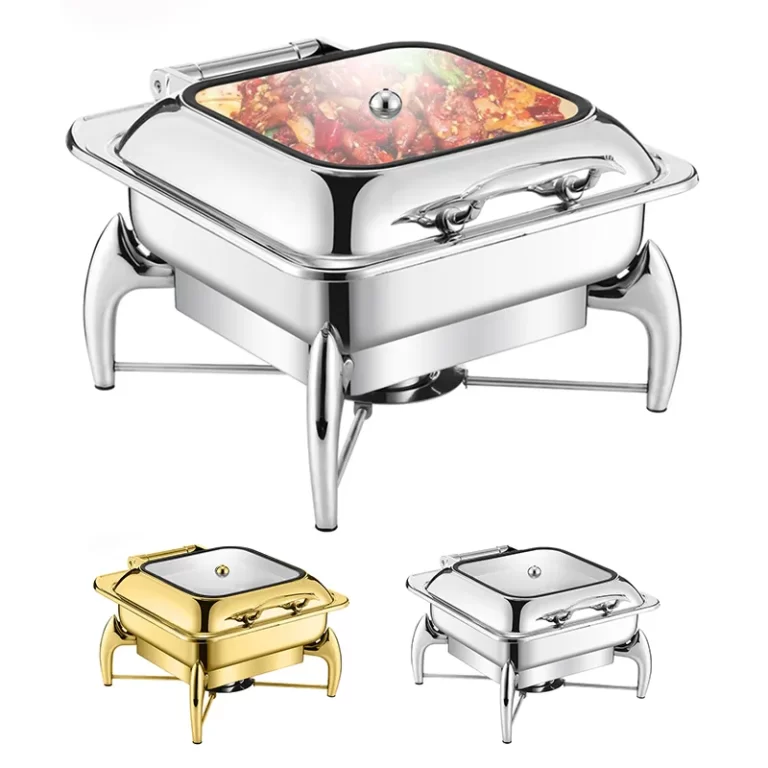
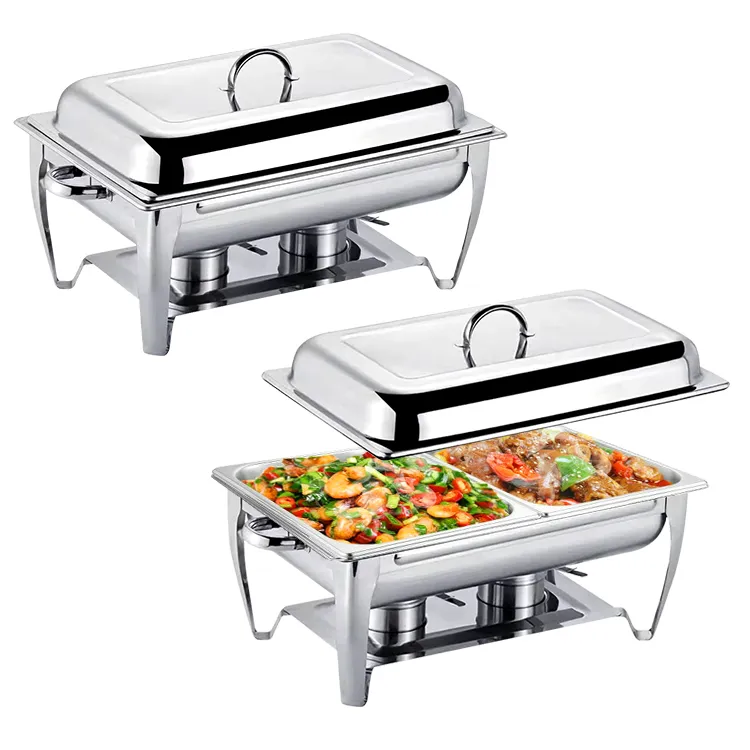
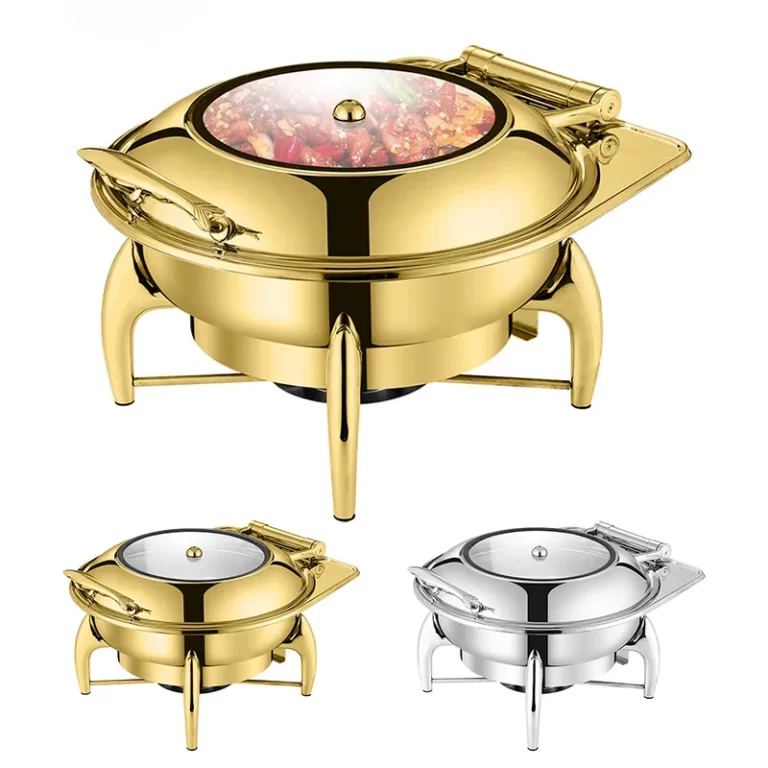

Unlike small kitchen accessories, chafing dishes have several characteristics that increase packaging requirements:
| Product Characteristic | Potential Shipping Risk | Required Protection |
|---|---|---|
| Stainless steel polished surface | Scratches and fingerprints | PE film, foam sheets, protective bags |
| Large metal structure | Dents from impact | Reinforced carton and corner protection |
| Multiple detachable parts | Missing components | Individual compartment packaging |
| Heavy product weight | Carton collapse | Strong corrugated export cartons |
| Long-distance ocean shipping | Moisture and corrosion | Moisture-resistant packaging |
For B2B buyers ordering hundreds or thousands of units, packaging quality directly affects customer satisfaction, warehouse efficiency, and brand reputation.
The World Shipping Council also reported that more than 10% of inspected cargo transport units had safety deficiencies in 2025, including problems related to packing, securing, marking, and documentation. This demonstrates why export-ready packaging is a critical part of international supply chains.
What Packaging Materials Are Needed to Pack Chafing Dishes?
The right packaging materials for chafing dishes include protective film, foam, cartons, pallets, and moisture-control solutions. Each layer serves a specific purpose during transportation.
A professional export packaging structure usually includes five protection levels:
| Packaging Layer | Matériau | Main Function |
|---|---|---|
| Surface protection | PE film or non-woven fabric | Prevent scratches on stainless steel |
| Shock absorption | EPE foam, pearl cotton, or bubble wrap | Reduce impact damage |
| Component separation | Cardboard dividers | Prevent parts collision |
| Outer protection | 5-layer corrugated carton | Provide compression strength |
| Shipping reinforcement | Wooden pallet and straps | Improve container handling safety |
Quand fabricants pack chafing dishes for overseas shipment, they should avoid placing multiple stainless steel parts directly against each other. Metal-to-metal contact is one of the main causes of surface scratches during transportation.
A unique packaging approach used for premium catering equipment is component-based packaging, where lids, frames, pans, and accessories are packed separately with identification labels. This method improves warehouse receiving efficiency for distributors and reduces assembly errors after delivery.
How Should You Pack Chafing Dishes Step by Step?
To pack chafing dishes correctly for international shipping, fabricants should follow a standardized packaging process that combines product protection and logistics efficiency.
Step 1: Inspect and Prepare Each Component
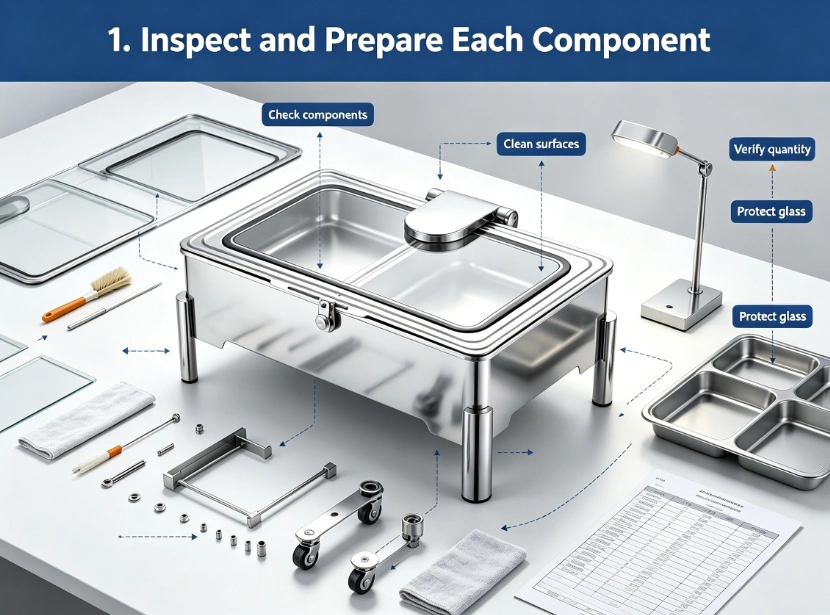
Before packaging, every chafing dish should go through quality inspection.
The preparation process includes:
- Check stainless steel surfaces for scratches, stains, or manufacturing defects.
- Confirm that lids, pans, handles, and accessories are complete.
- Clean and dry all components before wrapping.
- Apply protective film to polished surfaces.
- Separate removable parts to avoid friction damage.
For bulk buyers, pre-shipment inspection records and packaging photos provide additional quality assurance before containers leave the factory.
Step 2: Wrap Individual Parts with Protective Materials
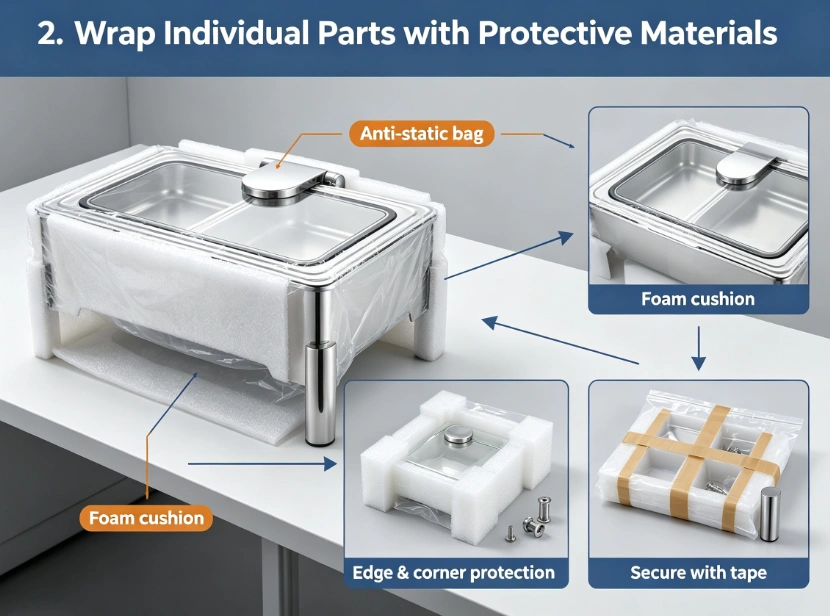
Each chafing dish component should receive individual protection before being placed into cartons.
Recommended wrapping methods:
- Wrap stainless steel lids with foam sheets.
- Place protective film on polished surfaces.
- Use EPE foam around corners and edges.
- Separate stacked pans with cardboard or foam layers.
This step is especially important for premium stainless steel chafing dishes because small scratches can affect the appearance of products displayed in hotels, restaurants, and catering venues.
Step 3: Select Strong Export Cartons
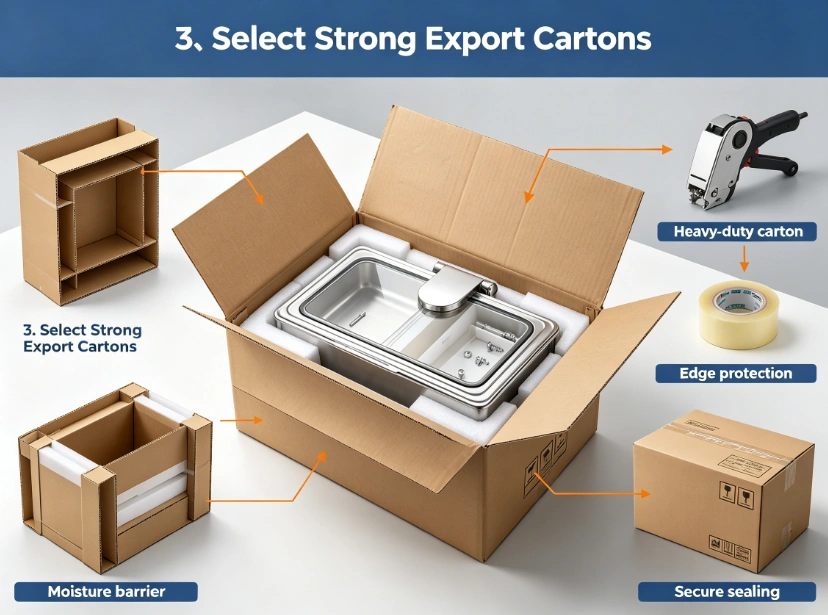
Export cartons must support the weight and size of commercial chafing dishes.
Recommended carton requirements:
| Requirement | Recommended Standard |
|---|---|
| Carton type | 5-layer corrugated carton |
| Printing | Shipping marks and product information |
| Structure | Customized internal support |
| Protection | Corner reinforcement |
| Loading method | Pallet-ready design |
For international buyers, customized cartons also improve inventory management because distributors can quickly identify product models and quantities after receiving shipments.
How Can You Secure Chafing Dishes for Container Shipping?
To secure chafing dishes during container transportation, buyers and manufacturers must focus on pallet stability, weight distribution, moisture protection, and preventing carton movement. Proper container loading reduces the risk of product damage caused by vibration, compression, and sudden movement during ocean freight.
For international shipments, chafing dishes are usually transported through Full Container Load (FCL) ou Less than Container Load (LCL) shipping. The packaging requirements are different depending on the shipping method.
| Shipping Method | Packaging Focus | Recommended Protection |
|---|---|---|
| FCL (Full Container Load) | Large-volume orders with dedicated container space | Pallet loading, stretch wrapping, anti-slip materials |
| LCL (Less than Container Load) | Shared container space with other cargo | Extra carton reinforcement and stronger internal protection |
| Air Freight | Fast delivery with higher handling frequency | Lightweight but impact-resistant packaging |
Quand fabricants pack chafing dishes for FCL shipments, cartons should be arranged evenly to avoid uneven pressure. Heavy cartons should always be placed at the bottom, while lighter accessories and smaller components should be loaded on top.
Additional container loading practices include:
- Use pallets to improve stability. Export pallets allow forklifts to handle cartons safely and prevent direct contact between packaging and container floors.
- Apply stretch film and straps. Stretch wrapping keeps cartons stable during transportation, while straps prevent pallet movement caused by vibration.
- Add moisture protection. Ocean transportation exposes cargo to humidity changes. Desiccant bags and moisture barriers help prevent packaging deterioration and stainless steel surface issues.
- Leave proper loading space. Avoid over-compressing cartons because excessive pressure can deform boxes and damage internal components.
Professionnel fabricants should provide container loading plans before shipment to help buyers understand how products are protected.
What Are the Common Mistakes When You Pack Chafing Dishes for Export?
The most common mistakes when packing chafing dishes include insufficient surface protection, weak cartons, poor component separation, and improper container loading. These mistakes increase the risk of product damage and additional costs for international buyers.
| Packaging Mistake | Possible Result | Better Solution |
|---|---|---|
| No protective film on stainless steel | Scratches and appearance defects | Use PE film or protective covers |
| Overloading cartons | Carton collapse during stacking | Match carton strength with product weight |
| Mixing loose components | Missing accessories after delivery | Use separated compartments |
| No moisture protection | Packaging damage or corrosion concerns | Add desiccant and moisture barrier |
| Unstable pallet loading | Carton shifting during transport | Use straps and stretch film |
One overlooked issue is packaging consistency between production batches. For distributors managing multiple suppliers, inconsistent carton sizes and packing methods increase warehouse handling time.
A professional OEM manufacturer should maintain standardized packing specifications, including carton dimensions, product quantity per carton, pallet configuration, and loading records.
How Can Buyers Reduce Shipping Damage When Ordering Chafing Dishes in Bulk?
Buyers can reduce shipping damage by selecting fabricants with export experience, requesting packaging details before production, and confirming quality inspections before shipment.
A reliable procurement process should include the following steps:
- Confirm packaging requirements before placing an order. Discuss carton structure, protective materials, pallet requirements, and labeling standards with the supplier.
- Request packaging samples for approval. Before mass production, evaluate whether the packaging can protect the product during transportation.
- Review production and packing inspection reports. Inspection records help buyers verify product quantity, appearance, and packaging condition.
- Choose suppliers with OEM export experience. Manufacturers familiar with international logistics understand different market requirements, including labeling, carton standards, and destination regulations.
- Plan shipping based on destination conditions. Long-distance ocean shipments require stronger protection than domestic transportation.
For restaurant supply distributors, hotel equipment suppliers, and catering wholesalers, packaging should not be considered an additional cost. It is an investment that protects product value throughout the supply chain.
What Should Buyers Check Before Choosing a Chafing Dish Supplier?
Buyers should evaluate a chafing dish supplier based on manufacturing capability, quality control systems, customization services, and export packaging experience. A supplier’s packaging ability directly reflects its understanding of international B2B requirements.
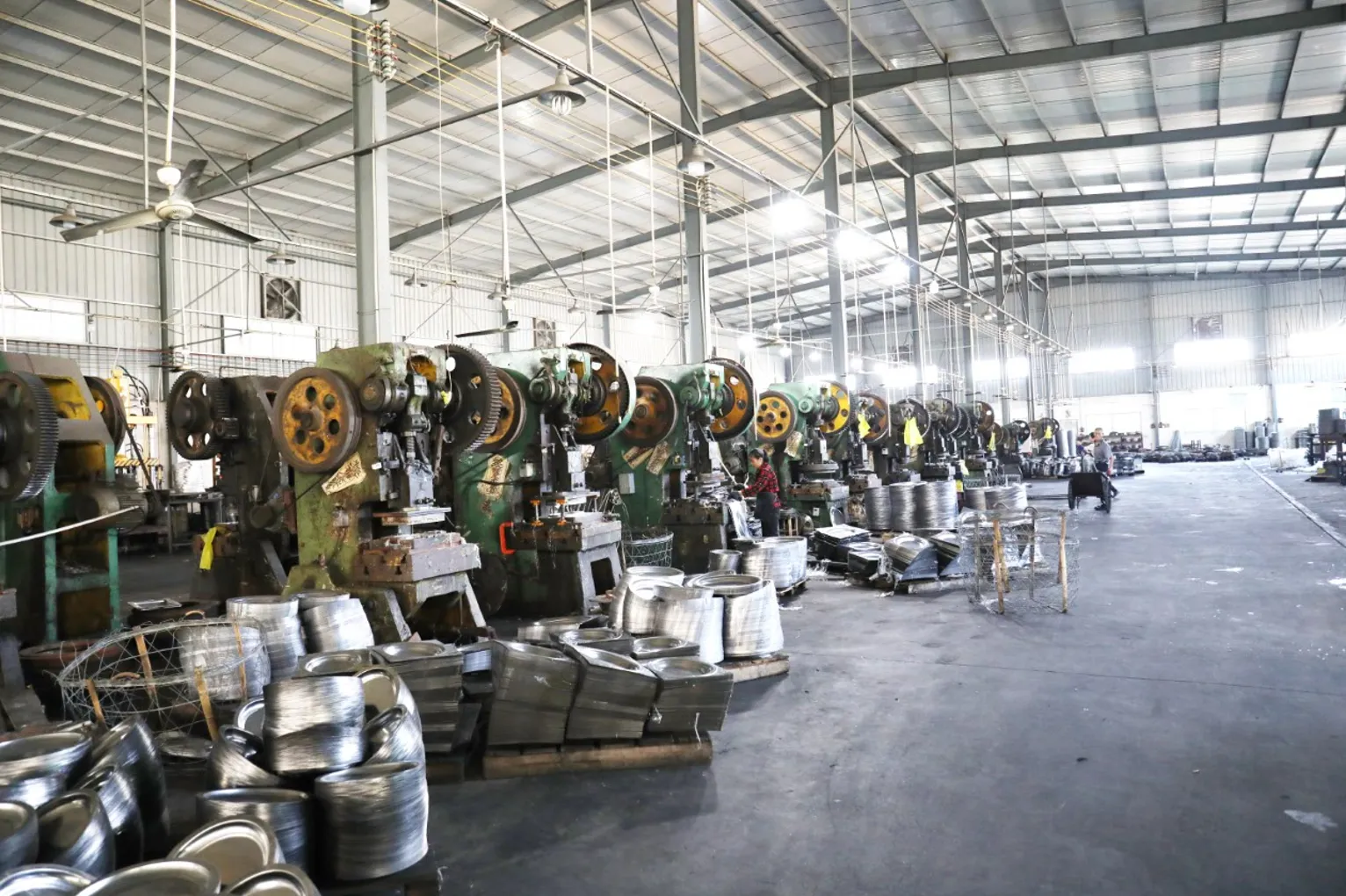
Before cooperation, buyers can review the following checklist:
| Critère d'évaluation | Questions Buyers Should Ask |
|---|---|
| Manufacturing capability | Does the supplier have stable production capacity for bulk orders? |
| Qualité des matériaux | Are food-contact stainless steel materials available? |
| Contrôle de la qualité | Are products inspected before shipment? |
| Packaging experience | Can the supplier provide export-standard packaging solutions? |
| Personnalisation | Can logos, designs, and packaging be customized? |
| Assistance après-vente | Can the supplier solve quality or shipping issues efficiently? |
For global buyers, selecting a manufacturer instead of a trading company can provide better control over product consistency, packaging standards, and customization options.
FAQ: Pack Chafing Dishes for International Shipping
Q1: How should I pack chafing dishes for overseas shipping?
You should pack chafing dishes using multiple protection layers, including surface film, foam wrapping, component separation, reinforced export cartons, and secure pallet loading. This prevents scratches, dents, and transportation damage.
Q2: What packaging materials are best for stainless steel chafing dishes?
The best packaging materials include PE protective film, EPE foam, bubble wrap, cardboard dividers, five-layer corrugated cartons, pallets, stretch film, and moisture-control materials.
Q3: Can chafing dishes be shipped without pallets?
Yes, but pallet-free shipping requires stronger carton structures and additional protection. For bulk international orders, pallet loading is recommended because it improves handling safety and reduces movement damage.
Q4: How many chafing dishes can fit in one shipping container?
The quantity depends on product size, carton dimensions, stacking method, and container type. Professional manufacturers calculate loading plans according to carton volume and weight limits.
Q5: Does Allnice provide customized packaging for bulk chafing dish orders?
Yes. Allnice provides OEM/ODM solutions including customized products, branding, packaging support, and bulk production services for international catering equipment buyers.
Conclusion
Learning how to pack chafing dishes correctly is essential for global buyers who want to protect product quality, reduce logistics risks, and improve customer satisfaction. Professional packaging combines product protection, export standards, and efficient transportation planning.
By working with an experienced OEM/ODM manufacturer like Allnice, importers and distributors can receive reliable catering equipment solutions with customized production and secure international shipping support.
How Does Allnice Help Buyers Pack and Ship Chafing Dishes Successfully?
Allnice provides professional stainless steel cookware, tableware, and catering equipment solutions for global importers, wholesalers, and distributors. As an experienced OEM/ODM kitchenware manufacturer, Allnice supports customers from product design and mold development to logo customization and bulk production.
With strong manufacturing capabilities and strict quality control procedures, Allnice understands that successful international delivery requires more than producing high-quality chafing dishes. It requires reliable export packaging, accurate order management, and customized solutions based on different market requirements.
Allnice stipule :
- Customized product designs for catering equipment brands
- OEM logo and packaging customization
- Professional bulk production support
- Export-ready packaging solutions
- Quality inspection before shipment
- One-stop catering supply solutions
Whether customers need standard stainless steel chafing dishes or customized catering equipment for hotels, restaurants, and distributors, Allnice works closely with global partners to deliver reliable products with secure packaging.
Contact Allnice today to discuss your OEM/ODM catering equipment requirements and develop a customized solution for your international market.
-

Réchauffeur d'aliments en acier inoxydable pour l'hôtellerie
-
Set de buffet en acier inoxydable avec pieds à colonnes romaines pour la restauration
-
Roll Top Chafing Dishes Supplier, Stainless Steel Food Warmer Silver Wholesale
-
Chafing Dish Gold Roll Top Wholesale Stainless Steel with Dome Lid and Roman Column Legs (Chafing en acier inoxydable avec couvercle en forme de dôme et pieds en forme de colonne romaine)