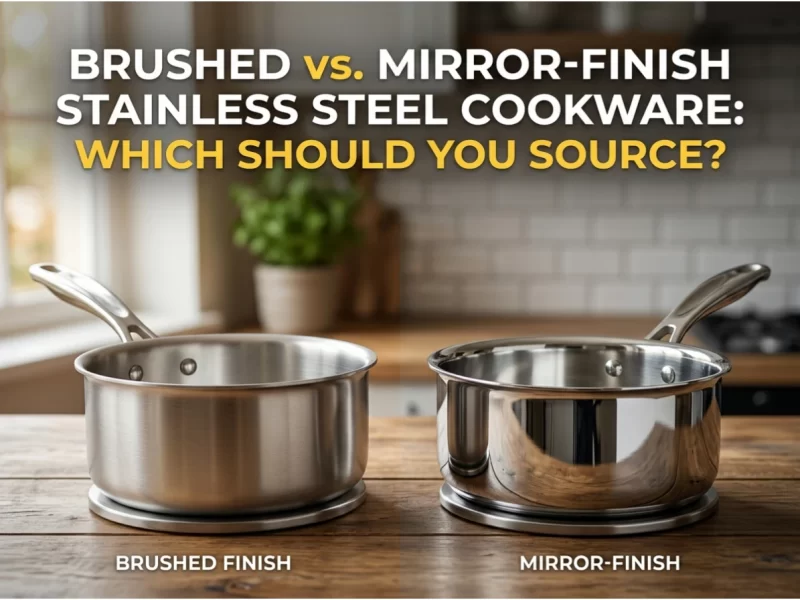
Choosing between brushed vs. mirror-finish Kochgeschirr aus rostfreiem Stahl is an important sourcing decision. Brushed finishes suit practical, understated cookware lines, while mirror finishes create a polished, premium appearance. Buyers should select based on target customers, maintenance requirements, visual consistency, and production specifications rather than appearance alone. As an experienced stainless steel cookware manufacturer, Allnice provides wholesale, OEM, and ODM solutions to help global buyers customize cookware finishes for their business needs.
What Is Brushed Stainless Steel Cookware?
Brushed stainless steel cookware features a directional surface texture created through mechanical abrasion. The process produces fine, parallel lines that give the metal a satin or matte appearance instead of a highly reflective shine.
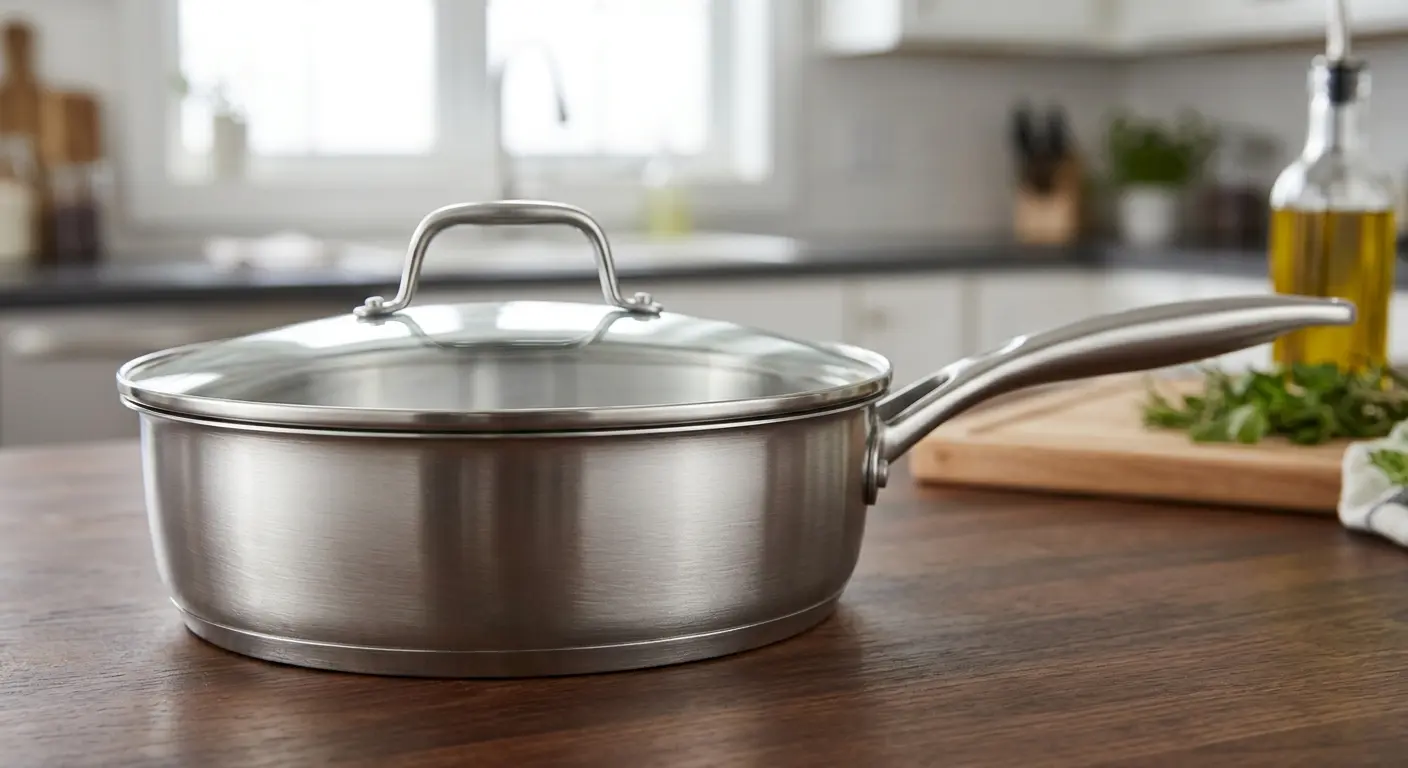
A brushed finish is commonly associated with the No. 4 stainless steel finish, although the exact appearance depends on the abrasive materials and finishing process.
Key Characteristics of Brushed Finishes
- Subtle appearance: The directional grain creates a modern, understated look suitable for everyday cookware.
- Lower reflectivity: The surface does not reflect surrounding objects as clearly as a mirror-polished finish.
- Less noticeable fingerprints: Fingerprints and minor handling marks are generally less visible than on highly reflective surfaces.
- Visible grain direction: Consistent brushing direction is important for maintaining a uniform appearance across a cookware set.
According to the Australian Stainless Steel Development Association (ASSDA), a typical No. 4 finish is produced using final abrasives of approximately 120–150 mesh. This gives buyers a useful technical reference when discussing brushed finishes with manufacturers.
What Are the Advantages and Limitations of Brushed Finishes?
Brushed stainless steel cookware is a strong choice for brands that prioritize practical appearance and easier day-to-day visual maintenance.
Vorteile:
- Hides minor surface marks better than a highly reflective finish.
- Creates a professional appearance for everyday and commercial cookware.
- Offers a contemporary look that works well with minimalist product designs.
- Reduces the visual impact of fingerprints and handling marks.
Einschränkungen:
- Directional scratches may become visible if the surface is rubbed against the grain.
- Brushing patterns can vary between production batches without clear specifications.
- The textured surface requires appropriate cleaning to avoid residue accumulating in surface grooves.
For wholesale buyers, brushed cookware is particularly suitable when the product line emphasizes functionality, understated design, and consistent everyday use.
What Is Mirror-Finish Stainless Steel Cookware?
Mirror-finish stainless steel cookware has a highly polished, reflective surface that produces a clear image reflection. Manufacturers achieve this appearance through successive polishing stages using progressively finer abrasives, followed by buffing.
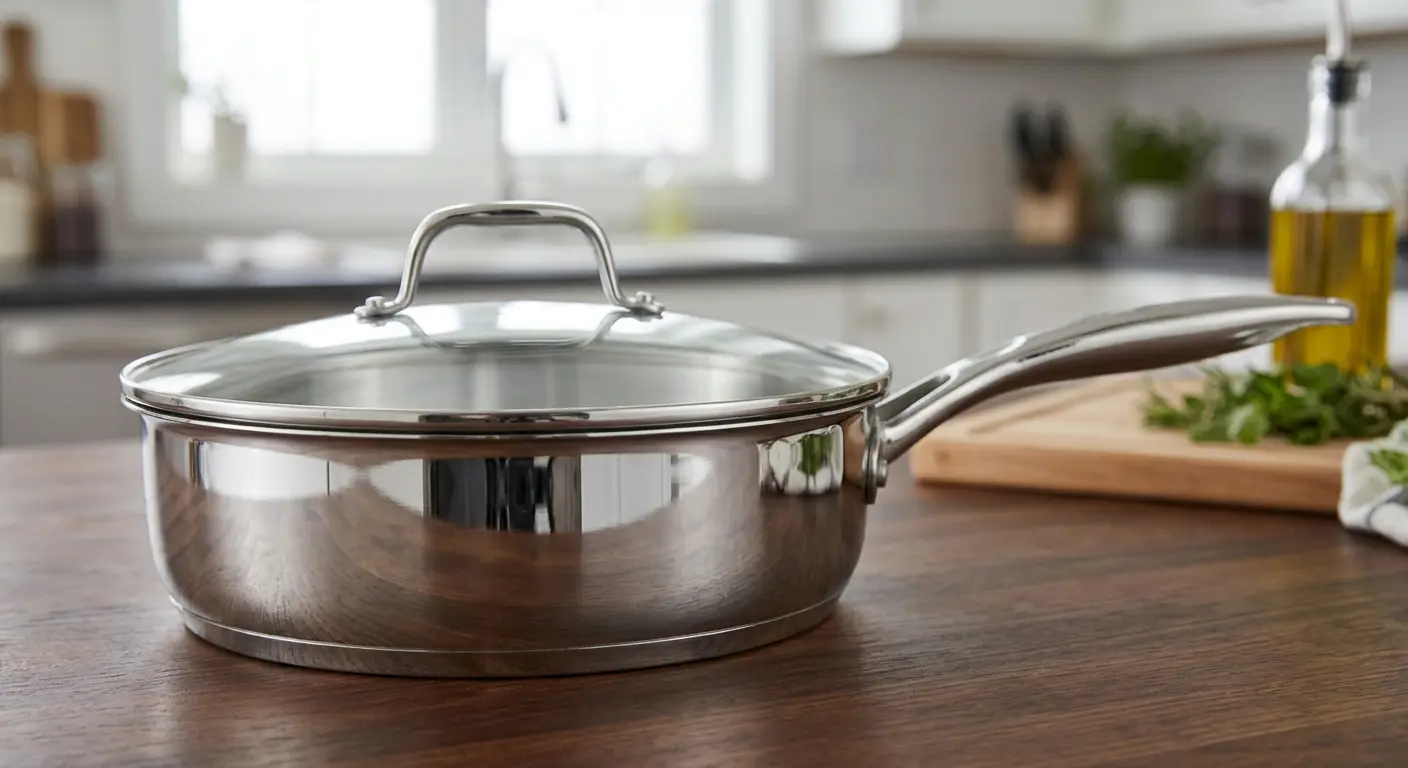
The No. 8 finish under ASTM A480 is a recognized mirror-finish designation. According to World Stainless, bright polished No. 8 is the most reflective commonly produced stainless steel finish.
Key Characteristics of Mirror Finishes
- High reflectivity: The surface creates a bright, polished appearance.
- Premium presentation: Its glossy appearance enhances the perceived quality of cookware.
- Smooth visual texture: Unlike brushed finishes, mirror polishing does not produce a visible directional grain.
- Greater visibility of marks: Fingerprints, water spots, and fine scratches are easier to notice on reflective surfaces.
What Are the Advantages and Limitations of Mirror Finishes?
Mirror-finish stainless steel cookware is ideal for brands targeting premium retail markets and customers who value polished product presentation.
Vorteile:
- Creates an attractive, high-end appearance.
- Enhances product presentation in retail displays and product photography.
- Works well with premium cookware collections and coordinated kitchenware sets.
- Provides a smooth, polished surface that is straightforward to wipe when properly maintained.
Einschränkungen:
- Fingerprints and water spots are more noticeable.
- Fine scratches can affect the reflective appearance.
- Achieving a consistent mirror finish requires careful polishing and inspection.
- Surface defects are more visually obvious, increasing the importance of appearance quality control.
For brands positioning cookware as a premium product, the additional finishing requirements can be justified by the visual value delivered to customers.
How Do Brushed vs. Mirror-Finish Stainless Steel Cookware Compare?
Brushed vs. mirror-finish stainless steel cookware differs mainly in appearance, surface texture, maintenance expectations, and manufacturing requirements. Neither finish is universally better; the right option depends on the product’s intended market and commercial positioning.
| Comparison Factor | Brushed Finish | Mirror Finish |
|---|---|---|
| Erscheinungsbild | Satin, matte, directional grain | Bright, glossy, reflective |
| Surface texture | Visible linear brushing marks | Highly polished, non-directional |
| Fingerprint visibility | Generally lower | Generally higher |
| Minor scratch visibility | Often less noticeable | More noticeable |
| Water spot visibility | Less visually prominent | More visually prominent |
| Reinigung | Requires care along the grain | Easy to wipe, but needs non-abrasive care |
| Manufacturing | Mechanical brushing or polishing | Multiple fine polishing and buffing stages |
| Qualitätskontrolle | Grain direction and consistency | Reflectivity and polishing uniformity |
| Product positioning | Practical, modern, professional | Premium, elegant, high-end |
An important technical distinction is that surface finish does not automatically determine the corrosion resistance of cookware. Stainless steel grade, surface cleanliness, finishing quality, and manufacturing practices also influence corrosion performance.
The British Stainless Steel Association (BSSA) reports typical surface roughness values of approximately 0.2–1.5 μm Ra for brushed or dull-polished 1J/2J finishes, compared with less than 0.1 μm Ra for bright-polished 1P/2P finishes. These are finish-specific reference values, not universal measurements for every cookware product.
This distinction matters when comparing brushed vs. mirror-finish stainless steel products: a smooth, properly finished surface can support corrosion resistance, but a shiny appearance alone does not prove superior material quality.
Which Cookware Finish Should You Source for Your Market?
Choose brushed stainless steel cookware for practical product lines where understated appearance and lower visibility of everyday marks matter most. Choose mirror-finish cookware for premium collections where visual impact, polished presentation, and perceived product value are key selling points.
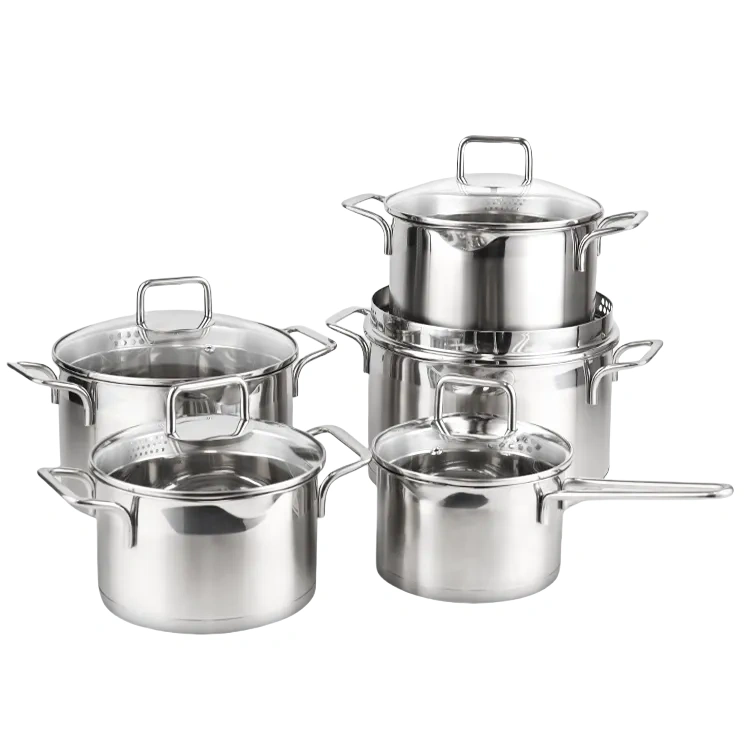


The following sourcing scenarios can help importers, wholesalers, and private-label brands make a more commercially relevant decision.
1. Should Commercial Kitchen Suppliers Choose Brushed Finishes?
Brushed finishes are a practical option for commercial kitchen suppliers, catering distributors, and foodservice equipment wholesalers.
Commercial buyers often prioritize functional design, regular handling, and a professional appearance. A brushed surface helps reduce the visibility of everyday fingerprints and minor handling marks, making it suitable for frequently used cookware.
For these product lines, buyers should focus on:
- Consistent brushing direction across matching products.
- Appropriate stainless steel grade for the intended application.
- Surface quality after forming, welding, and polishing.
- Easy-to-follow cleaning and maintenance instructions.
2. Should Premium Retail Brands Choose Mirror Finishes?
Mirror finishes are particularly suitable for premium cookware brands, gift collections, and retail-focused product ranges.
A reflective exterior creates a strong visual impression on store shelves and in online product photography. It also complements polished handles, decorative details, and coordinated cookware sets.
Premium buyers should prioritize:
- Uniform gloss across the entire visible surface.
- Minimal polishing marks and visible defects.
- Consistent appearance between lids, bodies, and handles.
- Protective packaging to prevent scratches during transportation.
3. Should Wholesale Buyers Offer Both Finishes?
Offering both finishes can help wholesalers and distributors serve different customer segments without developing entirely different cookware product categories.
For example, a distributor can source a standard brushed cookware range for everyday retail and commercial customers while offering a mirror-finish collection for premium retailers and private-label brands.
This approach creates more product positioning options and allows buyers to test market demand before expanding their inventory.
What Should Buyers Consider Before Sourcing Stainless Steel Cookware Finishes?
Before sourcing brushed vs. mirror-finish stainless steel cookware, buyers should define the required finish, material grade, appearance standards, production consistency, and inspection process. A clear specification helps manufacturers quote accurately and reduces disputes during bulk production.
Follow these five steps when preparing your purchasing requirements.
Step 1: Define the Target Market and Product Positioning
Determine whether your cookware is intended for everyday retail, commercial kitchens, premium stores, or private-label collections. This decision establishes the appropriate appearance and finishing requirements.
Step 2: Confirm the Stainless Steel Grade
Specify the required grade, such as 304 or another suitable stainless steel grade, for each relevant component. Do not assume that a mirror finish means better stainless steel quality. Material selection and surface finishing are separate purchasing decisions.
Step 3: Define the Finish with Physical Samples
Avoid relying only on descriptions such as “brushed,” “satin,” or “mirror polished.” Surface appearance can vary between finishing suppliers.
The BSSA recommends using agreed samples when specifying mechanically finished stainless steel. Buyers should approve a physical reference sample before mass production.
Step 4: Establish Appearance and Inspection Criteria
Specify measurable or clearly observable acceptance requirements, including:
- Brushing direction and texture consistency.
- Reflectivity and polishing uniformity.
- Acceptable scratches, dents, and surface marks.
- Consistency between cookware bodies, lids, and handles.
- Inspection conditions and approved reference samples.
Step 5: Confirm Production Cost, MOQ, and Packaging
Discuss finishing costs, minimum order quantities, lead times, and protective packaging with your manufacturer. Mirror-polished surfaces require particular protection during handling, storage, and transportation to reduce the risk of visible scratches.
What Is a Better Way to Control Finish Consistency in Bulk Production?
One useful approach is to create a Cookware Finish Approval Sheet before mass production. This is more reliable than approving a single product photo or using a general finish name in an RFQ.
The approval sheet should include:
- A physical reference sample for the approved finish.
- Close-up images showing the required surface texture and gloss.
- The approved finish on the actual cookware shape, not just a flat steel sheet.
- Defined inspection areas, including the body, rim, lid, and handles.
- Acceptable visual deviations and rejection criteria.
This is particularly important because a flat stainless steel sample does not always represent the final appearance of a curved stockpot or saucepan. Forming, welding, and polishing can create differences across product areas.
For buyers sourcing Großhandel mit Kochgeschirr aus Edelstahl, this finish approval process provides a shared quality reference for both the purchasing team and the manufacturer. It also helps maintain visual consistency across different models and production batches.
Can You Customize Brushed and Mirror Finishes for OEM Stainless Steel Cookware?
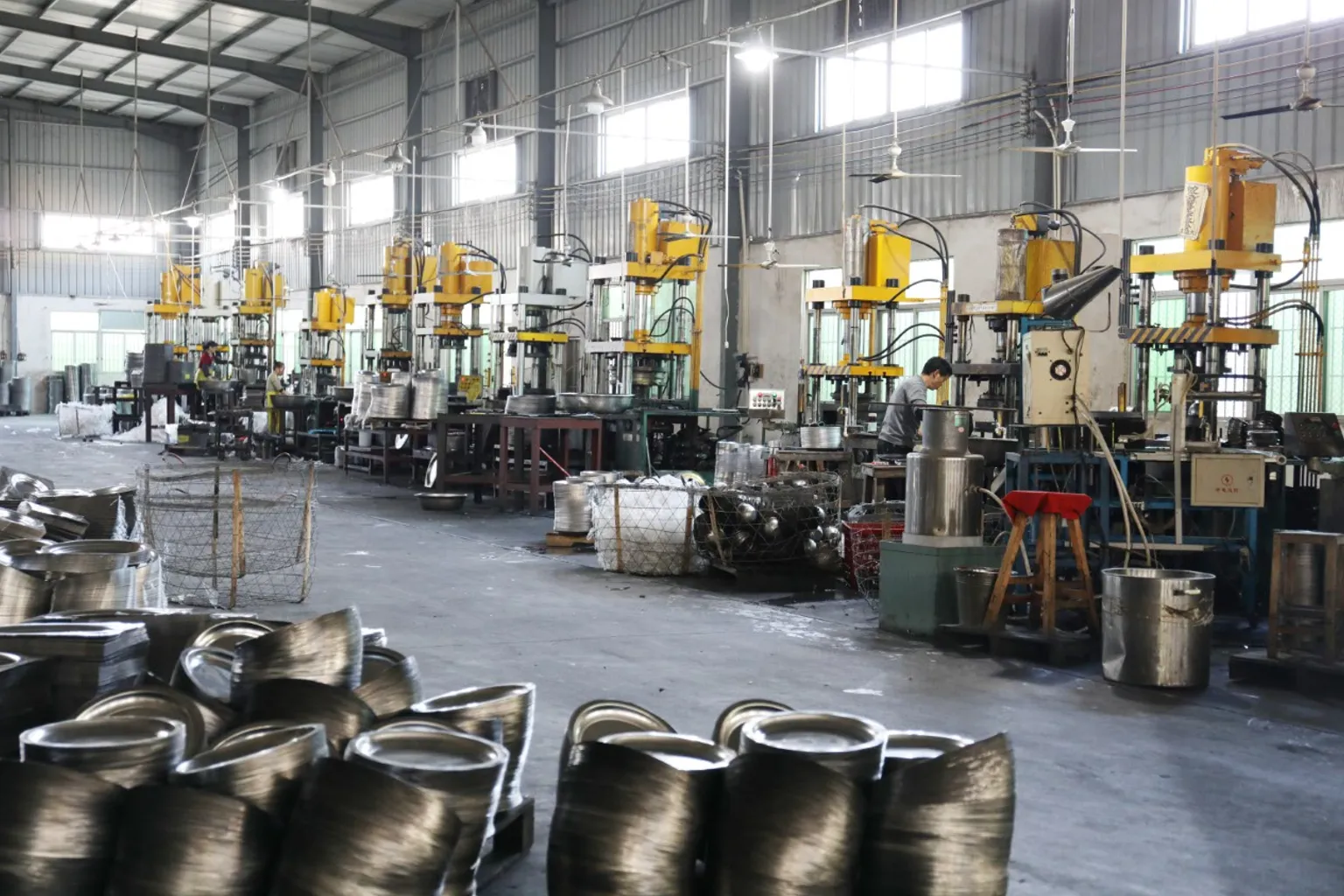
Yes. OEM stainless steel cookware manufacturers can customize surface finishes according to product designs, brand positioning, and target market requirements. Buyers can also combine brushed and mirror-polished details within one product to create a distinctive appearance.
For example, a cookware design can feature a brushed exterior body with mirror-polished rims, handles, or decorative bands. This combination balances a practical overall appearance with premium visual accents.
When developing Maßgefertigtes Kochgeschirr aus Edelstahl, discuss the following requirements with your manufacturing partner:
- Exterior and interior finish requirements.
- Brushing direction and texture.
- Mirror-polished areas and gloss consistency.
- Handle and lid finish coordination.
- Logo application and branding details.
- Packaging protection for finished surfaces.
An experienced OEM/ODM partner can help translate these requirements into production specifications, samples, and quality inspection standards before bulk manufacturing begins.
FAQ
Is brushed stainless steel better than mirror finish?
Neither is universally better. Brushed stainless steel is better suited to practical cookware lines where fingerprints and minor marks should be less noticeable. Mirror finish is better for premium collections that prioritize a bright, polished appearance.
Does mirror-finish stainless steel cookware scratch easily?
Fine scratches can occur during regular handling, cleaning, and transportation. Because mirror finishes are highly reflective, these marks are easier to notice. Non-abrasive cleaning tools and protective packaging help preserve the appearance.
Which stainless steel cookware finish is easier to maintain?
Brushed finishes generally make fingerprints and minor handling marks less noticeable. Mirror finishes are easy to wipe clean but require more attention to visible water spots and scratches. Both finishes need proper cleaning and drying.
Does surface finishing affect cookware performance?
Surface finishing mainly affects appearance, texture, and surface condition. Heat distribution and cooking performance depend more directly on material grade, thickness, base construction, and cookware design. A mirror finish does not automatically make cookware perform better.
Can manufacturers customize brushed and mirror finishes for wholesale orders?
Yes. Manufacturers can customize surface treatments, polishing areas, logo details, and product designs for wholesale and private-label orders. Buyers should confirm samples, finishing specifications, MOQ, and inspection standards before bulk production.
How should buyers specify brushed vs. mirror-finish stainless steel cookware in an RFQ?
Buyers should identify the required finish, provide reference samples or images, specify the relevant product areas, and define appearance acceptance criteria. They should also confirm stainless steel grade, dimensions, quantity, packaging, and delivery requirements.
Conclusion: Which Stainless Steel Cookware Finish Should You Source?
The right choice between brushed vs. mirror-finish stainless steel cookware depends on your target market, product positioning, and customer expectations. Brushed finishes provide a practical, understated appearance and help reduce the visibility of everyday marks. Mirror finishes create a polished, premium look that strengthens retail presentation.
For wholesalers and distributors, offering both finishes can expand market coverage and provide more options for different customer segments. For private-label brands, the best sourcing decision starts with clear material requirements, approved finish samples, and consistent quality standards.
Allnice ist eine vertrauenswürdige Hersteller von Küchenartikeln specializing in the production and wholesale supply of Kochgeschirr aus rostfreiem Stahl, Tafelgeschirrund Catering-Ausrüstung. Serving global importers, wholesalers, and distributors, Allnice provides comprehensive OEM/ODM solutions covering product design, mold development, logo customization, and bulk production. With strong manufacturing capabilities, strict quality control, and competitive pricing, Allnice delivers one-stop kitchenware solutions tailored to diverse business needs. Contact Allnice today to discuss your Maßgefertigtes Kochgeschirr aus Edelstahl requirements and request a wholesale quotation.