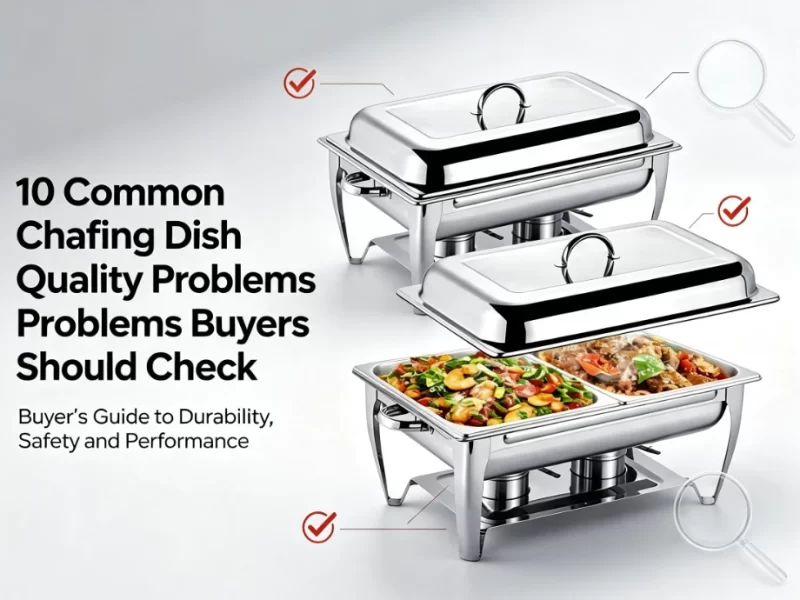
Gewerbe Chafing Dish Die Qualität wirkt sich unmittelbar auf die Lebensdauer, die Lebensmittelsicherheit, die Kundenzufriedenheit und den Ruf der Marke aus. Viele Käufer legen beim Kauf zu viel Wert auf den Preis, doch bei minderwertigen Produkten treten oft schon innerhalb weniger Monate Probleme auf – wie beispielsweise lockere Griffe, schlechte Wärmespeicherung, Rost, instabile Deckel oder ungleichmäßige Wärmeverteilung –, was zu kostspieligen Kundendienst- und Ersatzkosten führt.
Allnice hat es sich zur Aufgabe gemacht, Importeure, Großhändler und Vertriebsunternehmen weltweit bei der Beschaffung zu unterstützen hochwertige Chafing Dishes aus rostfreiem Stahl durch OEM-/ODM-Fertigung, strenge Qualitätskontrolle und maßgeschneiderte Lösungen für Großküchen.
Vor dem Abschluss von Großaufträgen müssen professionelle Einkäufer besonders auf die Materialqualität, das Schweißverfahren, die Deckelkonstruktion, die Heizleistung und die allgemeine Verarbeitungsqualität achten. Dieser Leitfaden beschreibt zehn häufige Qualität eines Chafing Dishes Punkte, die professionelle Einkäufer prüfen müssen, damit Sie kostspielige Fehler beim Einkauf vermeiden können.
Warum die Qualität von Warmhaltebehältern wichtiger ist als der Preis
Viele Beschaffungsteams vergleichen Angebote verschiedener Lieferanten und gehen davon aus, dass Produkte mit ähnlichem Erscheinungsbild auch eine ähnliche Qualität aufweisen.
Leider trifft das nur selten zu.
Zwei Chafing Dishes können online fast identisch aussehen, weisen jedoch erhebliche Unterschiede in folgenden Punkten auf:
- Edelstahlsorte
- Materialstärke
- Schweißqualität
- Haltbarkeit des Deckelmechanismus
- Oberflächenpolieren
- Wärmespeicherung
- Strukturelle Stabilität
- Konsistenz in der Fertigung
Diese Unterschiede entscheiden darüber, ob ein Produkt mehrere Jahre hält – oder bereits nach wenigen Catering-Veranstaltungen erste Mängel aufweist.
Eine schlechte Qualität des Warmhaltetellers kann folgende Folgen haben:
- Zunehmende Kundenbeschwerden
- Höhere Produktrücklaufquoten
- Zusätzliche Kosten im Kundendienstbereich
- Schaden für den Ruf Ihrer Marke
- Rückgang der Folgeaufträge
Bei gewerblichen Gastronomiegeräten sollten internationale Einkäufer außerdem Folgendes berücksichtigen: Hygiene, Reinigungsfreundlichkeit und Sicherheit im Lebensmittelkontakt. Organisationen wie die NSF betonen, dass gewerbliche Gastronomiegeräte strenge Anforderungen hinsichtlich der verwendeten Materialien, der Bauweise und der hygienischen Gestaltung erfüllen sollten, um einen sicheren und zuverlässigen Gebrauch zu gewährleisten.
Qualitätsprüfung 1: Edelstahlsorte
Das Erste, worauf jeder erfahrene Käufer achtet, ist das Edelstahlmaterial.
Nicht jeder Chafing Dish aus “Edelstahl” besteht aus derselben Legierung.
Zu den gängigsten Optionen gehören:
| Material | Vorteile | Empfohlene Verwendung |
|---|---|---|
| 201 Rostfreier Stahl | Geringere Kosten | Discounter |
| Edelstahl 430 | Magnetisch und wirtschaftlich | Trockene Umgebungen |
| 304 Edelstahl | Ausgezeichnete Korrosionsbeständigkeit | Hotels, Gastronomie, Großküchen |
Zwar senken minderwertige Materialien die Produktionskosten, doch können sie in feuchten Küchen oder bei Kontakt mit säurehaltigen Lebensmitteln leichter rosten.
Professionelle Einkäufer fragen in der Regel nach:
- Werkstoffzertifikate
- Überprüfung der Stahlsorte
- Dickenangaben
- Prüfberichte von unabhängigen Stellen
Wenn zu Ihren Zielkunden Hotels oder Premium-Catering-Unternehmen gehören, Edelstahl 304 wird aufgrund seiner Langlebigkeit und Korrosionsbeständigkeit in der Regel bevorzugt.
Qualitätsprüfung 2: Mangelhafte Schweißqualität
Das Schweißen ist eine der einfachsten Methoden, um die allgemeine Fertigungskompetenz zu beurteilen.
Mangelhafte Schweißarbeiten führen häufig zu:
- Scharfe Kanten
- Schwache strukturelle Verbindungen
- Sichtbare Lücken
- Risse nach wiederholtem Gebrauch
- Wasseraustritt
Professionelle Hersteller Durch den Einsatz präziser Schweißtechniken und anschließendes sorgfältiges Polieren entstehen glatte, nahtlose Verbindungen.
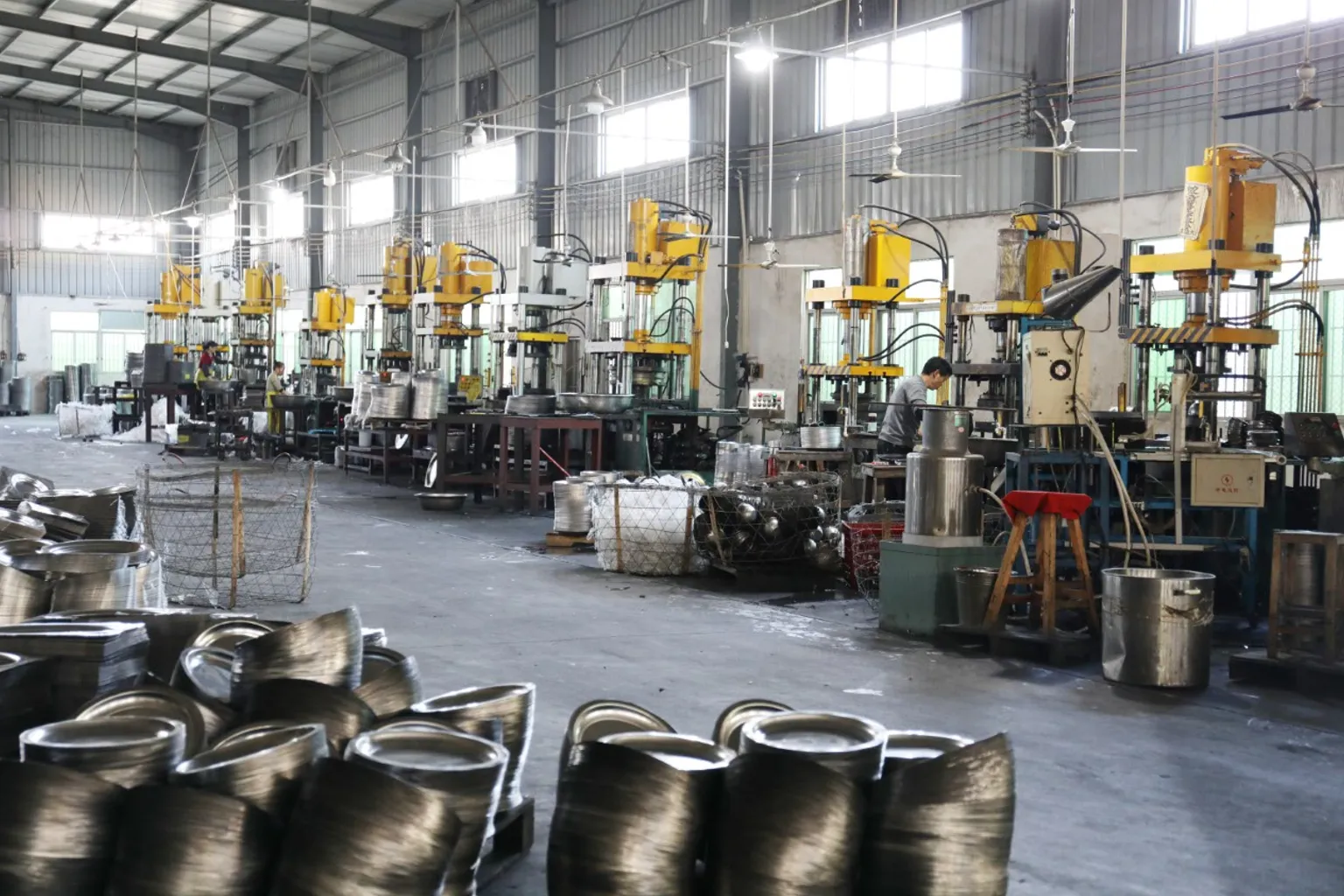
Zu den Anzeichen für eine hervorragende Schweißnaht gehören:
- Gleichmäßige Schweißnähte
- Keine sichtbaren Brandspuren
- Glattpolieren
- Starke Eckverstärkung
- Einheitliches Erscheinungsbild in allen Einheiten
Mangelhafte Schweißnähte sind nicht nur ein ästhetisches Problem – sie können auch die Haltbarkeit beeinträchtigen und Bereiche schaffen, die schwerer zu reinigen sind, was in gewerblichen Gastronomiebetrieben zu erhöhten Hygieneproblemen führt.
Qualitätsprüfung 3: Funktion des Deckels und Haltbarkeit der Scharniere
Der Deckel ist eines der am häufigsten verwendeten Teile beim Buffetservice.
Leider ist es auch eines der ersten Teile, die bei minderwertigen Produkten ausfallen.
Käufer sollten Folgendes prüfen:
- Öffnungswinkel
- Schließstabilität
- Federmechanismus
- Hydraulisches Scharnier (falls vorhanden)
- Griffkraft
- Verriegelungsleistung
Zu den häufigsten Problemen gehören:
- Der Deckel fällt unerwartet herunter
- Lose Scharniere
- Ungleichmäßige Öffnung
- Übermäßiger Lärm
- Schwierige Bedienung
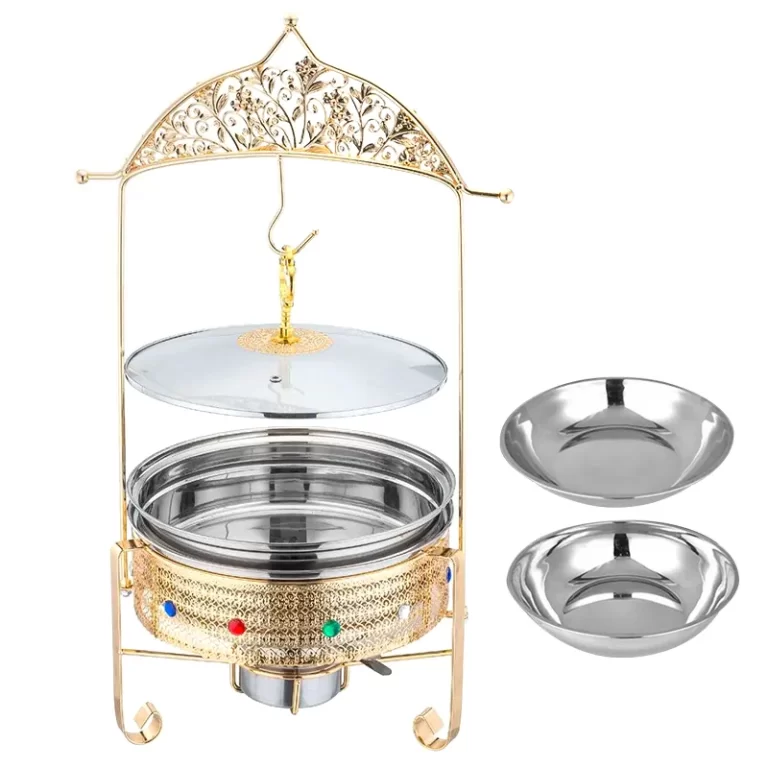
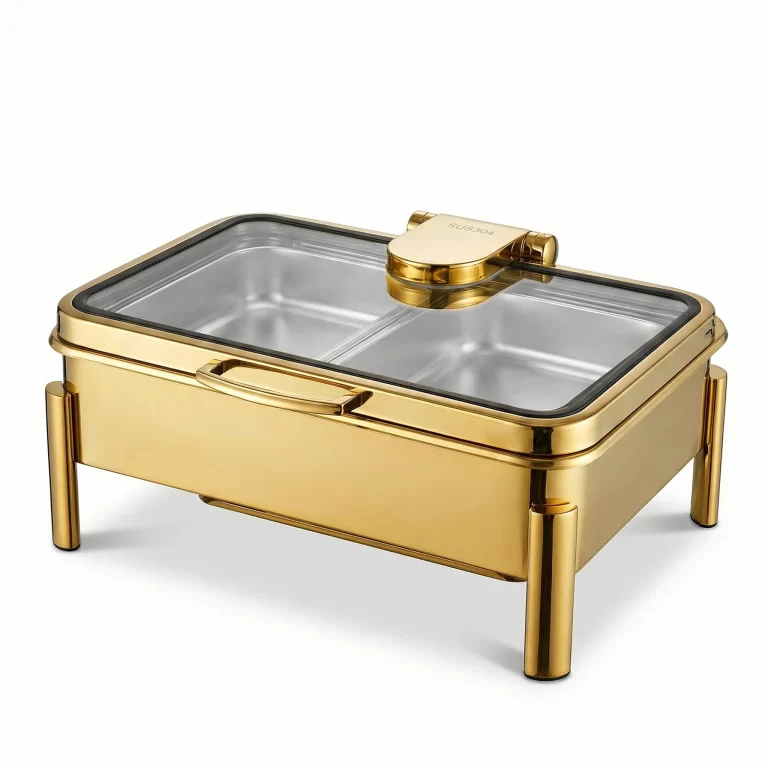
Hochwertige Hersteller die Deckelmechanismen während der Produktentwicklung wiederholt zu testen, um eine langfristige Haltbarkeit bei häufigem gewerblichen Einsatz sicherzustellen.
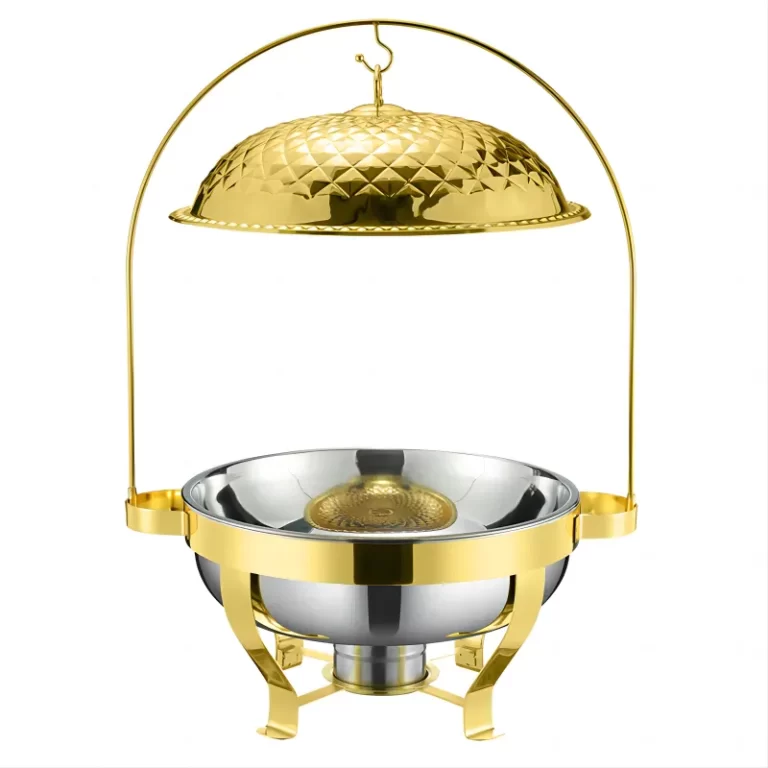
Bei hochwertigen Roll-Top- oder hydraulischen Chafing Dishes ist ein sanftes und kontrolliertes Öffnen ein wichtiger Indikator für höchste Qualität Chafing Dish Qualität.
Qualitätsprüfung 4: Ungleichmäßige Heizleistung
Selbst die attraktivste Buffetausstattung verliert an Wert, wenn sie die Temperatur der Speisen nicht konstant halten kann.
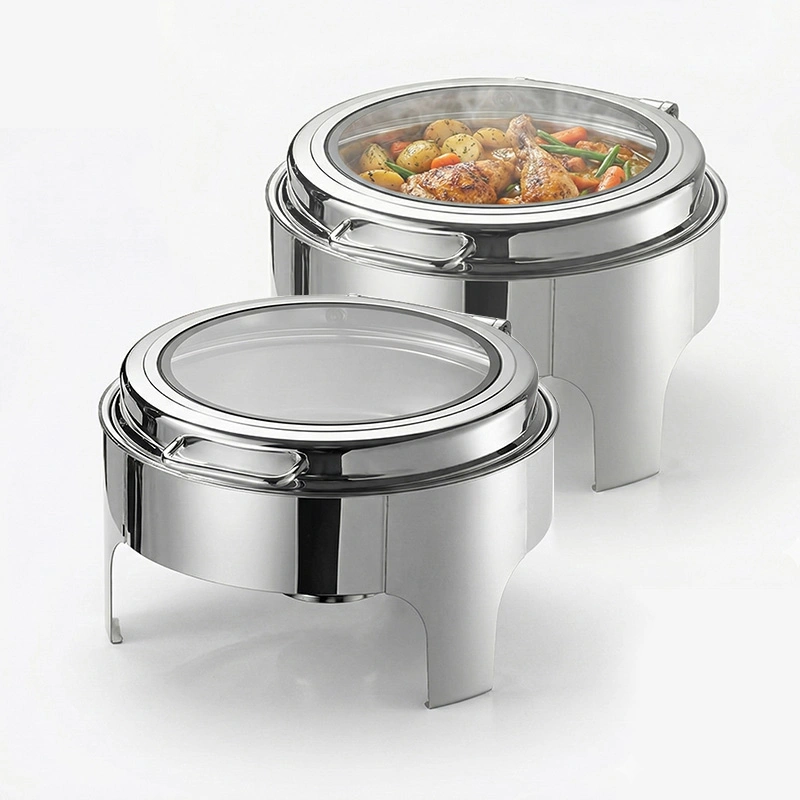
Eine ungleichmäßige Erwärmung ist häufig auf folgende Ursachen zurückzuführen:
- Ungünstige Anordnung der Brenner
- Dünner Edelstahl
- Schlechte Wärmeverteilung
- Mangelhafte Konstruktion der Wasserwanne
- Uneinheitliche Fertigungstoleranzen
Zu den häufigsten Kundenbeschwerden gehören:
- Das Essen wird zu schnell kalt.
- Das Essen brennt auf einer Seite an.
- Die Dampfverteilung ist ungleichmäßig.
- Wasser verdunstet schnell.
Professionelle Hersteller Die Konstruktion wird so optimiert, dass die Wärme gleichmäßig über die Speisenwanne verteilt wird, wodurch die Serviertemperaturen besser aufrechterhalten werden und gleichzeitig die Energieeffizienz verbessert wird.
Dies ist besonders wichtig für Hotels, Bankettsäle, Catering-Unternehmen und Buffetrestaurants, die über längere Zeiträume hinweg geöffnet sind.
Qualitätsprüfung 5: Oberflächenbeschaffenheit und Polieren
Das Erscheinungsbild der Oberflächen hat einen starken Einfluss auf den ersten Eindruck der Kunden – insbesondere im Gastgewerbe.
Eine hochwertige Spiegeloberfläche zeugt sowohl von Fertigungspräzision als auch von Liebe zum Detail.
Käufer sollten jedoch nicht nur auf den Glanz achten.
Überprüfen Sie sorgfältig, ob Folgendes vorliegt:
- Kratzer
- Polierspuren
- Ungleichmäßiges Zähneputzen
- Oberflächenwellen
- Fingerabdruckbeständigkeit
- Scharfe Ecken
Eine hochwertige Politur verbessert nicht nur die Optik, sondern erleichtert auch die Reinigung und trägt dazu bei, dass das Produkt auch nach wiederholtem gewerblichen Einsatz ein professionelles Erscheinungsbild behält.
Erfahrene Einkäufer vergleichen oft mehrere Muster unter hellem Licht, da sich so geringfügige Oberflächenfehler viel leichter erkennen lassen.
Qualitätsprüfung 6: Statische Stabilität und Tragfähigkeit
Ein Chafing Dish sollte auch während des regen Betriebs am Buffet stabil bleiben, selbst wenn er vollständig mit Speisen beladen ist.
Leider wird bei Produkten minderer Qualität oft der Kostensenkung Vorrang vor der strukturellen Integrität eingeräumt.
Zu den häufigsten Problemen gehören:
- Wackelnde Rahmen
- Schwache Stützbeine
- Abgeknickte Ecken
- Verformte Wasserwannen
- Lose Nieten
- Ungünstige Gewichtsverteilung
Diese Mängel verkürzen nicht nur die Lebensdauer der Produkte, sondern können auch Sicherheitsrisiken in Großküchen verursachen.
Bei der Beurteilung der Qualität von Chafing Dishes sollten Käufer Folgendes verlangen:
- Ergebnisse der statischen Belastungsprüfung
- Prüfberichte zur Montage
- Angaben zur Materialstärke
- Musterprüfung vor der Serienfertigung
Ein robuster Rahmen ist besonders wichtig für Hotels, Veranstaltungsorte für Bankette, Kreuzfahrtschiffe und Catering-Unternehmen, in denen die Geräte häufig transportiert werden.
Qualitätsprüfung 7: Schlechter Sitz der Bauteile
Ein oft übersehener Indikator für Chafing Dish Qualität zeigt sich darin, wie gut alle Komponenten zusammenpassen.
Eine unzureichende Maßkontrolle während der Fertigung führt häufig zu:
- Wasserwannen, die nicht flach aufliegen
- Wackelige Speiseformen
- Deckel, die nicht vollständig schließen
- Kraftstoffbehälter, die sich während des Gebrauchs verschieben
- Ungleichmäßige Montageabstände
Auch wenn diese Probleme auf den ersten Blick unbedeutend erscheinen mögen, wirken sie sich doch auf die Wärmespeicherung, das Benutzererlebnis und die allgemeine Zuverlässigkeit des Produkts aus.
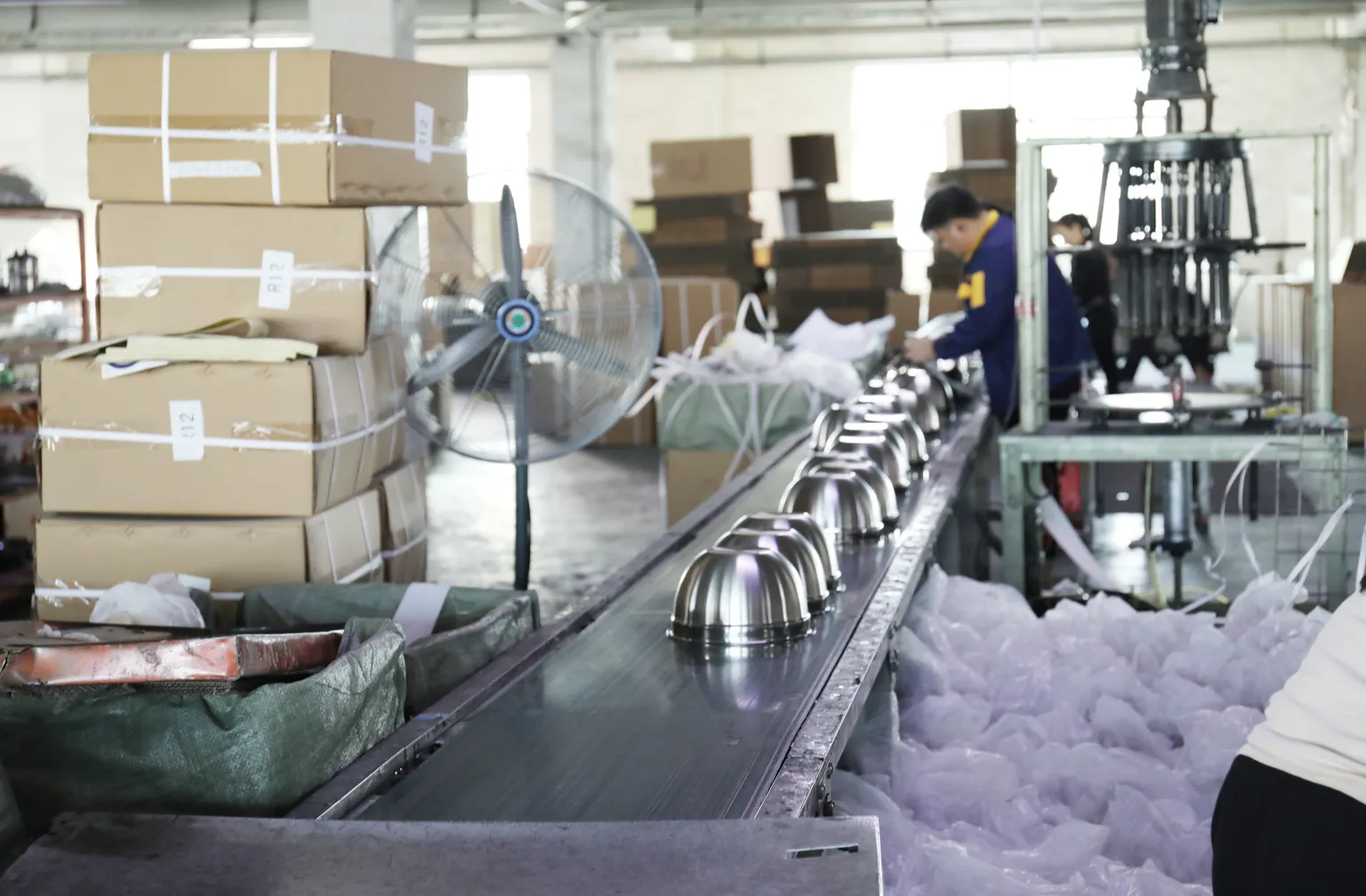
Professionelle Hersteller strenge Fertigungstoleranzen während des gesamten Prozesses – vom Stanzen über das Schweißen und Polieren bis hin zur Endmontage – einzuhalten, um sicherzustellen, dass alle Bauteile auch bei großen Produktionschargen einheitlich zusammenpassen.
Bitten Sie Ihren Lieferanten nach Möglichkeit, Ihnen vor dem Versand Montagevideos oder Fotos der Inspektion vor dem Versand zur Verfügung zu stellen.
Qualitätsprüfung 8: Mangelhafte Korrosionsbeständigkeit
Rost ist einer der Hauptgründe, warum Käufer nach der Lieferung Reklamationen erhalten.
Minderwertige Rohstoffe, eine unsachgemäße Politur oder eine unzureichende Oberflächenbehandlung können die Korrosionsbeständigkeit beeinträchtigen.
Zu den frühen Anzeichen gehören:
- Braune Flecken
- Verfärbungen an der Oberfläche
- Lochfraß
- Wasserflecken, die sich nicht entfernen lassen
- Raue Oberflächenstruktur
Gewerbliche Buffetausstattung ist folgenden Einflüssen ausgesetzt:
- Dampf
- Reinigungschemikalien
- Hohe Luftfeuchtigkeit
- Säurehaltige Lebensmittel
- Häufiges Waschen
Aus diesem Grund sollte die Korrosionsbeständigkeit niemals ausschließlich anhand des äußeren Erscheinungsbildes beurteilt werden.
Hochwertige Hersteller In der Regel führen sie Materialprüfungen und Qualitätskontrollen durch, um eine gleichbleibende Korrosionsbeständigkeit während des gesamten Produktionsprozesses sicherzustellen.
Qualitätsprüfung 9: Schwierigkeiten bei der Reinigung und der hygienischen Gestaltung
In Großküchen wird Wert auf Geräte gelegt, die sich leicht reinigen lassen.
Eine mangelhafte hygienische Gestaltung kann zu versteckten Bereichen führen, in denen sich Fett, Speisereste und Bakterien ansammeln.
Käufer sollten prüfen, ob das Chafing Dish über folgende Merkmale verfügt:
- Glatte, abgerundete Ecken
- Nahtloses Schweißen
- Leicht herausnehmbare Backformen
- Minimale Spalten
- Polierte Oberflächen, die mit Lebensmitteln in Berührung kommen
Gemäß den NSF-Normen für Lebensmittelgeräte sollten gewerbliche Gastronomiegeräte aus sicheren Materialien und unter Verwendung von Konstruktionsmethoden hergestellt werden, die die Reinigungsfreundlichkeit fördern und das Risiko einer bakteriellen Kontamination verringern. (Nationale Wissenschaftsstiftung)
Ein Produkt, das sich nur schwer reinigen lässt, führt oft zu höheren Arbeitskosten und einer geringeren Kundenzufriedenheit.
Qualitätsprüfung 10: Uneinheitliche Qualitätskontrolle zwischen den Produktionschargen
Eine einzige einwandfreie Probe ist nicht immer repräsentativ für eine gesamte Lieferung.
Viele Importeure sind mit diesem Problem konfrontiert:
Das freigegebene Muster sieht perfekt aus, doch die Serienlieferung weist deutliche Qualitätsunterschiede auf.
Beispiele hierfür sind:
- Verschiedene Polieroberflächen
- Materialersatz
- Ungleichmäßige Ausrichtung des Deckels
- Verschiedene Griffausführungen
- Schwankende Schweißqualität
- Uneinheitliche Verpackung
Aus diesem Grund bewerten erfahrene Einkäufer nicht nur das Produkt, sondern auch das Qualitätsmanagementsystem des Herstellers.
Fragen Sie Ihre Lieferanten nach:
- Prüfung des eingehenden Materials
- Qualitätskontrollen während des Produktionsprozesses
- Endkontrollen der Produkte
- Rückverfolgbarkeitssysteme
- Qualitätsberichte vor dem Versand
Eine zuverlässige Qualitätskontrolle ist oft der entscheidende Unterschied zwischen einem Handelsunternehmen und einem erfahrenen Hersteller.
Vor- und Nachteile verschiedener Qualitätsstufen bei Chafing Dishes
| Qualitätsstufe | Profis | Nachteile |
|---|---|---|
| Premium-Qualität für den gewerblichen Einsatz | Lange Lebensdauer, hervorragende Korrosionsbeständigkeit, professionelles Erscheinungsbild, geringere Wartungskosten, höhere Kundenzufriedenheit | Höhere Anfangsinvestition |
| Mittlere Qualität | Ausgewogenes Preis-Leistungs-Verhältnis, geeignet für die meisten Händler | Die Haltbarkeit hängt von der gleichbleibenden Qualität der Herstellung ab |
| Kostengünstige Economy-Klasse | Niedrigster Kaufpreis, geeignet für kurzfristige Projekte | Höhere Ersatzkosten, vermehrte Gewährleistungsansprüche, erhöhtes Risiko von Rost, Verformungen und mangelnder Heizleistung |
Für die meisten Großhändler und Lieferanten der Gastronomiebranche bedeutet die Investition in höhere Chafing Dish Eine hohe Qualität senkt in der Regel die Gesamtbetriebskosten über den gesamten Lebenszyklus des Produkts hinweg.
Häufig gestellte Fragen
Frage 1: Wie kann ich vor der Bestellung die Qualität eines Chafing Dishes beurteilen?
Fordern Sie Produktmuster an, prüfen Sie die Schweißqualität, verifizieren Sie die Edelstahlsorte, überprüfen Sie den Deckelmechanismus und verlangen Sie Qualitätsprüfberichte. Ebenso wichtig ist es, die Produktionskapazitäten und das Qualitätsmanagement des Herstellers zu überprüfen.
Frage 2: Inwiefern beeinflusst die Materialwahl die Qualität eines Chafing Dishes, und ist Edelstahl 304 immer besser als Edelstahl 201?
Für gewerbliche Buffet-Anwendungen bietet Edelstahl 304 in der Regel eine bessere Korrosionsbeständigkeit und Langlebigkeit, insbesondere in feuchten Umgebungen oder dort, wo häufig säurehaltige Speisen serviert werden. Die Wahl des geeigneten Materials hängt jedoch von Ihrem Zielmarkt, Ihrem Budget und dem vorgesehenen Einsatzzweck ab.
Frage 3: Auf welche Zertifizierungen oder Normen sollten Käufer achten?
Je nach Markt achten Käufer möglicherweise auf die Einhaltung von Vorschriften für den Kontakt mit Lebensmitteln und anerkannter Normen für Lebensmittelausrüstung. Die NSF-Normen decken Materialsicherheit, hygienisches Design, Konstruktion und Leistung ab, während Materialien mit Lebensmittelkontakt möglicherweise auch Vorschriften wie 21 CFR der US-amerikanischen FDA oder die EU-Rahmenverordnung (EG) Nr. 1935/2004 erfüllen müssen.
Frage 4: Sollte ich mich für das günstigste Angebot entscheiden?
Nicht unbedingt. Ein niedrigerer Kaufpreis kann aufgrund von Produktfehlern, Rücksendungen, Gewährleistungsansprüchen und einer Beeinträchtigung Ihres Markenrufs oft zu höheren langfristigen Kosten führen. Die Bewertung der Gesamtqualität der Chafing Dishes bietet in der Regel einen besseren langfristigen Nutzen, als sich allein auf den Stückpreis zu konzentrieren.
Fazit: Entscheiden Sie sich für einen Hersteller, bei dem Qualität an erster Stelle steht
Beim Kauf eines Chafing Dishes geht es um mehr als nur um einen Preisvergleich – es geht darum, Ihren guten Ruf zu wahren und Ihren Kunden eine zuverlässige Leistung zu garantieren.
Durch die Bewertung dieser zehn entscheidenden Aspekte der Qualität von Chafing Dishes können Einkäufer Beschaffungsrisiken erheblich reduzieren, kostspielige Probleme im Nachverkauf vermeiden und langfristige Beziehungen zu zuverlässigen Herstellern aufbauen.
Allnice ist ein bewährter OEM-/ODM-Hersteller, der sich auf Kochgeschirr aus Edelstahl, Geschirr, Warmhaltebehälter und gewerbliche Gastronomieausstattung. Wir bieten Fertigungslösungen aus einer Hand– von der Produktgestaltung und Formenentwicklung bis hin zur individuellen Anpassung von Logos und der Serienfertigung – für Importeure, Großhändler, Vertriebsunternehmen, Marken aus dem Gastgewerbe und Gastronomielieferanten weltweit.
Dank fortschrittlicher Fertigungskapazitäten, strenger Qualitätskontrollen und wettbewerbsfähiger Preise ab Werk, Allnice unterstützt Partner dabei, zuverlässige Produkte für Großküchen anzubieten, die den Erwartungen des internationalen Marktes entsprechen.
Auf der Suche nach einem zuverlässigen Hersteller von Chafing Dishes? Kontakt Allnice Kontaktieren Sie uns noch heute, um Ihr OEM-/ODM-Projekt zu besprechen, Muster anzufordern oder ein individuelles Angebot zu erhalten. Wir helfen Ihnen gerne dabei, eine Produktlinie aufzubauen, die herausragende Qualität bei Chafing Dishes, gleichbleibende Leistung und langfristigen geschäftlichen Mehrwert vereint.