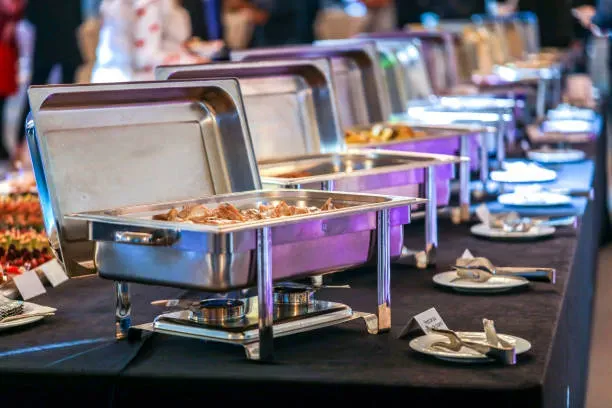
Selecting the right heating and holding solution is a core operational decision for any buffet service.
Today, Allnice is here to help. As a catering supplies wholesaler, we, in this blog, compare traditional fuel chafing dish setups with modern electric units. So procurement, operations, and events teams can make a practical choice based on temperature control, safety, layout, and total cost of ownership.
Buffet Service Requirements
Before choosing equipment, define the buffet’s operational constraints. For buffet service, the primary criteria are:
- Food safety & temperature control: consistent hot-holding (typically ≥60°C / 140°F) with minimal cold spots.
- Continuous service duration: single-event (2–4 hours) vs long-run (6+ hours).
- Venue constraints & safety: indoor fire codes, ventilation, and landlord rules.
- Layout & modularity: linear lines, islands, or segmented stations requiring joinable units.
- Operational simplicity: staff skill level, turnover, and training overhead.
- Cleaning & turnaround: speed of pan exchange and sanitation between services.
- Cost profile: fuel vs electricity, labor for fuel changes, and spare-part readiness.
These criteria should be weighted for every event and site before selecting a chafing dish strategy.
Traditional Fuel Chafing Dish: Strengths and Limitations
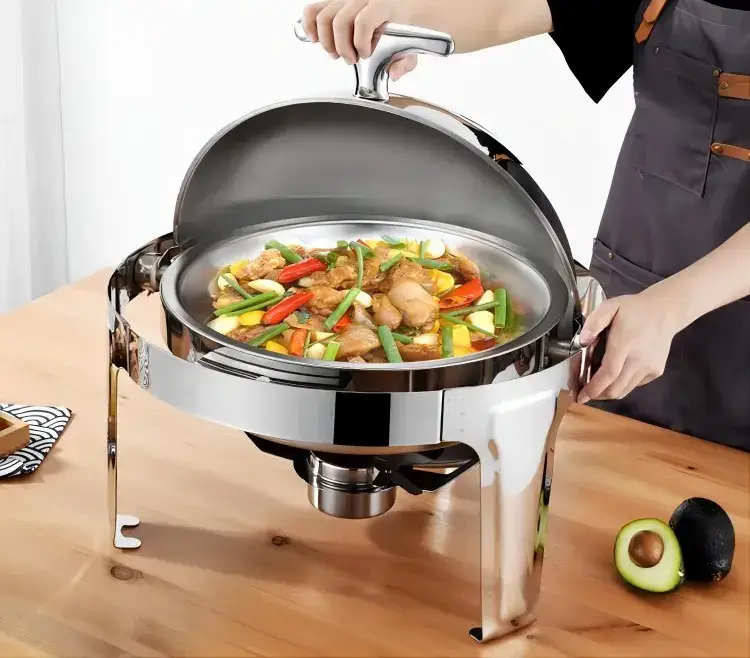
How they work. Traditional fuel chafers use canned fuel (sterno, gel) beneath a water pan to create steam that gently holds gastronorm pans warm.
Advantages of buffet service
- Portability & independence: no power required—ideal for outdoor pop-ups or temporary stations.
- Quick deploy: fast to set up in locations without electrical access.
- Lower initial CAPEX: units are typically less expensive than electric alternatives.
Limitations for buffet service
- Poor temperature precision: fuel-based heat is hard to regulate precisely, increasing food-safety risk for long holds.
- Open-flame safety: indoor use can run afoul of fire codes, venue policies, or insurance requirements.
- Fuel logistics: managing fuel inventory, replacements during service, and proper disposal increases labor.
- Inconsistent long-run performance: fuel cans burn out, and heat profile shifts over multi-hour services.
When fuel chafers work: short-duration outdoor buffets, temporary pop-up events, or sites with no reliable power where strict temperature control is not mission-critical.
Electric Chafing Dish: Strengths and Limitations
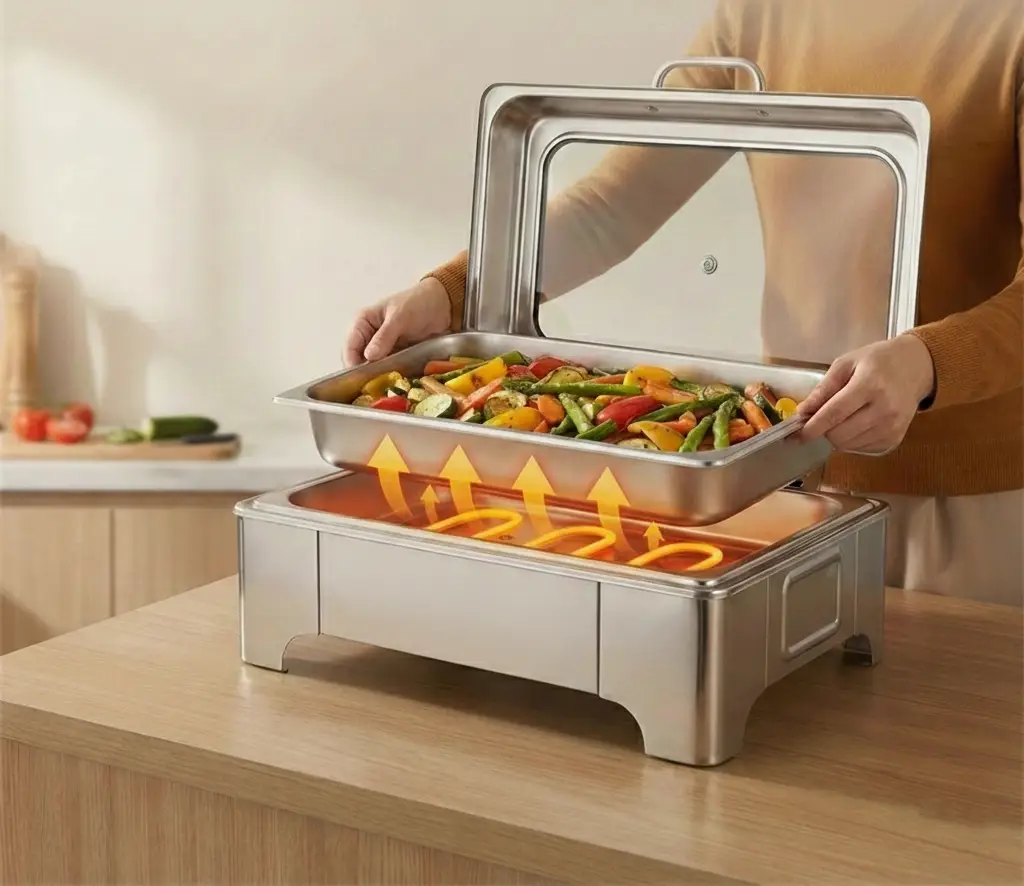
How they work. Electric units use thermostatic heating elements or induction warmers under GN pans to maintain a set temperature across wells.
Advantages of buffet service
- Precise temperature control: digital thermostats and programmable setpoints keep food within safe hot-holding bands.
- Consistent long-run performance: no fuel swaps required—ideal for multi-hour breakfast lines, banquets, and conferences.
- Indoor-safe operation: no open flame simplifies compliance with venue fire codes and reduces insurance friction.
- HACCP-friendly: easier logging and verification for audits and food-safety checks.
- Modularity & integration: many electric units are designed to join into long buffet lines with uniform control.
Limitations for buffet service
- Requires reliable power: must plan cabling and load distribution for long lines.
- Higher upfront cost: more capital outlay than basic fuel chafers.
- Potential for electrical faults: need for spare elements and electrical protection (RCDs, IP ratings).
When electric chafers work: indoor hotels, banquet centers, long-duration buffets, corporate dining, and any venue requiring predictable HACCP compliance.
Direct Comparison Table
| Comparison Factor (Buffet Service) | Traditional Fuel Chafing Dish | Electric Chafing Dish |
|---|---|---|
| Temperature accuracy | Limited, difficult to fine-tune | Higher CAPEX, often lower OPEX, and reduced risk cost over time |
| Safety & compliance | Higher risk indoors due to open flame | Safer for indoor venues, easier to meet fire and venue regulations |
| Portability | Excellent — no power required, ideal for temporary or remote sites | Moderate — requires reliable power and cable management |
| Operational labor | Higher — fuel replacement and monitoring needed | Lower — no fuel changes, simplified operation |
| Upfront vs lifetime cost | Lower CAPEX, higher ongoing fuel and labor cost | Lower CAPEX, higher ongoing fuel and labor costs |
| Modularity & buffet layout | Limited joining options | High precision, thermostatic control is ideal for food safety |
Scenario-based Recommendations
- Hotel breakfast & banquet halls (indoor, long-run): Choose electric chafing dish systems for consistent holding and HACCP documentation.
- Wedding receptions (indoor): Prefer electric for safety and guest experience.
- Outdoor festivals or pop-ups (short events, no power): Use fuel chafing dish units; plan fuel logistics and fire controls.
- Catering rental businesses: Adopt a hybrid fleet—electric as the primary indoor offering, with fuel units for remote/temporary work.
- Exhibition halls & conference centers: Electric systems with joiner kits to create continuous, professional-looking buffet lines.
Operational Checklist for Procurement
If choosing electric: confirm wattage per module, circuit requirements, IP splash rating, thermostat accuracy (±1–2°C), joiner/accessory kits, spare element availability, and certifications (CE/ETL). Verify GN pan compatibility, removable trays, and service access.
If choosing fuel: confirm fuel type and burn time per can, safe fuel storage procedures, extinguishing plans, and waste disposal. Evaluate lid and pan design for heat retention, and ensure staff training on safe fuel handling.
For both: require easy-clean design (removable water pans), clear HACCP procedures for holding windows, and an emergency protocol for equipment failures.
Conclusion
For most professional buffet operations—especially indoor, multi-hour services where food safety and auditability matter—an electric chafing dish solution is the practical default. Reserve traditional fuel chafing dish units for short, power-starved outdoor events or as emergency backups. Always align the choice with venue constraints, service duration, and your HACCP obligations.
About Allnice
Allnice is a catering supplies wholesaler specializing in wholesaling stainless steel chafing dishes and custom chafing dish solutions for professional buffet operations. Backed by strong manufacturing capability, we design fuel and electric chafing systems that balance temperature control, safety, and long-term operational efficiency.
Our solutions support diverse service scenarios—from hotels and banquet halls to events and rentals—helping operators meet food safety requirements with confidence and consistency.