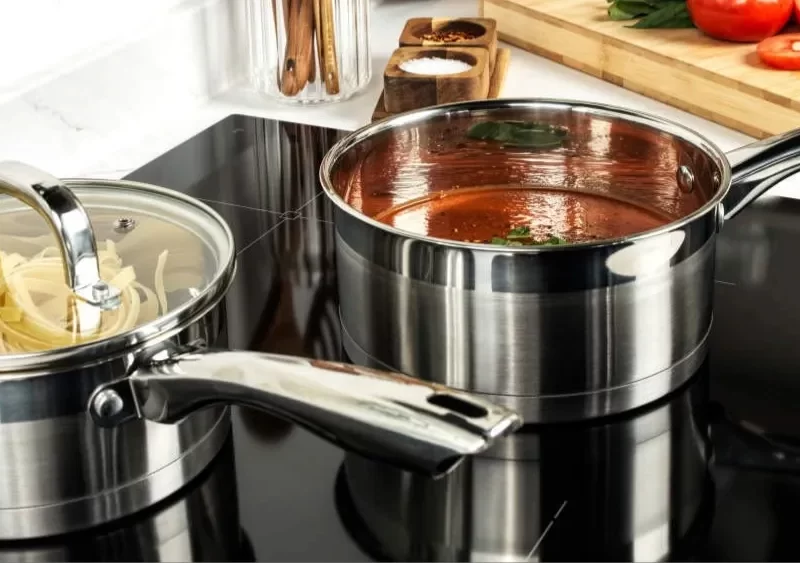
As a wholesale stainless steel cookware manufacturer, our sales data indicated that cookware buyers today are no longer choosing products based only on appearance or price. Performance, durability, heat control, and long-term reliability have become far more important—especially as both home cooks and commercial kitchens demand more consistent cooking results.
This shift is one reason why triply stainless steel cookware has become increasingly popular in premium cookware markets.
But despite its growing popularity, many buyers still do not fully understand what “triply” actually means—or why it matters. Together with Allnice, understanding its structure, materials, and performance helps explain why triply cookware has become a preferred choice for both home and commercial kitchens.
What Does “Triply” Mean in Stainless Steel Cookware?
The Three-Layer Construction Explained
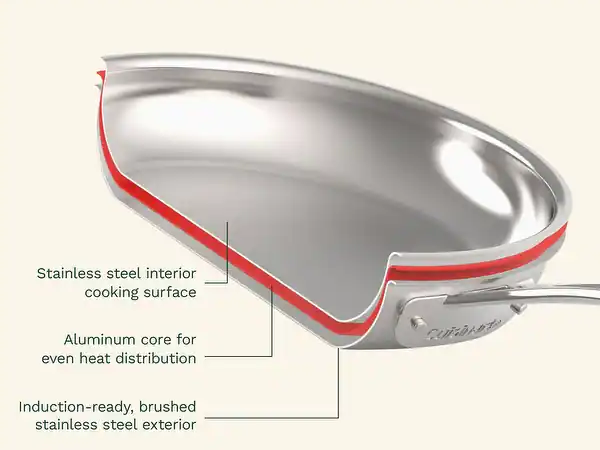
Triply cookware refers to cookware made with three bonded metal layers rather than a single sheet.
The structure typically includes:
- Interior stainless steel layer
The cooking surface that comes into contact with food is usually made from food-grade 304 stainless steel. - Aluminum core layer
Positioned in the middle to improve heat conductivity and distribute heat evenly. - Exterior stainless steel layer
The outer layer, often magnetic stainless steel, is designed for durability and induction compatibility.
This layered structure combines the strengths of different materials instead of relying on one metal alone.
How Triply Construction Works
Traditional stainless steel cookware is durable but not highly conductive. Aluminum, on the other hand, transfers heat efficiently but lacks structural strength and corrosion resistance.
Triply construction solves this by combining:
- Stainless steel durability
- Aluminum heat conductivity
The result is cookware that:
- Heats faster
- Reduces hot spots
- Maintains more stable cooking temperatures
This is especially important in cooking methods requiring consistent heat control, such as searing, sautéing, and sauce preparation.
Why Aluminum Is Added Between Stainless Steel Layers
The Weakness of Single-Layer Stainless Steel
Single-ply stainless steel cookware has one major limitation: poor heat conductivity.
Without a conductive core:
- Heat spreads unevenly
- Hot spots develop
- Food cooks inconsistently
This becomes more noticeable in larger pans or high-heat cooking situations.
Aluminum Core Performance Benefits
Adding an aluminum core significantly improves performance because aluminum transfers heat much faster than stainless steel.
Benefits include:
- Faster heating response
- More even cooking surfaces
- Reduced energy waste
- Better temperature control
- This is why triply cookware is commonly positioned as a performance upgrade over standard stainless steel cookware.
Triply vs Single-Ply Stainless Steel Cookware
Heat Distribution Comparison
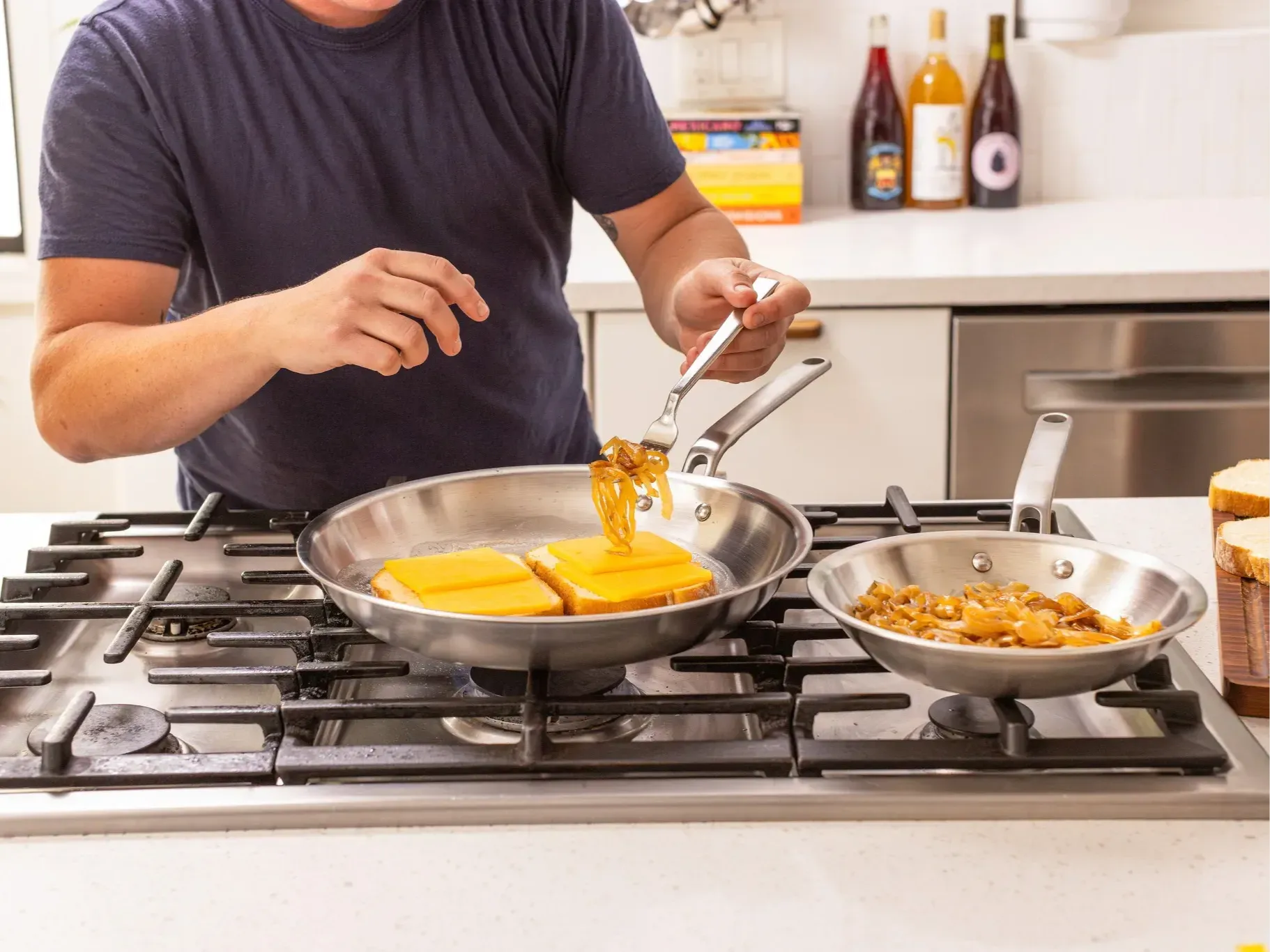
Triply cookware distributes heat across the entire cooking surface more evenly, while single-ply cookware tends to concentrate heat near the center.
This affects:
- Cooking consistency
- Browning performance
- Sauce reduction accuracy
Durability and Warping Resistance
Triply cookware is generally more structurally stable because the layered construction improves rigidity.
Higher-quality triply cookware is less likely to:
- Warp under heat
- Develop uneven bases
- Lose induction compatibility over time
Cooking Performance Differences
In practical cooking:
- Triply cookware responds faster to temperature adjustments
- Heat retention is more stable
- Cooking results become more predictable
This is why many professional kitchens prefer triply cookware for precision cooking tasks.
Price vs Long-Term Value
Triply cookware costs more upfront because of:
- Additional materials
- Bonding technology
- More complex manufacturing processes
However, the longer lifespan and better cooking performance often provide stronger long-term value.

Triply vs Non-Stick Cookware
Coating-Free Cooking Surface
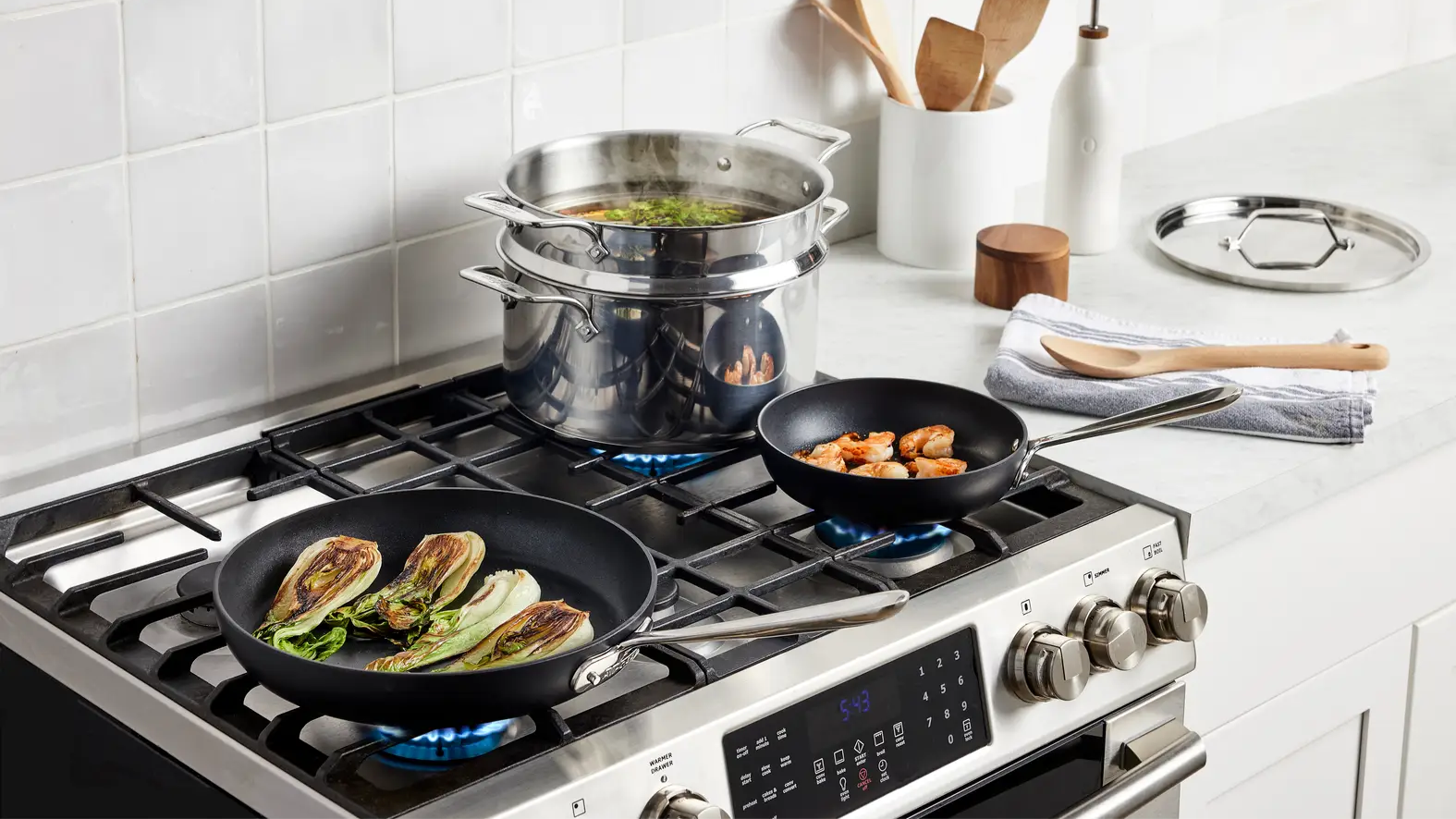
Unlike non-stick cookware, triply stainless steel cookware does not rely on synthetic coatings.
This eliminates concerns related to:
- Coating scratches
- Surface peeling
- High-temperature coating degradation
High-Heat Cooking Performance
Triply cookware performs particularly well under high heat, making it suitable for:
- Searing
- Browning
- Stir-frying
Non-stick cookware is generally less suitable for continuous high-temperature cooking.
Durability and Lifespan
A quality triply pan can remain functional for many years with proper care, while coated cookware usually experiences a gradual performance decline as the surface wears.
Safety and Food Contact Stability
Food-grade stainless steel is widely regarded as one of the most stable cookware materials because it does not rely on chemically treated surfaces for performance.
This is one reason many buyers source from a trusted [stainless steel cookware manufacturer] when looking for long-term cookware reliability.
Is Triply Stainless Steel Cookware Safe?
Food-Grade Stainless Steel Standards
High-quality triply cookware uses food-grade stainless steel designed for stable food contact performance under normal cooking conditions.
FDA and LFGB Compliance
Reliable cookware manufacturers often produce cookware that complies with:
- FDA food contact standards for the U.S. market
- LFGB certification requirements for European markets
These standards help verify material safety and migration compliance.
Why Professional Kitchens Prefer Triply Stainless Steel
Commercial kitchens prioritize:
- Durability
- Heat consistency
- Long-term reliability
Triply stainless steel cookware aligns with all three requirements, which is why it is widely used in restaurants and hotels.
Working with a professional triply cookware supplier also helps ensure consistency across cookware lines and production batches.

What Types of Cookware Commonly Use Triply Construction?
Frying Pans
Triply frying pans are among the most common applications because even heating directly affects searing and browning performance.
Saucepans
Triply saucepans improve temperature control during sauce preparation and simmering.
Stock Pots
Larger cookware benefits from more even heat distribution across wider surfaces.
Woks and Saute Pans
Triply construction helps maintain heat stability during high-temperature cooking.
What Buyers Should Check Before Purchasing Triply Cookware
Full-Clad vs Impact-Bonded Base
- Full-clad cookware extends the layered structure throughout the body
- Impact-bonded cookware only includes layered construction at the base
Full-clad cookware generally provides more even sidewall heating.
Layer Thickness and Weight
Extremely thin cookware may reduce cost but compromise stability and heat retention.
Handle Construction and Riveting
Strong rivets and ergonomic handles improve:
- Safety
- Durability
- Long-term usability
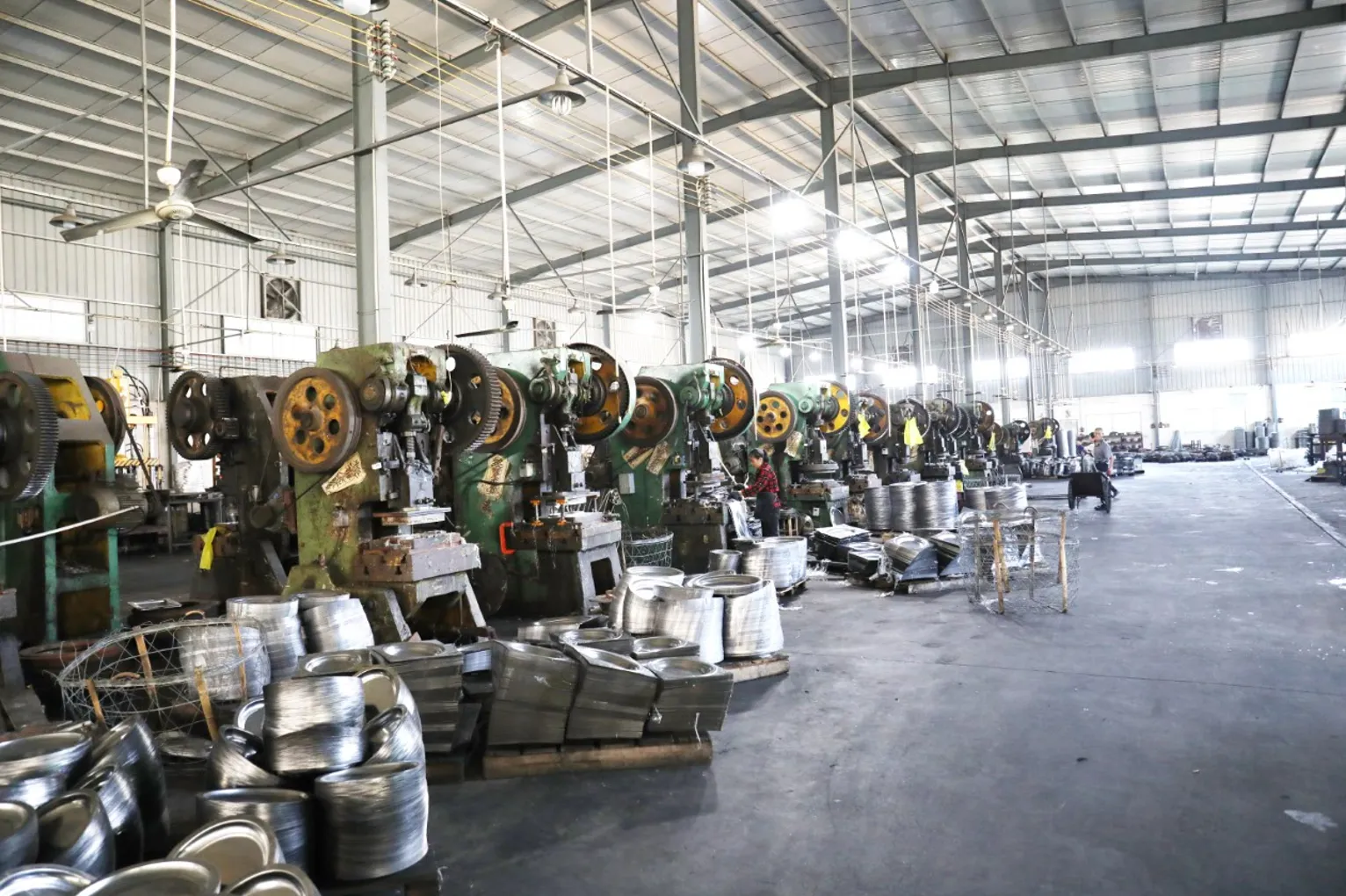
Manufacturing Quality and Surface Finish
A reliable stainless steel cookware supplier should maintain:
- Consistent polishing quality
- Smooth welds and edges
- Stable bonding performance
Poor finishing often signals broader manufacturing inconsistency.
Triply Cookware for Home Kitchens vs Commercial Kitchens
Home Cooking Advantages
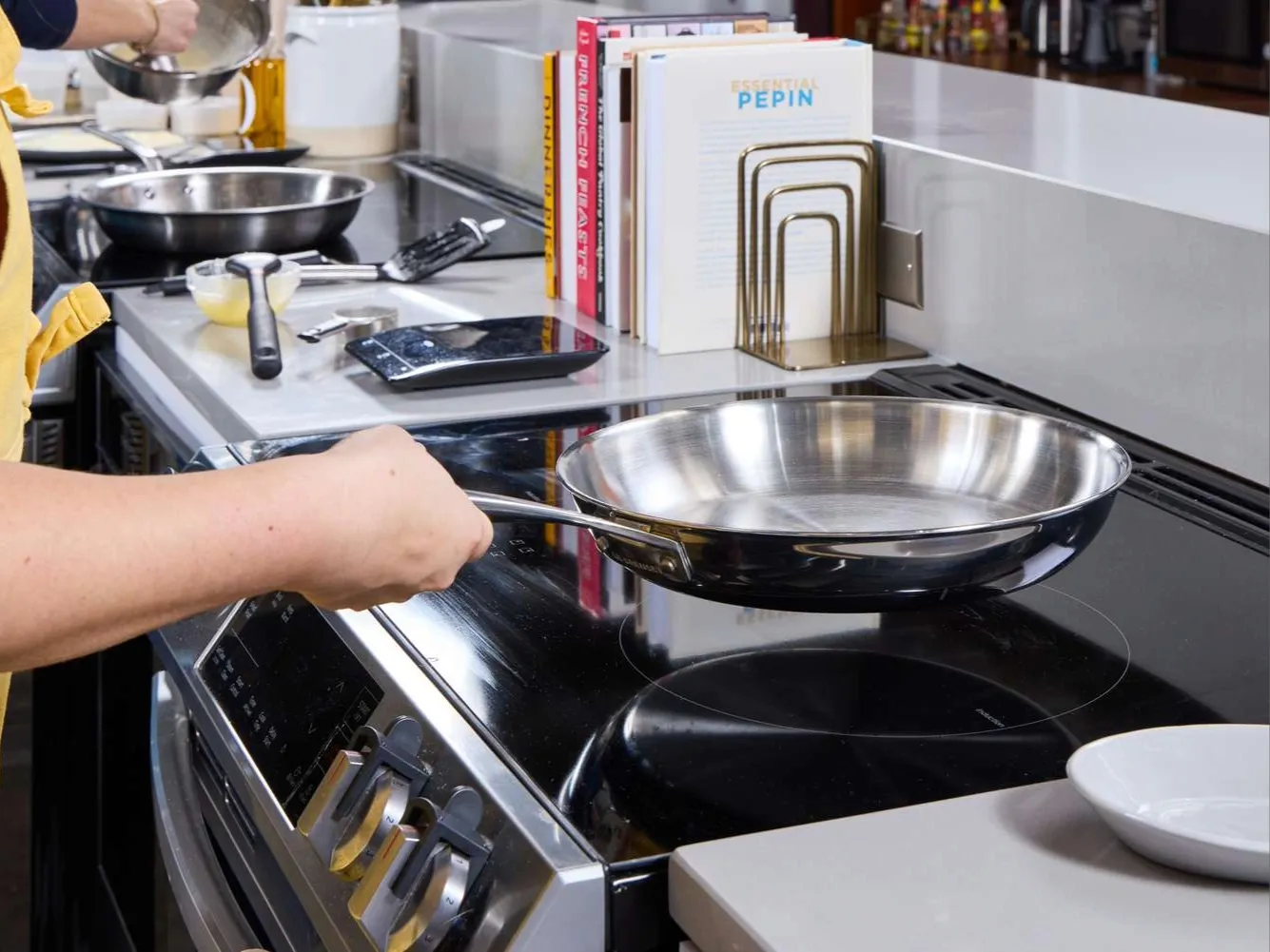
For home users, triply cookware offers:
- Better cooking consistency
- Longer lifespan
- Versatility across cooking styles

High-Volume Commercial Cooking Benefits
Commercial kitchens benefit from:
- Faster thermal response
- Structural durability: Reduced replacement frequency
Long-Term Cost Efficiency
Although triply cookware costs more initially, the combination of durability and performance often lowers long-term replacement costs.
OEM and Private Label Opportunities in Triply Cookware
Custom Sizes and Structures
A professional custom cookware manufacturer can develop:
- Customized cookware dimensions
- Different core thicknesses
- Specialized handle structures
Branding and Packaging Customization
OEM services may include:
- Laser logo engraving
- Retail packaging design
- Product line standardization
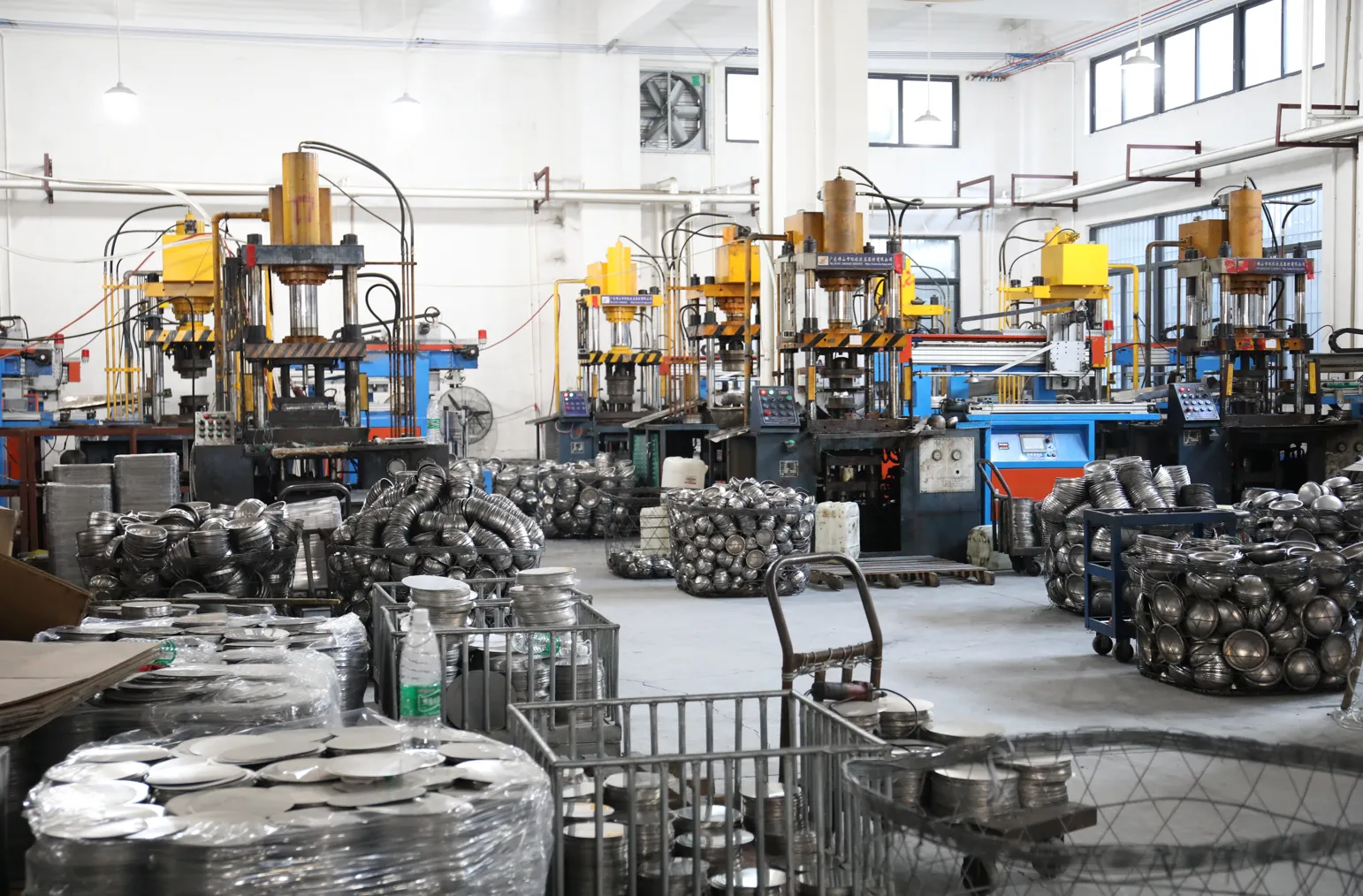
Bulk Manufacturing and Global Export
An experienced wholesale stainless steel cookware supplier can support:
- Large-volume production
- International compliance standards
- Stable lead times for global distribution
Conclusion: Is Triply Stainless Steel Cookware Worth It?
Triply stainless steel cookware has become popular because it solves a real performance limitation found in traditional stainless steel cookware: uneven heat distribution.
By combining:
- Stainless steel durability
- Aluminum heat conductivity
- Multi-layer structural stability
Triply cookware delivers more controlled and consistent cooking performance.
For buyers focused on:
- Long-term durability
- High-heat cooking capability
- Reliable performance
Triply cookware is often worth the higher upfront investment.
The key difference is not marketing—it is the engineering structure.
FAQ Section
What is triply stainless steel cookware?
Triply cookware is made with three bonded metal layers, usually stainless steel on the inside and outside with an aluminum core in the middle.
Is triply cookware better than stainless steel?
Triply cookware is technically a type of stainless steel cookware, but its layered construction provides better heat distribution and cooking performance than single-layer stainless steel.
Is triply cookware safe for health?
Yes. High-quality triply cookware made with food-grade stainless steel is widely considered safe for cooking.
What is the difference between triply and non-stick cookware?
Triply cookware uses layered metal construction without synthetic coatings, while non-stick cookware relies on coated cooking surfaces.
Does triply cookware work on induction cooktops?
Yes, most triply cookware uses a magnetic stainless steel exterior layer that is compatible with induction cooking.
About Allnice

Allnice is a factory-direct stainless steel cookware manufacturer focused on providing stable, high-performance cookware solutions for global B2B buyers. From triply stainless steel cookware to complete cookware collections, we ensure reliable quality through controlled production, strict material standards, and consistent manufacturing processes.
Our OEM/ODM cookware services support custom structures, branding, packaging, and product development tailored to different markets. With strong supply capability and export experience, we help distributors, retailers, and cookware brands build scalable product lines with dependable performance, long-term durability, and efficient one-stop sourcing support.