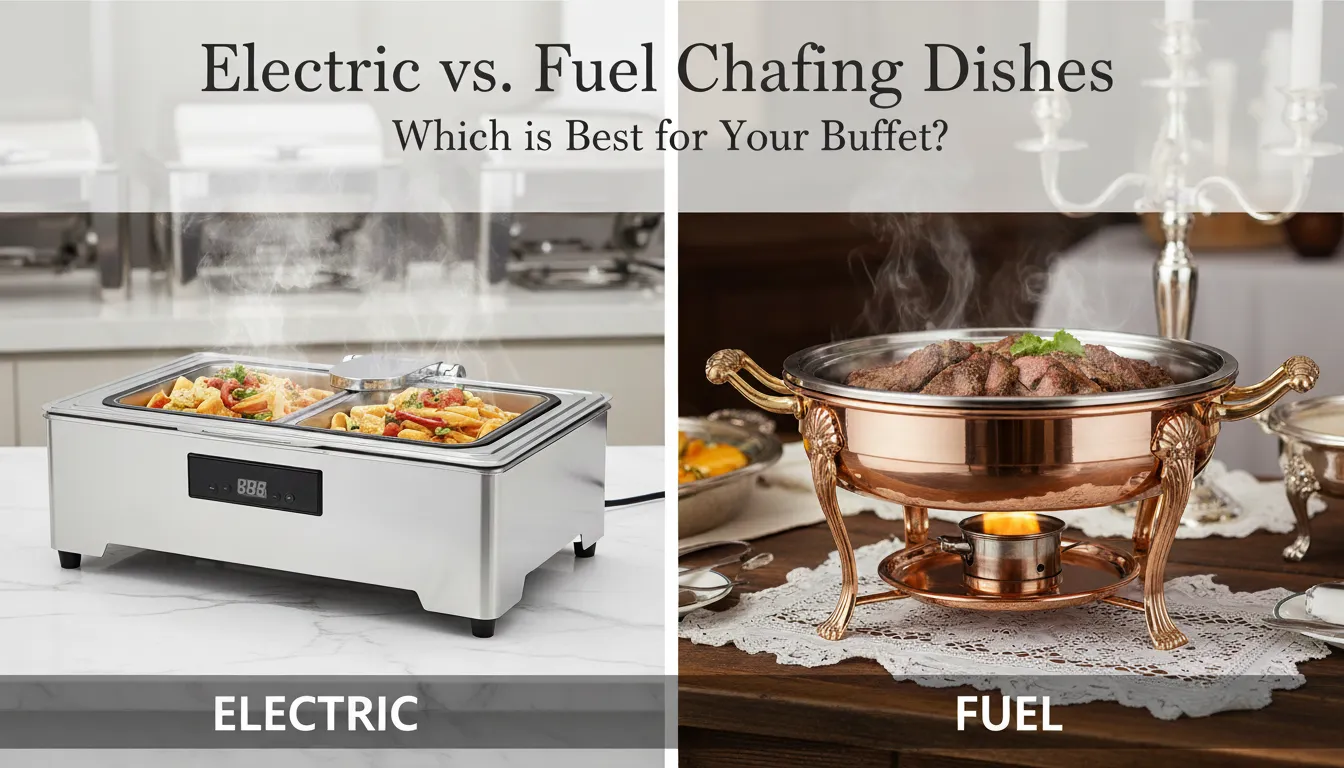
Choosing between electric and fuel 火皿 systems is quite a confusing decision for freshmen operators. The right heating method directly affects food safety, operating cost, staff workflow, and venue layout.
このガイドでは ケータリング機器メーカー, gives procurement managers and owners a venue-based decision framework, lifecycle cost perspective, and supplier checklist so you can pick equipment that fits your service model.
How Chafing Dishes Hold Food Warm
Here is how they work:
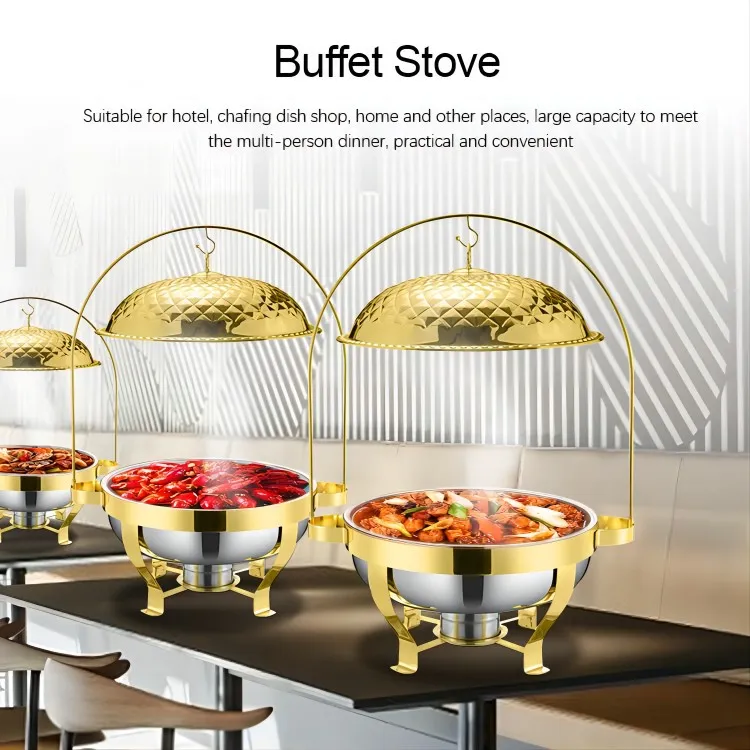
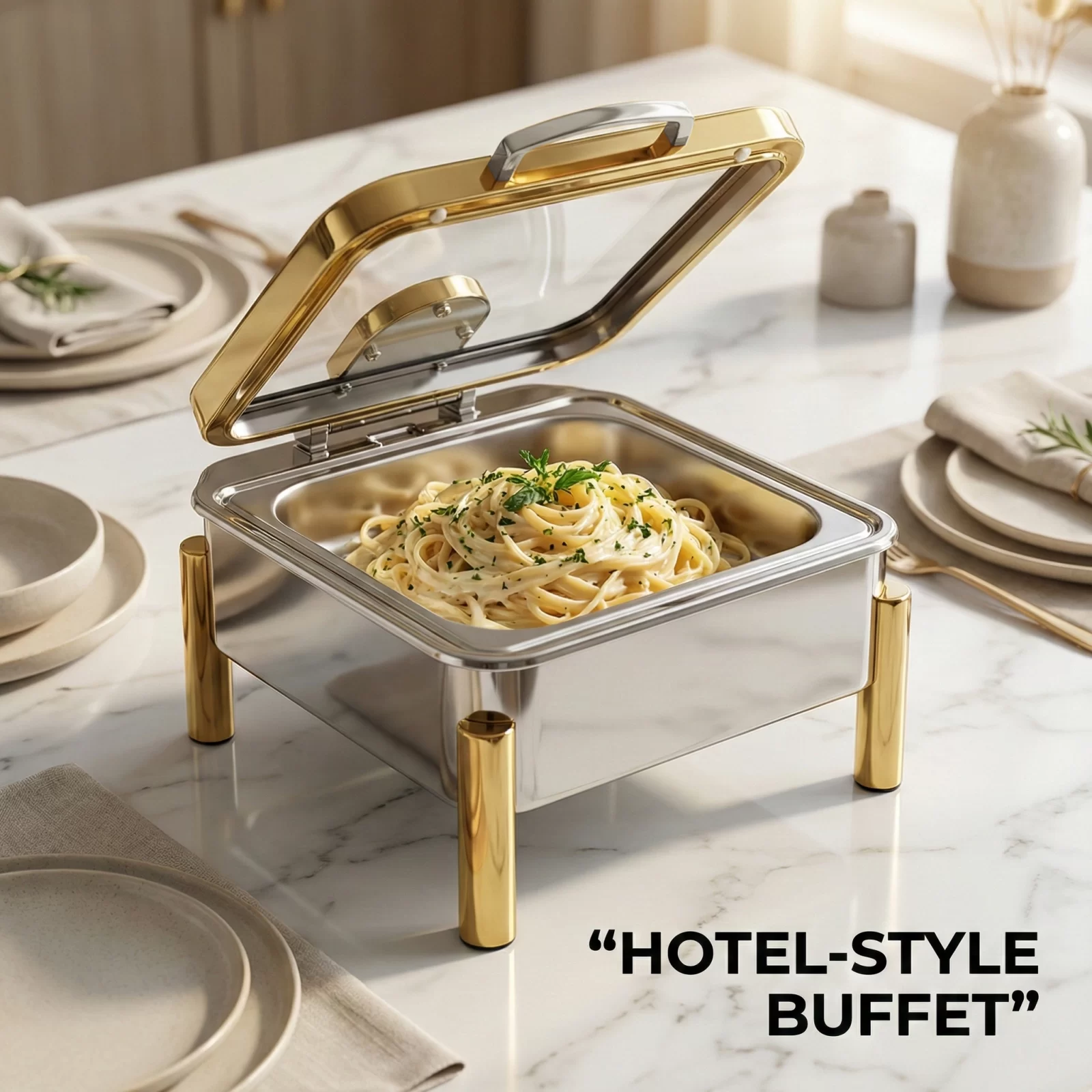
- 電気 units use a heating element (water-bath or dry-heat element) with thermostat control. They deliver steady, programmable temperatures and are suited for continuous service.
- Fuel units rely on gel/alcohol burners (sterno) or canned fuel beneath a water pan. Heat is less controllable and requires manual replacement or relighting during long services.
The heating mechanism determines safety profile, placement options, labor touchpoints, and cost drivers. Treat the heating type as a systems choice, not a product feature.
Electric Chafing Dish — Advantages and Practical Limits
メリット
- Precise temperature control. Thermostats maintain holding temperature (e.g., 60–70°C) with small variance — important for HACCP and food-safety audits.
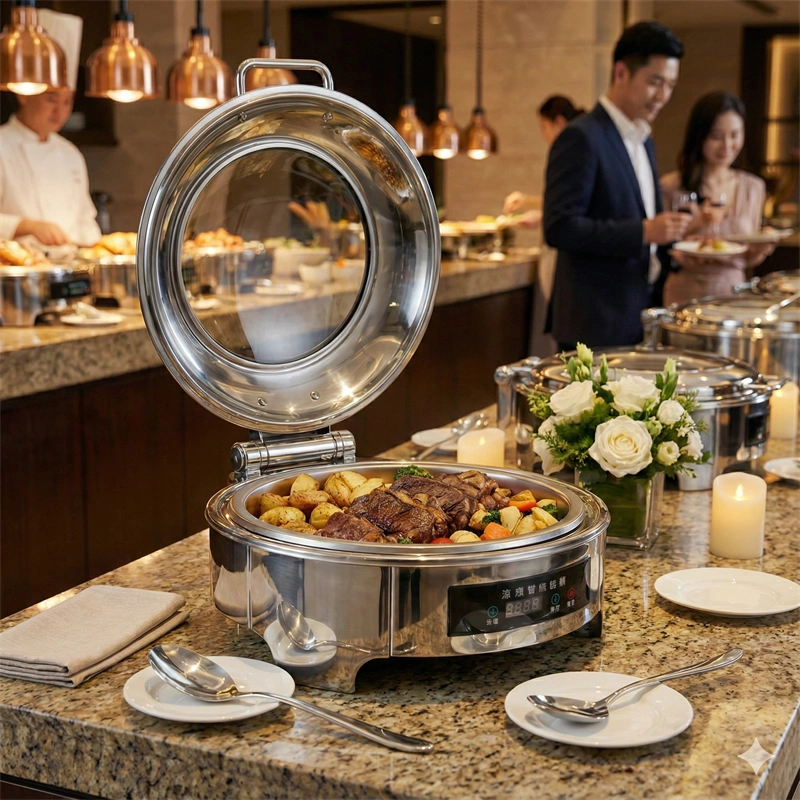
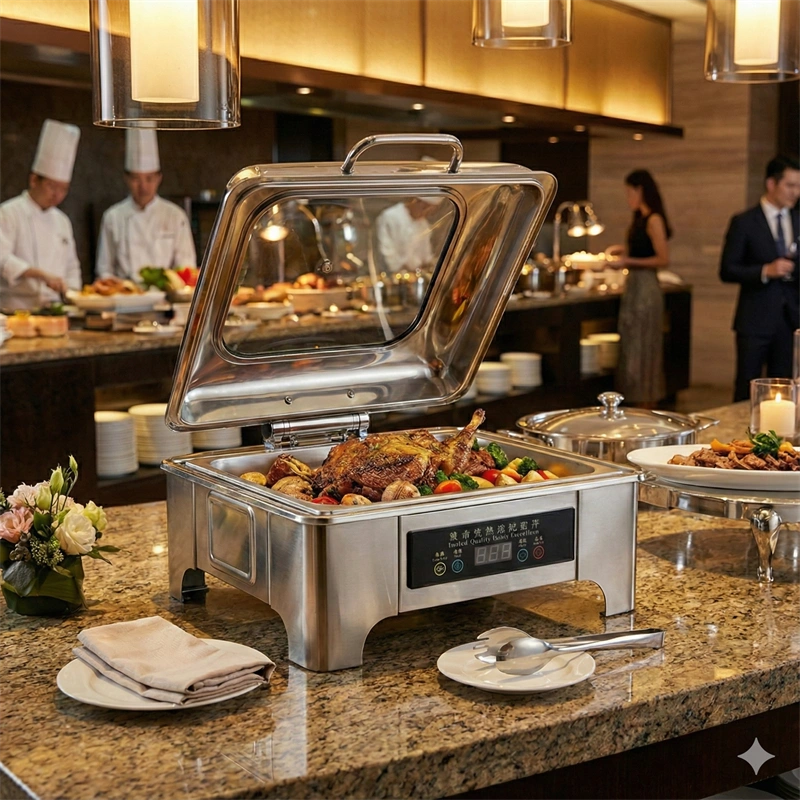
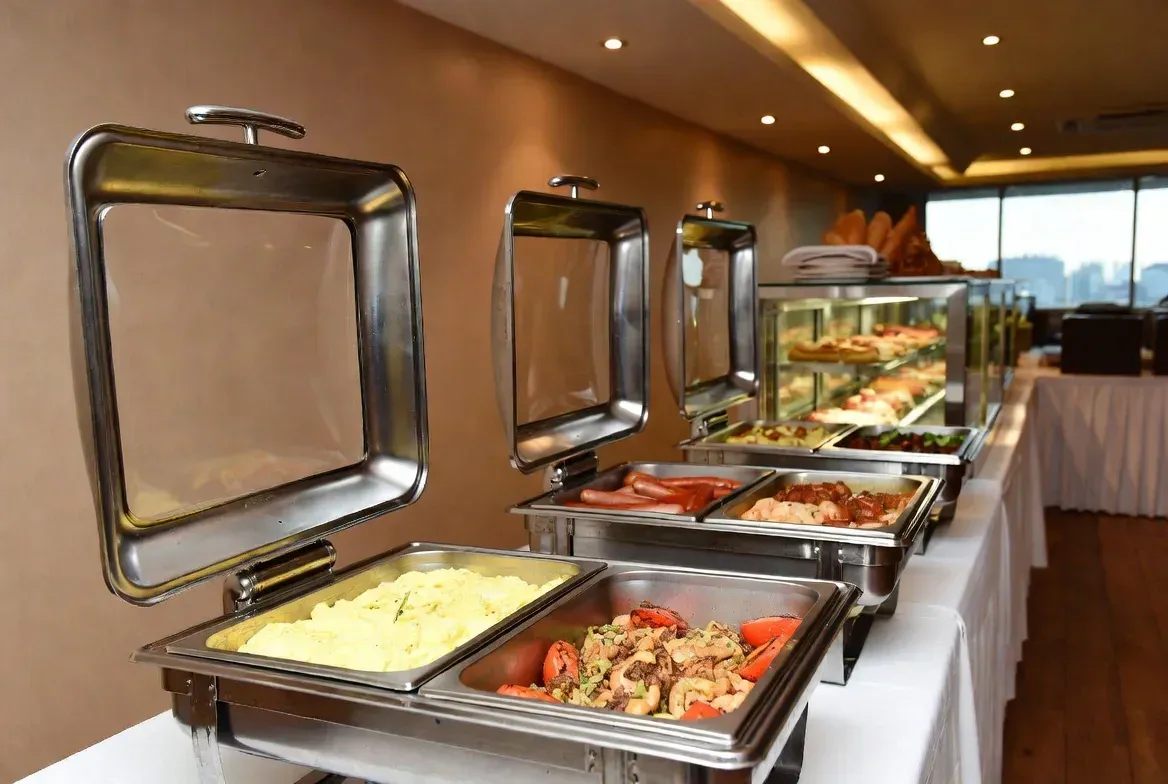
- Better for long services. Hotels and banquet halls that run buffets for hours benefit from continuous, stable heating without staff continually changing fuel cans.
- Reduced fire risk. Indoor venues with strict fire codes prefer electric solutions because there’s no open flame.
- Lower long-run operating cost (often). For daily operations, electricity can be cheaper and easier to meter than constant fuel use.
Limitations
- Power dependence. Requires accessible, dedicated circuits and RCD/earth leakage protection. Placement is constrained by power routing.
- Higher upfront cost. Electric units and controllers typically cost more than simple fuel models.
- Mobility constraints. Not ideal for remote or temporary sites without reliable power.
Use cases: hotel buffets, institutional dining, cruise ships, permanent banquet stations.
Fuel Chafing Dish — Advantages and Practical Limits
メリット
- Placement flexibility. No mains power required — line up tables anywhere.
- Lower capital cost. Initial purchase price and simple maintenance are attractive for event operators.
- Ideal for temporary/remote events. Outdoor receptions, pop-up banquets, and venues without reliable power.
Limitations
- Higher operational labor and consumable costs. Fuel replacement during long services increases labor and consumables spend.
- Open-flame safety issues. Requires strict SOPs, wind guards (outdoors), and fire-safety planning. Many indoor venues restrict open flames.
- Less precise control. Heat varies with fuel supply and environmental conditions; maintaining exact holding temperatures is harder.
Use cases: outdoor catering, weddings in temporary venues, mobile caterers.
Venue Decision Guide — Match Heating to the Operation
Use the questions below when selecting equipment:
- Is stable mains power available and practical at the buffet line?
- Yes → strongly consider an 電気チェーフィングディッシュ.
- No → fuel chafing dish may be necessary.
- What is the typical service duration?
- Long runs (2+ hours) → electric reduces labor and fuel consumption.
- Short events → fuel is acceptable and flexible.
- Are there indoor fire or insurance restrictions?
- Strict restrictions → electric is safer and often required.
- Do you need flexible layouts or rapid setup/teardown?
- Frequent reconfiguration or outdoor setups → fuel wins for mobility.
- Is the total cost of ownership (TCO) or upfront CAPEX the priority?
- TCO focus → model and run cost calculations, often favoring electric over time.
- Low CAPEX → fuel units lower entry cost.
Quick Operating Cost Comparison
| Factor | 電気 火皿 | Fuel 火皿 |
|---|---|---|
| Initial cost | Higher | 下へ |
| Energy/consumable cost (daily use) | Lower (usually) | Higher (fuel cans) |
| Labor to operate | 下へ | Higher (monitor & replace fuel) |
| Mobility | Limited | High |
| Fire & insurance risk | 下へ | Higher |
| 温度制御 | Precise | Variable |
Interpretation: For venues with daily buffets and reliable power, electric units usually become cheaper and safer over the equipment life cycle. For temporary, remote, or highly mobile operations, fuel units remain practical.
Procurement Considerations Beyond Heating Type
When evaluating any 火皿 supplier, look past the heat source and verify:
- Material quality: food-contact surfaces should be 304ステンレス鋼 (or higher); inspect coil CoA or material declaration.
- Structural stability: water-pan gauge, frame rigidity, lid hinge lifecycle rating (cycle counts).
- Temperature control specs: digital thermostat accuracy, overheat protection, and element serviceability.
- Safety features (fuel models): stable fuel cups, wind guards, spark-resistant designs, and clear SOPs.
- Spare parts & service: ready supply of replacement lids, hinges, fuel cup assemblies, and heating elements.
- Compliance documentation: CE, LFGB, NSF, or local authority certificates as required for your market.
- Pilot & FAI: always run a pilot batch and First Article Inspection for new SKUs or suppliers.
Include these as contractual acceptance gates — not optional requests.
Hybrid Strategies: Optimize Flexibility and Risk
Large operators often deploy a hybrid fleet:
- 電気 units for permanent buffet lines and daily service.
- Fuel units in the mobile toolkit for outdoor events and temporary functions.
This approach balances safety, TCO, and flexibility while keeping spares, staff training, and SOPs consistent across the fleet.
Chafing Dish Supplier Checklist for Bulk Procurement
Before signing a PO, confirm the 火皿 manufacturer can provide:
- Production photos/videos (pressing, welding, assembly).
- Material CoAs and incoming material traceability.
- Warranty terms and spare parts lead times.
- Pilot batch samples and FAI report.
- Electrical certification for heaters and thermostats (if electric).
- Clear fuel handling guidance and testing records (if fuel).
- Logistics packaging specs (VCI, palletization) and lead-time commitments.
Score vendors and require remedial actions for any gaps.
最終勧告
- Permanent indoor buffets, institutional dining, and long daily service: choose an 電気チェーフィングディッシュ for safety, control, and lower long-term cost.
- Temporary events, remote locations, and highly mobile catering: choose a fuel chafing dish for placement flexibility and lower CAPEX.
- If in doubt: adopt a hybrid fleet and codify SOPs so staff can operate both systems safely and efficiently.
Procurement is risk management: quantify service duration, placement constraints, and TCO before buying. The right 火皿 choice reduces liability, lowers operating friction, and stabilizes your buffet performance.
オールナイスについて
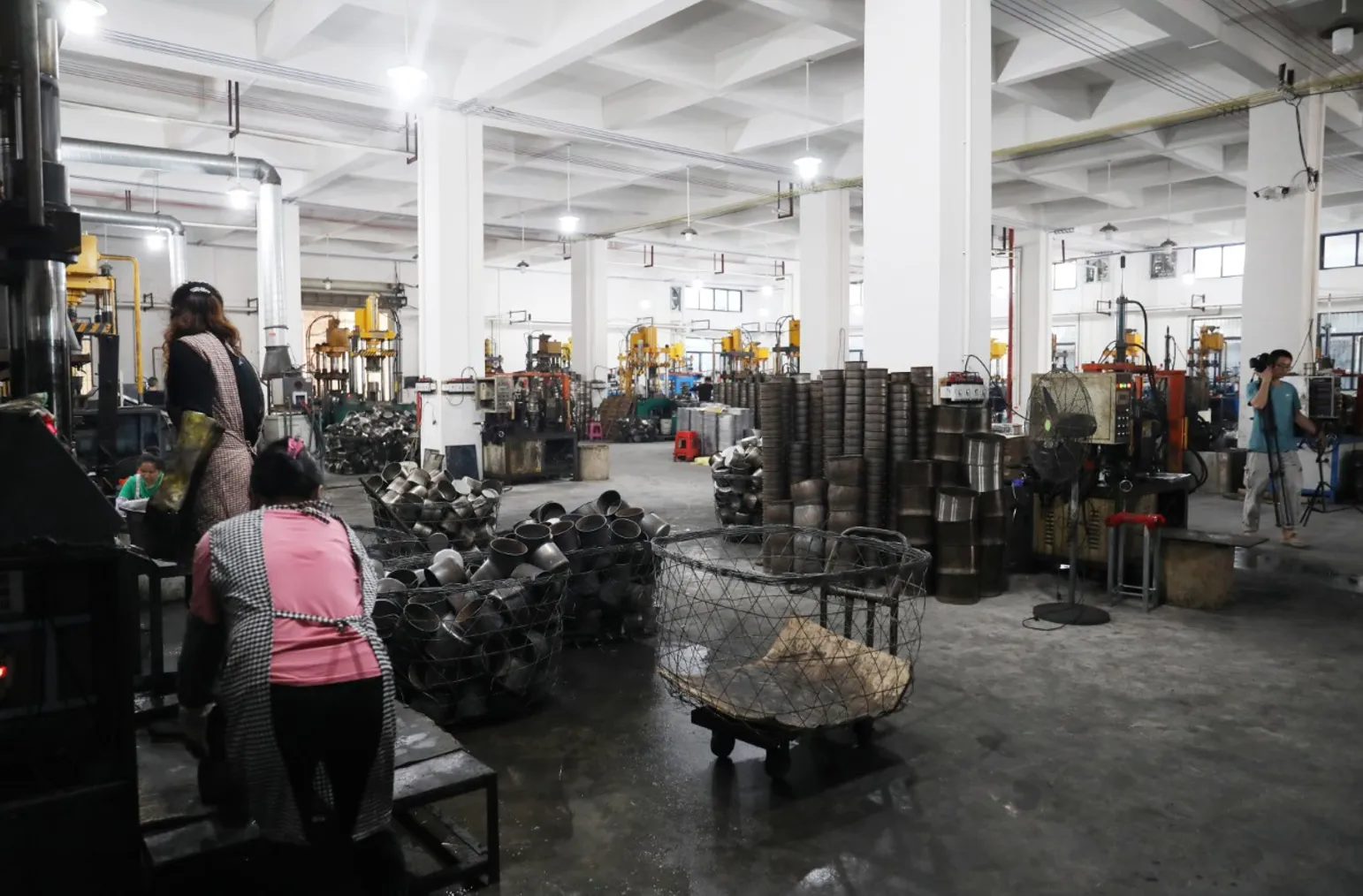
オールナイスはプロフェッショナル ケータリング機器メーカー specializing in stainless steel chafing dishes for hotels, buffet operators, and foodservice distributors worldwide. Our self-possessed factory conducts all the key production processes—from metal forming and welding to polishing and final assembly—ensuring stable quality across repeat production batches.
For B2B clients, we offer wholesale chafing dish services そして カスタムチェーフィングディッシュ, including structure design, heating configurations, surface finishes, branding, and packaging solutions tailored for large-scale hospitality supply.