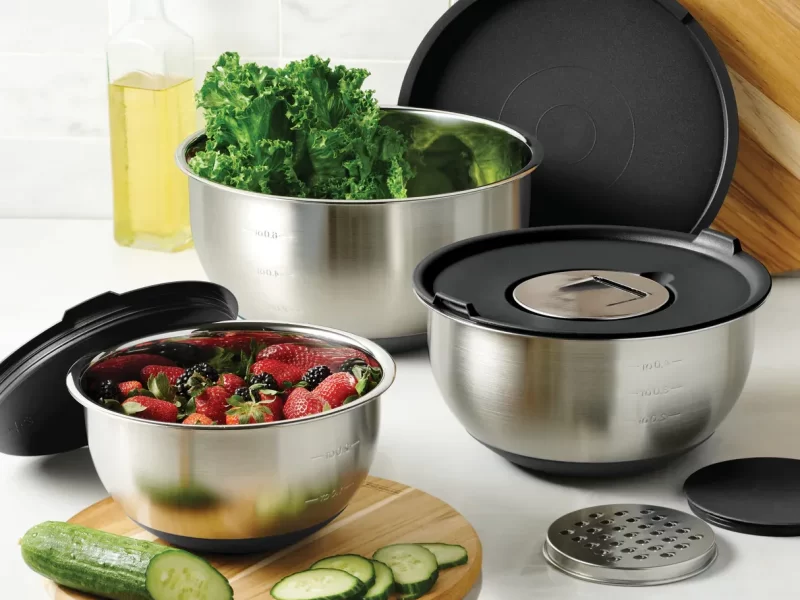
In terms of durability, hygiene, heat tolerance, and long-term value, a stainless steel mixing bowl usually outperforms a plastic one. Plastic mixing bowls offer advantages as well, weight, cost, and color variety.
This guide, delivered by Allnice, a stainless steel mixing bowl wholesaler, compares both materials across real-world criteria so you can choose the right bowl for home, bakery, or commercial use.
What Each Bowl is Made Of
Stainless steel mixing bowl: It is usually made of 18/8 (304) or 18/10 (304) food-grade alloys. It is non-porous, recyclable. Moreover, it can be finished by brushing and mirroring as well.
Plastic mixing bowl: Polypropylene (PP), high-density polyethylene (HDPE), and melamine are the main materials of these bowls. Advantages like lightweight and inexpensive help it win its market share. But the potential risk of heat limit and leaching concerns vary by polymer and grade.
Durability & Lifespan
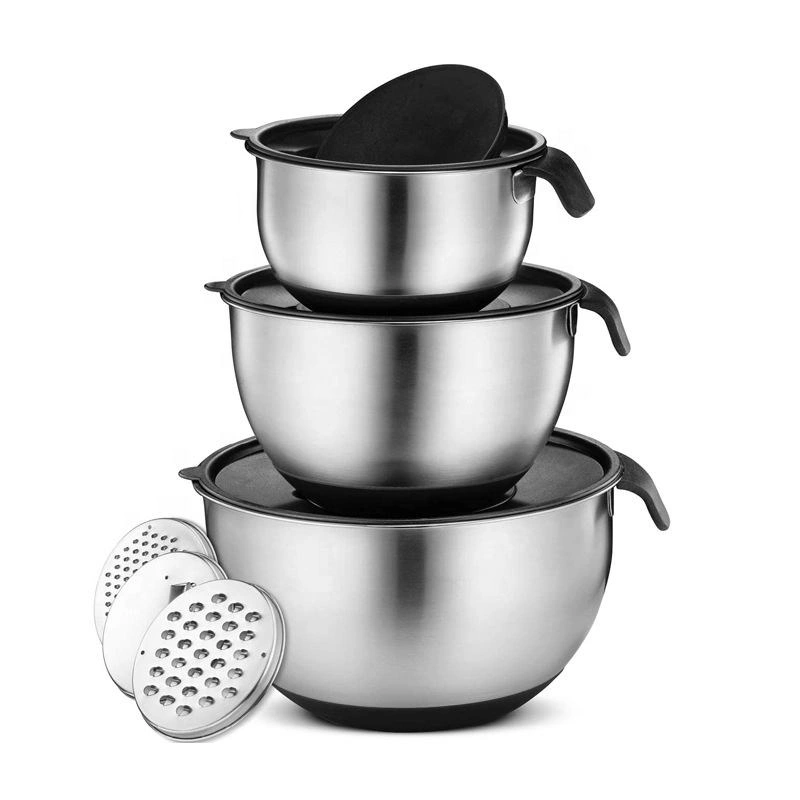
A stainless steel mixing bowl resists impact, won’t warp under heat, and tolerates aggressive dishwashing. Expect many years of service even in heavy use. Plastic bowls dent, scratch, and can crack over time — scratches trap food and odors, shortening their useful life.
Food Safety and Chemical Stability
Stainless steel is inert for typical cooking; it won’t leach flavor and is good with acidic foods. “Stainless steel” mixing bowls are high quality and meet food-contact standards (FDA/LFGB equivalents). Plastics may be BPA-free, but other polymer materials can absorb oils and odors, and lower standards of plastic may migrate chemicals, particularly when hot or alcohol-based extracts.
Thermal Performance
Need to whip cream or chill dough rapidly? A metal bowl has excellent thermal conduction and cools rapidly in the refrigerator or ice bath. For hot tasks, stainless steel tolerates the heat of the oven (to an extent) and of high-temperature mixing. Plastic is a thermal insulator, which is easy to hold, but doesn’t contribute much to regulating temperature.
Cleaning and Hygiene
Non-porous stainless steel is easy to sanitize and dishwasher-safe, and it doesn’t stain easily like tomato or turmeric. Plastic scratches and develops odors, and sometimes the discoloration is permanent. For commercial kitchens and bakeries where sanitation is a top concern, the stainless mixing bowl product is the better choice.
Weight & Ergonomics
Plastic wins for lightness — useful for large capacity bowls moved frequently by staff or home cooks with limited strength. A deep 5–8-quart stainless steel mixing bowl can be heavier, but modern thin-gauge designs balance weight and rigidity. Consider nested sets to reduce handling strain.
Cost & Return on Investment
Upfront, plastic costs less. Long term, stainless delivers better ROI: fewer replacements, lower sanitation risk, and higher perceived product value. For businesses, durable stainless steel mixing bowls reduce the total cost of ownership despite a higher initial spend.
Environmental Impact
Stainless steel is highly recyclable and often contains recycled content; it avoids single-use waste. Plastics can be recyclable depending on local streams, but low-grade plastics contribute to landfill and microplastic concerns. Sustainability-minded buyers typically prefer steel.
Use-case Recommendations
- Home baker/family: mid-range stainless steel mixing bowl (3–5 qt) for versatility; keep 1–2 plastic bowls for light tasks and transport.
- Professional bakery/restaurant: prioritize stainless steel for hygiene, heat work, and heavy use.
- Catering / outdoor events: plastic for portability, but choose food-grade, high-heat-tolerant polymers.
- Childcare / institutional kitchens: shatterproof plastic may be required for safety rules — use BPA-free, certified materials.
Buying Checklist — What to Look For
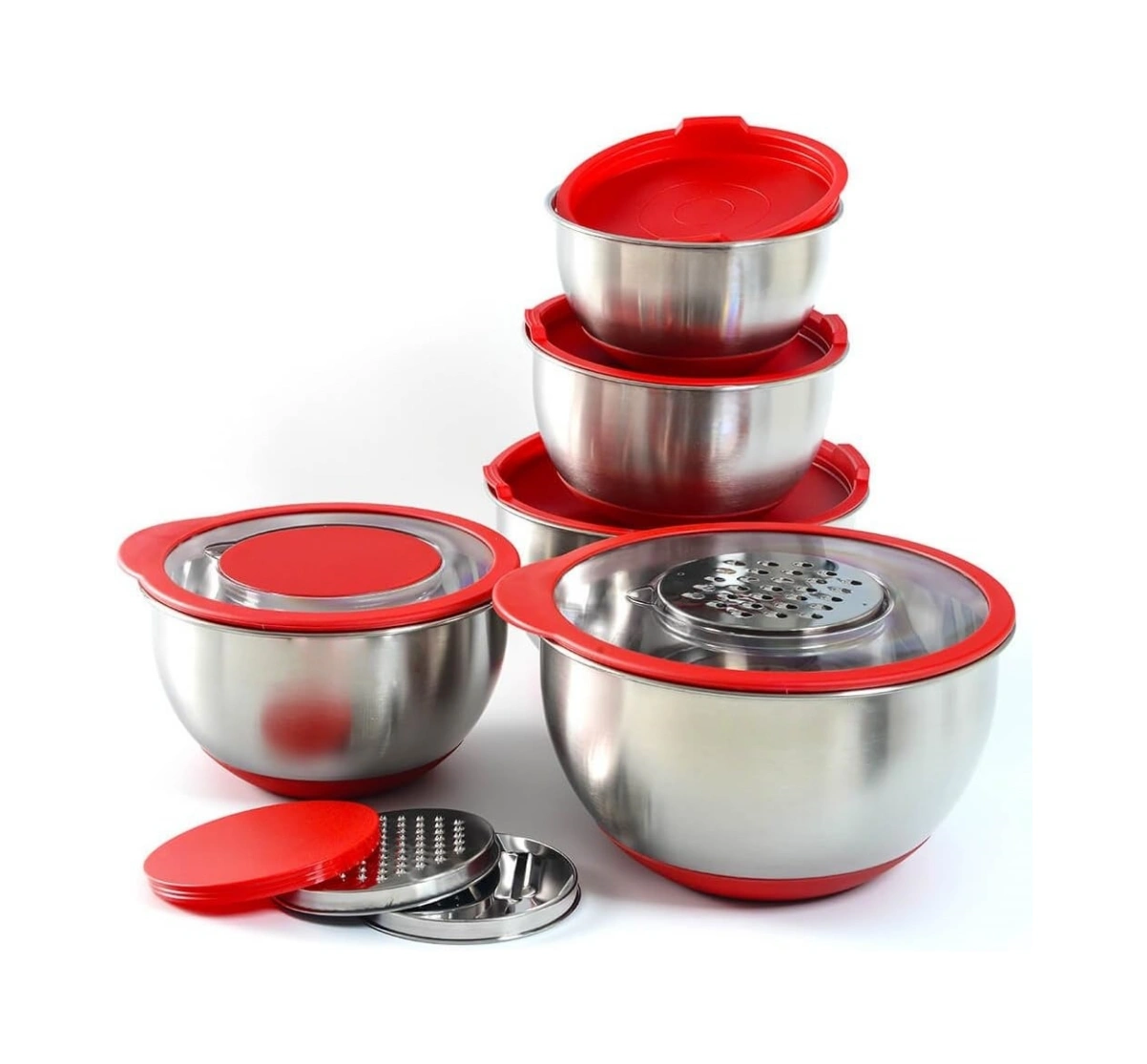
- Material grade: prefer 304 / 18-8 for food contact.
- Thickness/gauge: heavier gauge resists denting — specify mm or gauge for commercial buys.
- Finish: brushed interior hides minor scratches; mirror interior is easier to wipe.
- Rim & stacking: rolled rims for comfort and safety; nested design for storage.
- Certifications: FDA/LFGB test reports or supplier MTRs for B2B purchases.
- Capacity labeling: clear quart/liter markings help kitchen workflows.
Care & Maintenance Tips
- Wash promptly; use non-abrasive pads to preserve finish.
- For stainless: a vinegar or baking-soda soak removes discoloration; dry immediately to prevent spotting.
- For plastic: avoid high heat and stain-prone foods where possible; replace when deep scratches appear.
- Store nested with paper or silicone separators to avoid marring mirror finishes.
Conclusion
If your priority is hygiene, longevity, and thermal control, choose a stainless steel mixing bowl — it’s the clear winner for commercial kitchens, serious home bakers, and anyone seeking long-term value. Use plastic where weight, cost, or impact resistance is the primary requirement.
About Allnice

Allnice is a trusted stainless steel mixing bowl wholesaler offering custom stainless steel catering solutions for professional kitchens and distributors. Backed by our own manufacturing facility, we produce and wholesale high-quality stainless steel mixing bowls with efficiency and precision. Every item is crafted under a strict QA system that fully aligns with international standards, ensuring lasting performance and reliability for our global partners.